

A microwave grill pan is assembled from several systems that must continue to agree after the first sample: the formed metal part, heat-responsive construction, food-contact coating, silicone structure, closure and printed instructions. The manufacturing process is the set of controls that keeps those systems tied to one approved product.
HeMaSe's current Microwave Toaster Grill Tray page publishes this route: product design, mold development, die casting, surface coating, silicone molding, assembly, packaging and final inspection. That sequence is a useful map, but it is not a universal recipe for every model. Before production, the factory and brand should freeze the selected construction, process route, approved sample, claim set and change-control rules. Each stage needs a defined input, output and release point.

The eight-stage HeMaSe manufacturing process
The current HeMaSe Microwave Toaster Grill Tray category page names eight stages in its manufacturing route. We use that published sequence below because it is more useful than a generic factory tour. The exact equipment and forming method still depend on the selected model.
Product design
Define the food load, active area, plate form, closure, microwave mode, handling and target claims.
Mold development
Translate approved geometry into controlled tooling for metal and silicone parts.
Metal forming
Create the plate or body using the model-specific route. HeMaSe lists die casting in its category process.
Surface coating
Prepare the substrate, apply the specified layer system and control the cure.
Silicone molding
Produce the housing, grip, closure or lid components to the approved material and form.
Assembly
Fit the coated metal and silicone components without creating rub, twist or incorrect orientation.
Packaging
Protect the product and connect its instructions, identity and claims to the correct model.
Final inspection
Confirm the finished unit and pack against the released specification before shipment.
The sequence does not mean that design ends when tooling begins. A tooling review can reveal an edge, undercut, wall transition or assembly problem that sends the drawing back for revision. The important point is to record that revision before the next sample is made.
Manufacturing starts with a frozen product brief
A drawing cannot settle a vague product promise. Before tooling or color sampling, the brief should identify the primary food, load dimensions, microwave mode, cooking format, intended cleaning method, destination market and exact consumer claims.
The format changes the process. A clamshell sandwich tray needs two mating faces and a controlled closed position. A waffle grid creates repeated peaks and recessed corners. A lidded multi-pot needs a deeper body, lid fit and steam path. Treating all three as a change of appearance will create late revisions.
Freeze a baseline pack before the first manufacturing sample:
- assembly drawing and part drawings with a revision code;
- material list that separates the substrate, heat-responsive construction, coating layers, silicone and decorations;
- approved color references and where each color is used;
- food-contact and non-food-contact surfaces;
- representative food loads and permitted microwave modes;
- claims, instructions and warnings that the product must support;
- sample stages and acceptance responsibilities for the factory and buyer.
The microwave grill pan materials guide provides the questions for each layer. The design guide covers active area, food clearance, surface profile and closure. Both should be resolved before the process sheet is treated as final.
Design and mold development must share one revision
Tooling is where a product sketch becomes a repeatable part. The factory needs more than the outside shape. Metal and silicone tools must account for mating surfaces, coating boundaries, assembly access, flash-control areas, grip features, closure points and the way the finished pan sits inside the microwave.
A brand often asks whether the logo, plate pattern or product size can be changed. Those requests have different consequences. A logo placed on an already defined non-contact area may use an existing decoration route. A new grill pattern changes the food-contact geometry and usually reopens tooling, coating-coverage and cleaning review. A new outside size can affect cavity clearance, packaging and the relationship between the silicone frame and metal plate.
During tool sampling, record each adjustment against the part drawing. If a technician polishes, shims or modifies a local area, the approved tool status and resulting dimensions should be traceable. Otherwise the next replacement insert or duplicate tool may reproduce the old problem.
The metal-part route depends on the selected construction
HeMaSe's category page lists die casting in the current process. That statement should not be copied across every microwave grill pan without checking the model. The site's product range also describes different substrates and formats, so the order file must name the metal part, specification and forming route actually being purchased.
Regardless of the method, the metal stage needs to deliver geometry that the later operations can use. Review overall flatness or form, ridge definition, edge condition, wall transitions, holes or locating features and the areas that will meet the silicone structure. A coating line cannot repair a twisted plate. Assembly pressure should not be used to hide one either.
The drawing should distinguish the total part outline from the active food-contact zone and the coating boundary. Mark the surfaces that will be hidden after assembly because they may become difficult to inspect later. If a formed edge or corner changes during tooling adjustment, review coating access and silicone fit at the same time.
Surface preparation decides what the coating can do
The current HeMaSe category page describes a three-layer non-stick system of primer, bonding layer and topcoat. That published description is the starting point for the selected tray, not a complete coating approval file. The order still needs the system reference, prepared substrate, layer sequence, application route, cure controls and finished-article evidence.
Coating should follow a released metal condition. If the substrate texture, edge or cleaning route changes, adhesion and coverage may change with it. Ridge tops, groove corners, perimeter edges and assembly contact points deserve their own inspection locations because the broad center is usually the easiest area to coat and view.
Keep the appearance standard separate from functional acceptance. Color, gloss and texture can be compared with a signed limit sample. Adhesion, food release, abrasion and food-contact suitability each need their own method and evidence. The microwave grill pan coating guide explains how to build that approval pack.
Silicone molding carries the fit, grip and closure
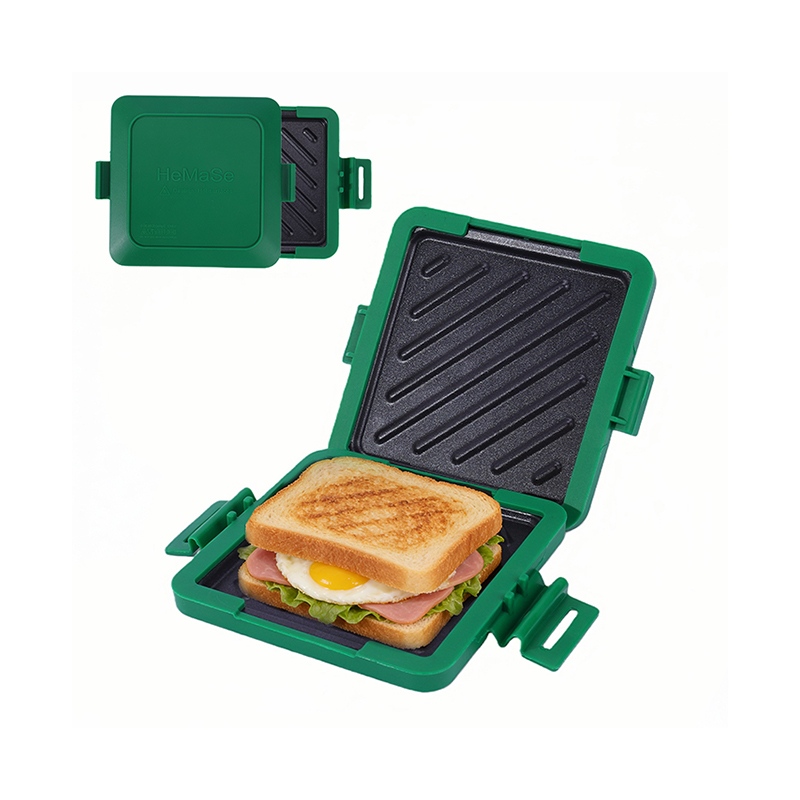
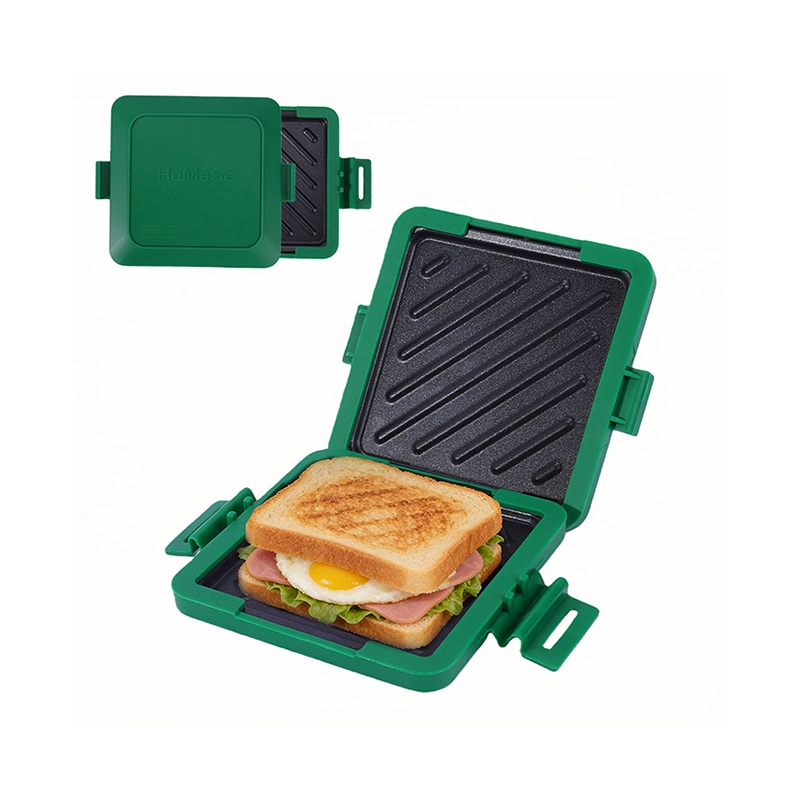
On the HeMaSe clamshell products, the silicone structure does more than add color. It surrounds the metal plate, provides grip areas and supports the closure geometry shown on the current product pages. On a multi-pot, the silicone body or lid can also define the food volume and opening sequence.
The process specification should identify the approved silicone material and color system, mold revision, part orientation, critical fit zones and the finish expected after trimming. Define where flash, bubbles, contamination, short fill or color variation become unacceptable. Do not rely on a single phrase such as "food-grade silicone" to control any of those conditions.
Dimensional inspection should focus on function. Check the groove or pocket that holds the metal part, the buckle or latch geometry, hinge movement where applicable, lid seating and the user's grip. A dimension that looks minor on an isolated silicone part can decide whether the assembled plates remain parallel.
The existing silicone microwave-safety article covers material questions for readers. Manufacturing control goes further: the factory must keep the approved material, pigment, molded geometry and finished assembly connected to the same revision.
Assembly is where separate tolerances meet
A coated plate can pass its own inspection and a silicone housing can pass its drawing, yet the assembled pan can still twist, rub or close unevenly. Assembly approval therefore needs finished-unit checks rather than a stack of component reports.
Define the order in which components are fitted and any orientation marks, fixtures or tools used. Inspect plate seating, movement between materials, coating contact with the fixture, edge exposure, closure engagement and the open and closed positions. For detachable designs, add removal, reassembly and incorrect-orientation checks.
We do not treat forced assembly as a normal correction. If an operator must bend a plate, stretch a frame or select parts by trial and error, the process is sorting variation instead of controlling it. Record the mismatch and return to the relevant component or tooling step.
Quality control should release stages, not merely find defects at the end
Final inspection has limited power. It can see a scratch or a missing part, but it may not reveal the wrong primer, an undocumented silicone change or a cure record that belongs to another batch. Place quality gates where the team can still identify and correct the source.
Match material identity, supplier documents, color or batch reference and the approved specification before use.
Release first-off parts, monitor selected process and product characteristics, and contain deviations at the operation that created them.
Confirm assembly, appearance, function, labeling, accessories and packaging against the order revision before shipment.
For EU food-contact materials, Commission Regulation (EC) No 2023/2006 on good manufacturing practice requires an effective documented quality-assurance system, starting materials that meet pre-established specifications, operations carried out to pre-established instructions, an effective quality-control system and appropriate records. The regulation provides a useful discipline for the manufacturing file even when the project also needs material-specific or national compliance work.
The HeMaSe category page lists temperature testing, appearance, coating adhesion, structural stability and packaging inspection as its quality-control areas. Those are company-published categories. The model-specific method, sample status and acceptance limit should be agreed in the order file rather than inferred from the category wording.
The microwave grill pan testing guide covers development validation and claim evidence. The quality inspection checklist covers routine controls. Manufacturing connects the two by defining which approved characteristics each operation must preserve.
Packaging is the final manufacturing operation
The product can leave assembly in good condition and arrive with rubbed coating, distorted silicone or missing instructions if pack-out is treated as an afterthought. The packaging specification should control contact points, orientation, accessories, closure state, stacking and the way the consumer first removes the pan.
Artwork is also product control. The model name, images, included parts, microwave mode, cleaning method, warnings and market claims must match the item inside. A packaging revision can therefore require technical review even when the box dimensions do not change.
Keep product protection and retail presentation as separate questions. A gift box can look good but let the upper and lower plates rub. A compact pack can reduce empty space but leave the closure under permanent stress. The OEM microwave grill pan packaging guide explains how to build the pack around product protection, claims and channel needs.
Which custom changes reopen manufacturing approval?
Customization should be classified by what it changes in the process. The commercial description "small change" is not enough. A new silicone color may keep the mold but change the pigment system and appearance standard. A new grill pattern can reopen the tool, coating access, food trial and cleaning method.
| Requested change | Likely manufacturing effect | Approval that may reopen | Record to update |
|---|---|---|---|
| Packaging artwork only | No part geometry change, but claims or instructions may change | Technical copy, regulatory review and pack-out | Artwork revision and approved claim matrix |
| Logo on an existing non-contact area | Adds or changes a decoration operation | Placement, adhesion, wear and applicable material review | Decoration drawing, ink or process reference and limit sample |
| Silicone color | May change pigment, mixing and visual inspection | Material documentation, color sample and any applicable finished-article evidence | Material list, color standard and batch traceability |
| New cooking-surface pattern | Changes tool geometry, coating coverage, contact and cleaning | Tool sample, food trial, coating and cleanability | Part drawing, tool revision and validation file |
| Different coating system | Changes surface preparation, layers, application or cure | Appearance, adhesion, release, wear and food-contact basis | Coating specification, process sheet and reports |
| New closure or lid | Changes molding, assembly and user handling | Fit, opening, steam or liquid path and misuse cases | Assembly drawing, instructions and test plan |
| Larger or deeper product | Can change metal and silicone tooling, cavity fit and packaging | Full dimensional, microwave, food, handling and transport review | New model or clearly separated major revision |
Change control should name who can propose a substitution, what documents must accompany it and who gives written approval. An urgent material purchase does not make an unapproved change equivalent to the golden sample.
The manufacturing route changes with the HeMaSe format
HeMaSe's current range shows why one process sheet cannot cover every microwave grill pan. The shared sequence remains design, tooling, parts, coating where applicable, molding, assembly and pack-out. The control points shift with the product geometry.
| Current HeMaSe format | Published construction feature | Manufacturing focus | Product page |
|---|---|---|---|
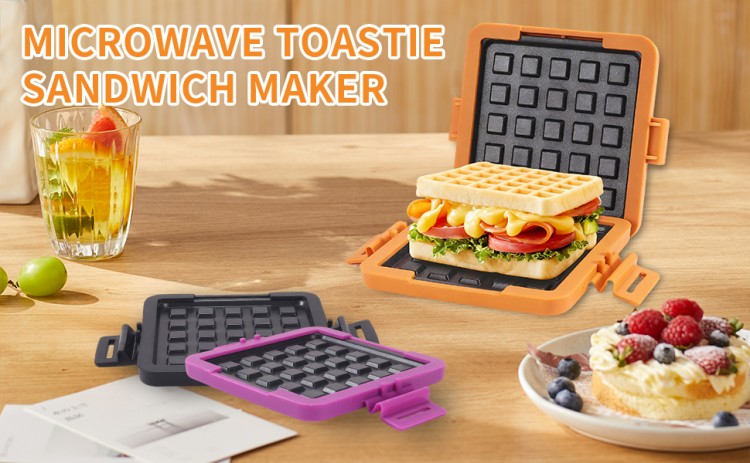
| Square clamshell tray | Two wave-pattern cooking faces within a silicone closure structure | Plate pairing, active-area alignment, closed position and perimeter fit | Square Microwave Toaster Grill Tray |
| Quick Cooking tray | Wave-pattern plates and four side closure points | Four buckle positions, plate seating, closure consistency and coating protection during assembly | Quick Cooking Microwave Toaster Grill Tray |
| Waffle tray | Grid-pattern food-contact face | Repeated grid definition, coating access at intersections and trimming or assembly without surface damage | Waffles Microwave Toaster Grill Tray |
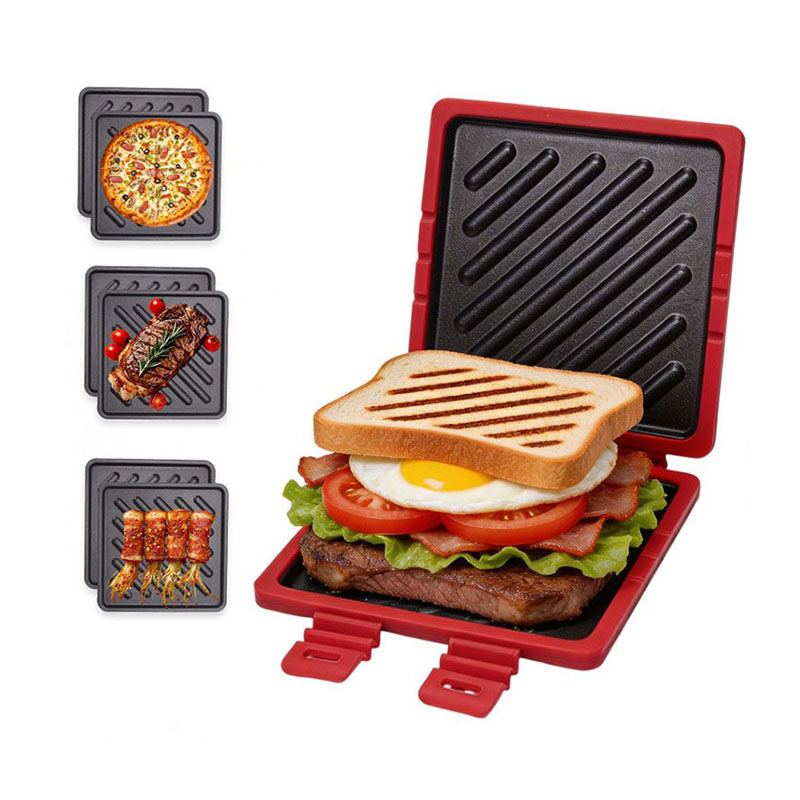
| 3-in-1 tray | Detachable patterned plates | Part identification, interchangeable fit, orientation and complete pack-out | 3-in-1 Microwave Toaster Grill Tray |
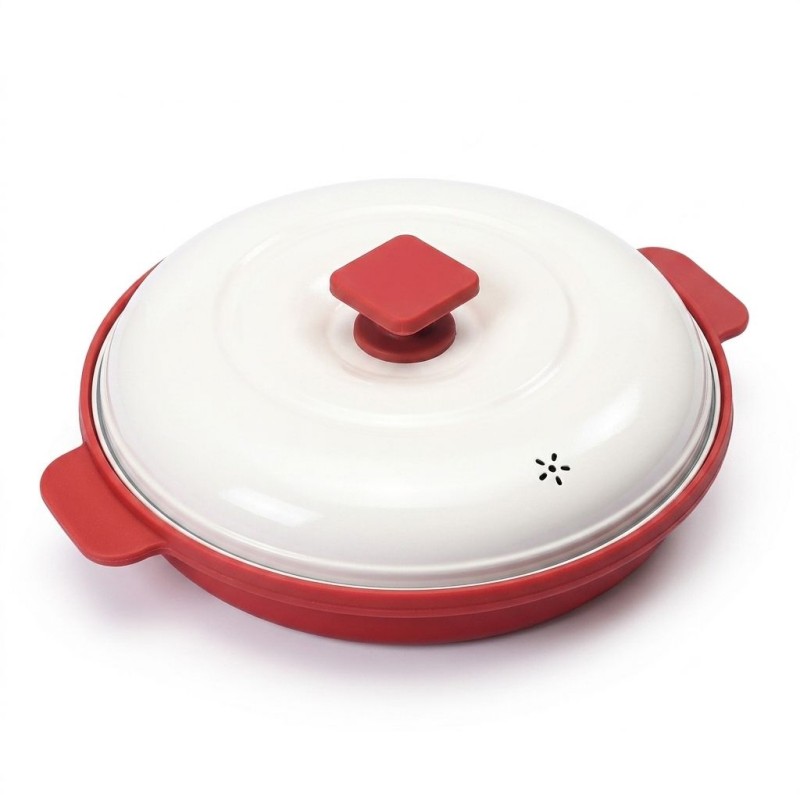
| Microwave Grill Multi-Pot | Deep body, lid and corrugated base described on the current page | Body form, lid seating, base assembly, steam path and access for cleaning | Healthy Low Oil Microwave Multi-Cook Grill Pot |
The mass-production handoff file
Mass production should not begin from an email thread and a couriered sample. The physical sample helps, but it cannot reveal a hidden coating layer, silicone grade, cure instruction or a change that was approved for appearance only.
Production-release file
- Released assembly and part drawings use one current revision.
- Bill of materials identifies controlled suppliers, material references, colors and applicable documents.
- Tool list and tool revisions match the approved samples.
- Process flow identifies each operation, owner and hold point.
- Coating and silicone process specifications link to the selected model.
- Inspection plan defines the characteristic, method, frequency, sample status and acceptance rule.
- Development and compliance reports identify the product revision they cover.
- Golden sample and appearance limits are signed and stored under controlled conditions.
- Artwork, instructions, accessories and pack-out configuration match the final product.
- Nonconforming-product, corrective-action and change-approval routes are assigned.
- Batch or lot records can connect incoming materials, production and finished shipment.
US food-contact review also depends on traceable identity. The FDA explains that the regulatory status of a food-contact material depends on the individual substances, their specifications and conditions of use. An effective Food Contact Notification can be specific to its manufacturer. A substitution therefore needs regulatory review as well as a purchasing decision.
If a buyer wants to assess how a supplier controls this handoff, the microwave grill pan manufacturer guide provides the factory-review questions. The manufacturing process article you are reading owns a different task: it shows what must travel from one operation to the next after the supplier is selected.
Frequently asked questions
How is a microwave grill pan manufactured?
HeMaSe's current category page lists product design, mold development, die casting, surface coating, silicone molding, assembly, packaging and final inspection. The exact route varies by model. A clamshell tray, detachable set and deep multi-pot need different tools, parts and assembly controls.
Is every microwave grill pan die cast?
No universal forming method applies to every product. HeMaSe lists die casting in its Microwave Toaster Grill Tray process, but the brand should confirm the actual substrate and metal-forming route for the selected model. The drawing and order file should identify that construction.
When should a brand approve the golden sample?
Approve the golden sample after the materials, tooling, coating, silicone, assembly, appearance, function, compliance evidence, instructions and packaging revision are accepted. Link the physical sample to the same document revision used for production.
What can be customized without changing the tool?
Packaging artwork or a logo on an established decoration area may avoid a new product tool, depending on the chosen process. Color, coating, decoration and claims still need their own review. A new plate pattern, closure, size or food-contact geometry normally reopens tooling and validation.
Why does coating approval happen after metal preparation?
The coating bonds to the prepared substrate, so metal surface condition, texture, edges and cleanliness affect the finished system. Approving a topcoat name or color without the substrate and preparation route leaves a gap in the manufacturing specification.
What manufacturing records should a buyer request?
Request the released drawings, bill of materials, tool revisions, process flow, material and coating references, inspection plan, applicable compliance documents, golden-sample record, packaging revision, change-control procedure and batch traceability agreed for the order.
Evidence note
The eight-stage route and product-format descriptions come from the linked current HeMaSe pages. They are company-published process information, not independent proof of production performance. The documentation and material-control discussion uses the current consolidated EU food-contact GMP regulation and current FDA food-contact component guidance. Exact model processes, reports and acceptance limits should be confirmed in the order file before publication or production.
HeMaSe OEM product development
Define the process before requesting the production sample
Send HeMaSe the target model, food load, destination market, preferred materials, color and branding, packaging channel and proposed claims. We can use that brief to separate existing-product changes from new tooling and identify the drawings, samples and approvals needed before mass production.
Discuss an OEM Microwave Grill Pan