

A microwave grill pan is not one material shaped into a tray. It is a material system: a cooking surface, a metal substrate, a microwave-responsive layer, an outer structure and the interfaces that hold them together. For a brand, the purchase risk sits in those interfaces. A supplier can name silicone and aluminum on a quotation and still leave the important questions unanswered.
Do not ask only, "What is the microwave grill pan made of?" Specify what each layer must do, which surfaces touch food, the intended food and microwave mode, the destination market, cleaning conditions and the evidence required for the finished article. The best material choice depends on the product format. A shallow sandwich press and a lidded multi-pot place different demands on the plate, coating, silicone parts and closure.
Why is a microwave grill pan a material system?
Ordinary microwave-safe cookware tries to stay relatively transparent to microwave energy while the food heats. A microwave grill pan adds another job: a designed part absorbs or responds to that energy and becomes a hot contact surface. This is why a product can contain metal without behaving like a loose metal plate placed in an oven. Geometry, shielding, layer continuity and the manufacturer's operating instructions all belong to the design.
The material list alone cannot explain that design. "Silicone + aluminum" says nothing about which side touches food, whether the aluminum is coated, what lies behind the plate, how an edge is enclosed, or which microwave mode the product is designed for. Those missing details affect performance, cleaning, durability and the compliance file.
For brands, this distinction prevents an expensive category mistake. A raw-material declaration may support one component, yet the item sold to the consumer is the assembled pan. The assembled pan has food-contact surfaces, seams, edges, adhesives or coatings, and instructions that create its actual conditions of use.
What does each material layer do?
The exact construction varies by model. The stack below is a specification map, not a claim that every microwave grill pan uses five separate physical layers.
| Part of the system | Product decision | Evidence question | Commonly missed detail |
|---|---|---|---|
| Cooking surface | Flat, ridged, waffle or other pattern; release and cleanability requirements | What is the complete coating system, and for which food-contact conditions is it supported? | A coating name without substrate preparation, cure conditions or permitted use |
| Metal plate | Material family, shape, formed depth and edge design | Does the supplied plate match the approved drawing and material declaration? | Using "aluminum" as though it identified alloy, thickness and finish |
| Responsive layer | Location, coverage pattern and protection from moisture or abrasion | How is the layer controlled and checked in the finished pan? | Describing the layer only as "high efficiency" |
| Silicone parts | Handle, frame, buckle, lid or body function | Which grade and color system are used, and which surfaces contact food? | Treating every red component as the same formulation |
| Joint or edge | Mechanical retention, bonding and cleanable geometry | Can the buyer inspect exposed edges, gaps or movement after agreed use cycles? | Approving parts separately without reviewing their assembled interface |
| Marking and decoration | Logo location, color, printing or molded branding | Is the decoration on a food-contact or non-food-contact side, and is that placement controlled? | Adding a logo after compliance review without change assessment |
Do different pan formats need different material priorities?
Yes. Product shape changes the work assigned to each material. A specification copied from one format to another often preserves the nouns but loses the engineering logic.
Shallow single tray
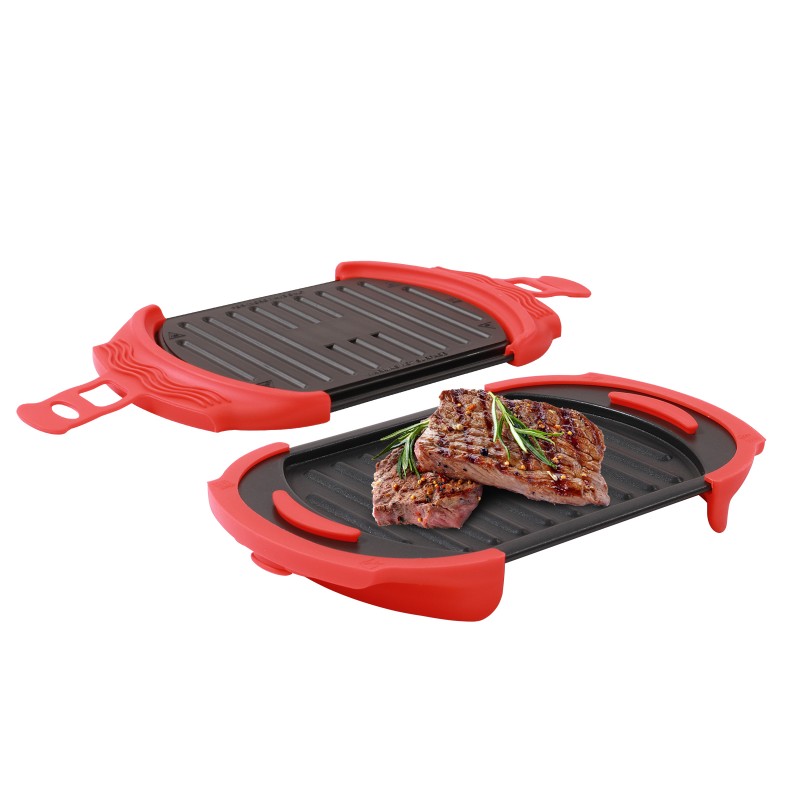
Usable plate area, edge enclosure and a stable flat contact face dominate. The food load is usually exposed, so moisture management depends heavily on surface pattern and loading.
Clamshell press
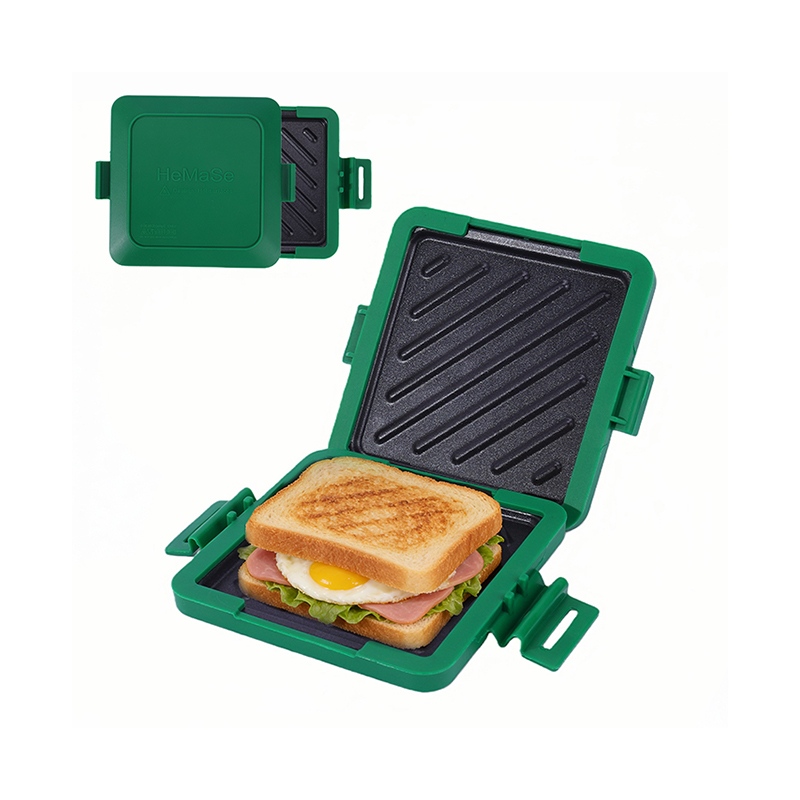
Two active faces must meet the food predictably. Hinge or buckle geometry, silicone flexibility and pressure distribution matter alongside the plate and coating.
Lidded multi-pot
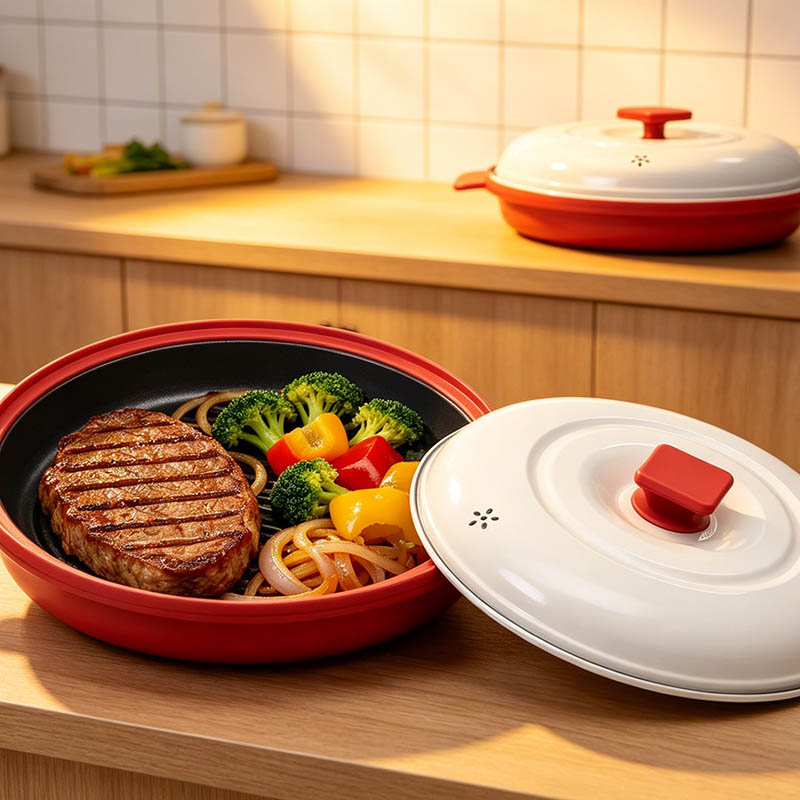
Depth, sidewall, lid behavior and steam path enter the design. The base may support browning while the pot body manages volume and containment.
This is visible in HeMaSe's current range. The Quick Cooking Microwave Toaster Grill Tray is described as a locking format with four symmetrical buckles and two cooking faces. The Food Grade Microwave Multi Cook Grill Pot is described with a weighted lid and a side pressure-relief feature. Those forms should not share a generic material specification simply because both belong to microwave cookware.
Why are "food grade silicone" and "non-stick coating" not complete specifications?
Both phrases describe categories, not a finished compliance position. The same broad material family can contain different formulations, colors, additives and processing histories. It may also be used on different sides of the product under different temperatures, foods and contact times.
FDA guidance for US food-contact materials makes this practical point in regulatory language: the status of a component depends on the identity of the substance, its specifications and the limitations on its conditions of use. An effective Food Contact Substance Notification may also apply only to the named manufacturer and conditions in that notification. A buyer should therefore ask for the basis that applies to the actual supplied material, not accept a screenshot for a vaguely similar resin or coating.
The EU framework takes a different legal route but reaches the same purchasing lesson. Regulation (EC) No 1935/2004 sets general safety and inertness principles for food-contact materials, while specific EU measures cover selected material groups. Because mixed cookware can include silicone, metal, coatings and polymeric parts, the compliance map may involve both EU and national requirements. "EU compliant" without a mapped basis is too broad for product approval.
How should a brand write a microwave grill pan material specification?
Start with the use case, then build the material requirements around it. In development discussions, a request such as "red silicone microwave grill pan" is not enough to hold the product stable across sampling, testing and mass production.
- Define the product format. State whether the concept is a single tray, clamshell press, lidded pot or another structure. Attach a drawing or identify the existing HeMaSe model under review.
- Define the appliance mode. Separate ordinary microwave mode from an appliance's grill or convection functions. A pan approved for one operating mode should not be assumed suitable for another.
- Describe the food load. Record representative foods, starting condition, portion shape, mass range, fat or acid exposure and whether the product touches one or two heated faces.
- Map food-contact surfaces. Mark the cooking face, sidewalls, lid, gasket, decorative zones and any area that may reasonably contact food during normal use.
- Specify each material by function. Identify the cooking-surface system, substrate family, responsive layer, silicone components, pigments, bonds and decorations separately.
- Set appearance and mechanical checkpoints. Color reference, surface finish, plate flatness, closure feel, edge coverage and part alignment need agreed references. Numeric tolerances should come from an approved drawing, not from a blog article.
- Define cleaning and misuse boundaries. State the intended cleaning method, permitted utensils, empty-heating restriction and inspection or replacement instructions.
- Attach the destination-market evidence plan. Agree which documents, samples and finished-article tests must be available before approval.
Food type belongs in the engineering brief. Peer-reviewed work on microwave susceptors has shown that food moisture, dimensions and initial conditions affect interface temperatures. That study used thin-film commercial susceptors and dough products, so its measured temperatures do not describe a reusable HeMaSe pan. It does support a narrow design rule: test with a defined load rather than treating an empty or arbitrary trial as representative.
Which material and compliance documents should buyers request?
The document set should follow the product and destination market. It is not a contest to collect the most logos. A useful file lets a reviewer connect a specific component or finished article to an intended use.
| Record | What it should identify | Why the buyer needs it | Review question |
|---|---|---|---|
| Controlled bill of materials | Material family and supplier reference for each relevant part | Connects the approved sample to production inputs | Does the revision match the model ordered? |
| Material declaration or guaranty | Supplier, grade or formulation reference, intended food-contact use and restrictions | Shows the stated basis for the actual input | Does it cover the color and conditions used here? |
| Coating system record | Coating supplier, system reference, application side and substrate | Prevents "non-stick" from becoming an unidentified black box | Are primer, topcoat and process treated as one controlled system? |
| Finished-article test report | Exact sample, method, simulant or food, time, temperature and result | Tests the product as sold under defined conditions | Is the report relevant to the destination market and intended use? |
| Drawing and approved sample | Geometry, contact zones, closures, appearance and revision | Gives inspection a physical and dimensional reference | Can production changes be seen and traced? |
| Instructions and warnings | Microwave mode, loading, handling, cleaning and stop-use conditions | Defines foreseeable use and communicates limits | Do claims and test conditions agree with the instructions? |
| Change-control record | Changes to material source, formula, color, coating, process or geometry | Prevents an approved sample from drifting silently | Which changes require buyer notice or re-evaluation? |
EU good manufacturing practice rules give this documentation a firm business purpose. Regulation (EC) No 2023/2006 calls for pre-established specifications for starting materials, documented procedures and records relevant to the compliance and safety of the finished material or article. For a brand, a controlled document chain is more useful than a sales claim that the factory "uses food-grade materials."
How should a sample represent mass production?
A beautiful sample is weak evidence if no one can identify its material revision. Mark the sample with a code, date or approval record that connects it to the drawing, bill of materials, coating system and color reference. Keep a sealed reference sample on both sides of the transaction when practical.
Then decide what must remain unchanged. A substitute pigment can affect a silicone declaration. A different coating supplier changes the evidence chain. A small geometry change can alter closure pressure or expose an edge. None of these changes is automatically unacceptable, but they should not happen without review.
Sample approval record
- Product model, drawing number and revision are identified.
- Material references for every relevant layer match the document pack.
- Food-contact and non-food-contact surfaces are marked.
- Color, finish, closure and visible edge conditions have reference photos.
- Trial load, microwave mode and inspection sequence are recorded.
- Any open compliance question has an owner and completion point.
- Changes that trigger buyer notification are written into the agreement.
Which material failures deserve attention during development?
The table below is a design-review list. It does not claim that these defects occurred in HeMaSe production. Its purpose is to make sample discussions observable.
| Observed condition | Material or interface to inspect | Why it matters | Useful record |
|---|---|---|---|
| Coating scratch, blister or peeling | Cooking face, substrate preparation, edge and cleaning tools | Food release and contact surface have changed | Close-up photo, location map, sample ID and use history |
| Plate warping or poor face contact | Metal substrate, formed geometry and assembly | Contact pressure and heating pattern may no longer match the design | Flatness check against approved drawing and reference sample |
| Buckle no longer closes consistently | Silicone formulation, geometry, hinge area and alignment | The two faces may meet unevenly or open during use | Closure inspection with the defined load and conditioning history |
| Responsive layer shows a crack or exposed area | Layer coverage, edge protection and bond to the plate | The energy-converting structure may have changed | Stop-use disposition, photo and supplier analysis |
| Gap traps food or cleaning water | Joint design, edge enclosure and part movement | Cleanability and material durability need review | Post-cleaning inspection under the specified method |
| Unexpected odor or color transfer | Silicone, pigment, coating, adhesive and cleaning residue | The approved material or process may not match the sample | Lot trace, controlled comparison and appropriate laboratory assessment |
| Uneven browning in a defined trial | Plate contact, responsive-layer coverage, food geometry and microwave conditions | The failure may come from the load or test method as well as the material | Load map, appliance, mode, sequence and result photos |
A factory team should not jump from a symptom to a material replacement. If one corner browns less, first check food thickness, face contact, placement and the test record. Changing the conductive layer before controlling those variables can create a second problem while leaving the first unexplained.
How do current HeMaSe material descriptions differ by model?
HeMaSe's public pages show why model-specific language matters. The company currently describes the quick-cooking tray as silicone, polymer and aluminum plate. The square tray page identifies a wave-pattern cooking surface, non-stick coating, silicone handles and a heat-conductive polymer base. Multi-pot pages identify silicone with aluminized steel and show a deeper vessel with a lid.
These descriptions are a starting point for an OEM discussion. They do not establish the grade, coating system, test scope or regulatory status of the unit a buyer intends to sell. HeMaSe should provide the current records that correspond to the chosen model and agreed configuration during project review.
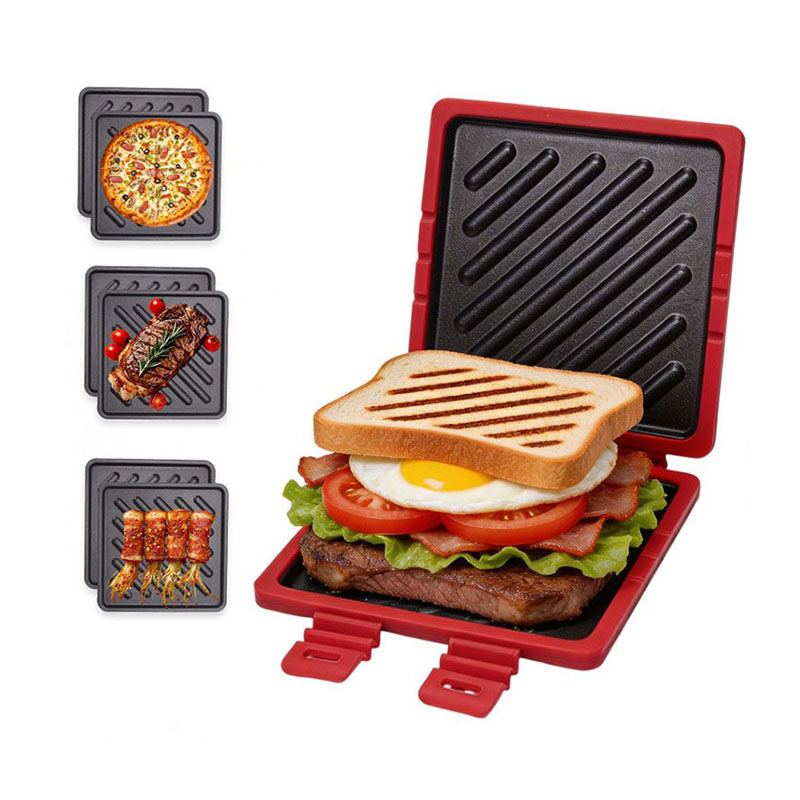
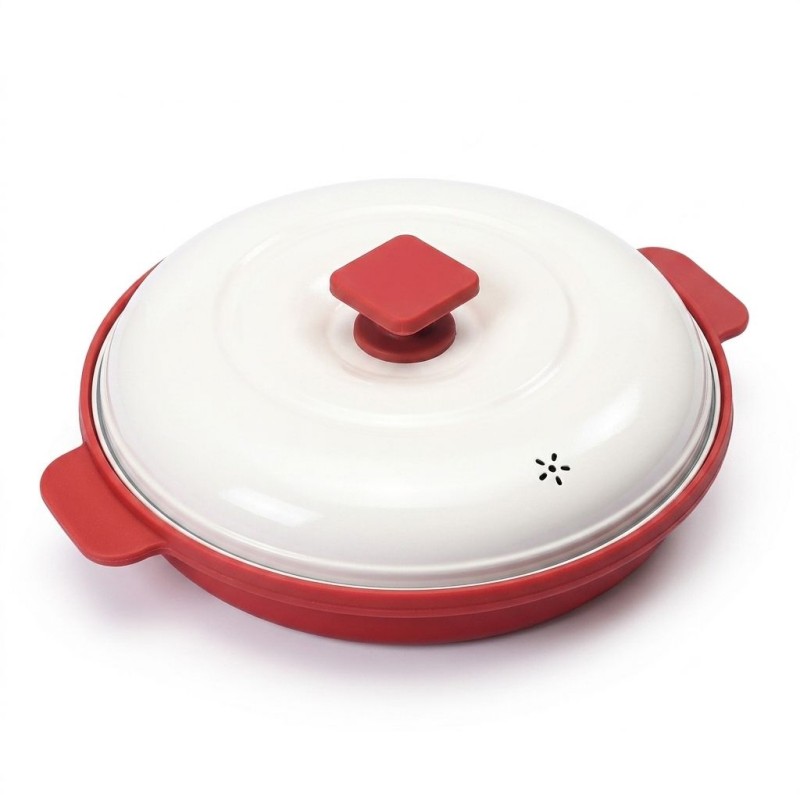
Buyers comparing the broader range can start with the Microwave Toaster Grill Tray category and the microwave grill pan guide. The category shows the available form factors; this page provides the questions needed to specify them.
What should go into the first product-development brief?
The fastest useful inquiry is not the shortest one. Send enough context for the factory to separate an existing model review from a new structure or coating project.
- Destination country or region and the selling channel.
- Selected HeMaSe model or a drawing of the proposed format.
- Representative foods, load range and intended cooking result.
- Microwave operating mode and any appliance restrictions.
- Required cooking-surface pattern, lid, buckle and handle arrangement.
- Brand color, logo location, packaging and instruction language.
- Compliance documents and finished-article tests your reviewer expects.
- Required approval samples and rules for material or supplier changes.
Do not lock a material solely because a competing product uses it. Start with the job and the evidence. The factory can then explain whether an existing square grill tray, a lidded microwave grill pot or a modified structure is the sensible base for review.
Frequently asked questions
What materials are microwave grill pans made of?
Reusable microwave grill pans commonly combine several functional materials rather than one material. Current HeMaSe tray pages identify silicone, a polymer or heat-conductive polymer layer, an aluminum plate and a non-stick cooking surface. Selected multi-pot pages identify silicone and aluminized steel. The exact stack must be confirmed for the chosen model.
Is metal safe in a microwave grill pan?
Metal is not automatically safe in a microwave. A microwave grill pan uses metal as part of a designed assembly with controlled geometry, other layers and model-specific instructions. Buyers should assess the complete product for its intended microwave mode and should not generalize from it to ordinary metal cookware.
Does food-grade silicone prove that the complete pan is compliant?
No. Silicone describes one part of a mixed article. The cooking surface, coating, metal, responsive layer, pigment, joints and finished product also need the appropriate review for the destination market and intended conditions of use.
How should a buyer verify a non-stick coating?
Identify the coating supplier and system reference, the substrate and application side, the supported food-contact conditions and the report that matches the finished article. Also control cure process, appearance, adhesion checks, cleaning instructions and any change of coating source.
Is aluminum better than aluminized steel for a microwave grill pan?
Neither is universally better. The choice depends on the pan format, formed geometry, mass, coating system, edge design and the role of the plate in the complete assembly. HeMaSe's current tray and multi-pot pages use different material descriptions, so compare model-specific drawings and evidence rather than the metal name alone.
Should buyers test raw materials or the finished microwave grill pan?
Both may be relevant. Raw-material records establish the identity and regulatory basis of inputs. Finished-article testing checks the assembled product under defined conditions. The evidence plan should match the destination market, food-contact surfaces, intended foods, time, temperature, cleaning and operating instructions.
Technical sources used
- US FDA: Determining the Regulatory Status of Components of a Food Contact Material
- European Commission: Food Contact Materials Legislation
- EUR-Lex: Commission Regulation (EC) No 2023/2006 on good manufacturing practice
- Czech Journal of Food Sciences: Temperature profiles in dough products during microwave heating with susceptors
HeMaSe product development
Send the material brief with the product photo
Tell HeMaSe the destination market, intended food load, microwave mode, preferred pan format, brand requirements and compliance-document expectations. Our team can use that brief to identify a current model for review or define the open points for a modified product.
Discuss a Microwave Grill Pan Project