

A smooth black cooking face is easy to approve in a sample meeting. The harder question is whether production will use the same substrate preparation, primer, intermediate layer, topcoat and cure schedule, with evidence that matches the market and intended use. That is the real microwave grill pan coating specification.
Approve the coating as a controlled system, not as a color or a supplier trade name. The file should connect the substrate and pretreatment to each coating layer, process and cure controls, finished-article evidence, approved appearance, use instructions and change control. Claims such as non-stick, PFOA-free, PFAS-free, PTFE-free, dishwasher-safe or scratch-resistant need separate definitions and supporting evidence. One claim does not prove the others.
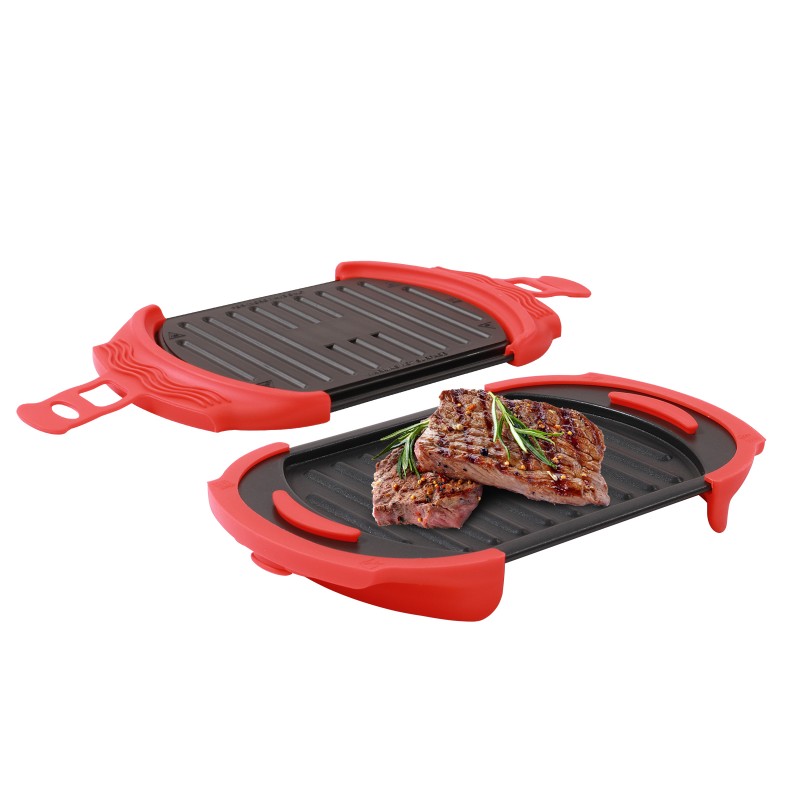
Why is a microwave grill pan coating a complete system?
From the factory side, "food-grade coating" is not a usable specification. It does not identify a chemistry, a formulation, a layer sequence, a substrate, a process window or a condition of use. It also does not tell the buyer which document supports the finished product.
The coating begins before any liquid coating reaches the plate. The metal surface must be clean and prepared for the selected system. The primer has to anchor to that surface. Any intermediate or bonding layer must be compatible with the layers on both sides. The topcoat gives the visible finish and much of the food-release behavior. The complete assembly then needs a defined cure process.
This is a specification map, not a cross-section to scale. The actual layer count and chemistry must come from the approved coating system and product file.
HeMaSe's current Microwave Toaster Grill Tray category page describes its non-stick finish as a three-layer structure of primer, bonding layer and topcoat. That is useful first-party product information. It is not, by itself, the full coating specification or a compliance report. A buyer still needs the exact system reference and evidence for the model being ordered.
This distinction matters when a private-label project changes color, supplier, substrate, cooking pattern or target market. If any part of the approved system changes, the team should decide which documents and validations must be reopened rather than assuming that the word "non-stick" preserves equivalence.
What job must the coating perform on microwave grill cookware?
A microwave grill pan is not an ordinary decorative metal part. Its cooking face is expected to contact food, release it after heating, survive the permitted cleaning method and remain integrated with a heat-responsive plate. Each of those jobs has a different failure mode.
Release
The cooked food should separate under the approved recipe and care method. Release is not the same as scratch resistance or legal compliance.
Coverage
The specified face, grooves, ridge tops and edges need the intended film system without exposed or poorly covered zones.
Adhesion
The cured layers must remain attached to the prepared substrate and to one another under the intended use and cleaning conditions.
Food contact
The complete material combination needs an appropriate regulatory basis and finished-article evidence for its actual conditions of use.
Appearance
Color, gloss, texture, specks and coverage need a signed reference and viewing method, not a verbal promise of "perfect black."
Communication
Instructions must reflect what was validated, including microwave mode, utensils, cleaning, empty-heating restrictions and retirement conditions.
These jobs should not be collapsed into one pass or fail test. A surface can look uniform but have the wrong cure. It can release one food well yet lack evidence for another time and temperature condition. It can pass an initial appearance check but receive a consumer claim that the project never validated.
The microwave grill pan materials guide explains how the cooking face fits into the whole material stack. This article stays with the coating system itself: how to define it, approve it and control what the brand says about it.
PTFE, ceramic, PFOA-free and PFAS-free are not interchangeable
Coating conversations often begin with a retail label instead of a technical definition. That creates risk because the common terms answer different questions.
| Term | What it can describe | What it does not prove | Buyer action |
|---|---|---|---|
| PTFE or fluoropolymer coating | A coating family that uses a fluoropolymer such as PTFE in the system | It does not identify every ingredient, the full layer stack, legal status for a particular use or finished-product performance | Request the exact system identity, layers, conditions of use and supporting documents |
| Ceramic or ceramic-style coating | A commercial description often associated with sol-gel-derived cookware finishes | The word alone does not establish composition, durability, food-contact status or the absence of every fluorinated substance | Replace the label with a supplier specification and a precise claim definition |
| PFOA-free | A claim about perfluorooctanoic acid under a defined evidence basis | It does not mean PTFE-free, fluorine-free or PFAS-free | Define the test or documentation behind the claim and the point in production it covers |
| PFAS-free | A broad claim whose scope depends on the definition, market and evidence used | It cannot be inferred from a PFOA-free document or from a generic "ceramic" description | Have the legal and technical teams define the substances, threshold, method and market before artwork approval |
| Non-stick | An expected food-release property under stated cooking and care conditions | It does not prove a chemistry, lifetime, scratch resistance, dishwasher safety or regulatory compliance | Create a repeatable release method using representative foods and an agreed sample condition |
The current HeMaSe public pages describe a non-stick, multilayer cooking surface, but they do not establish one exact chemistry for every listed model. A buyer should therefore confirm the coating reference for the selected model and order instead of copying a chemistry claim from a general article into packaging.
How does intended use change the coating evidence?
Food-contact review is tied to use. The relevant questions include the foods that touch the surface, contact time, temperature, repeated-use pattern and whether water, fat or acidic ingredients are involved. A report that covers one simulant and one exposure condition may not answer a different product brief.
The US rule for resinous and polymeric coatings, 21 CFR 175.300, describes prescribed uses and extraction conditions related to food type and time-temperature conditions. It does not create a general-purpose "FDA-certified coating" label. The FDA also explains that the regulatory status of a food-contact material depends on its individual components, specifications and limitations or conditions of use. A Food Contact Notification can be specific to a manufacturer and use.
For a microwave grill pan coating, the brand should give the compliance reviewer a real use case rather than the word "cookware." The input should name the product format, representative foods, microwave mode, expected contact sequence, cleaning instructions and destination market. If the consumer instructions prohibit grill, convection, oven or open-flame use, the evidence and artwork should not imply those modes.
HeMaSe's current Quick Cooking Microwave Toaster Grill Tray page states microwave mode only and warns against sharp tools and prolonged empty heating. Those points belong in a model-specific approval discussion. They should not be silently replaced by more aggressive use claims for retail appeal.
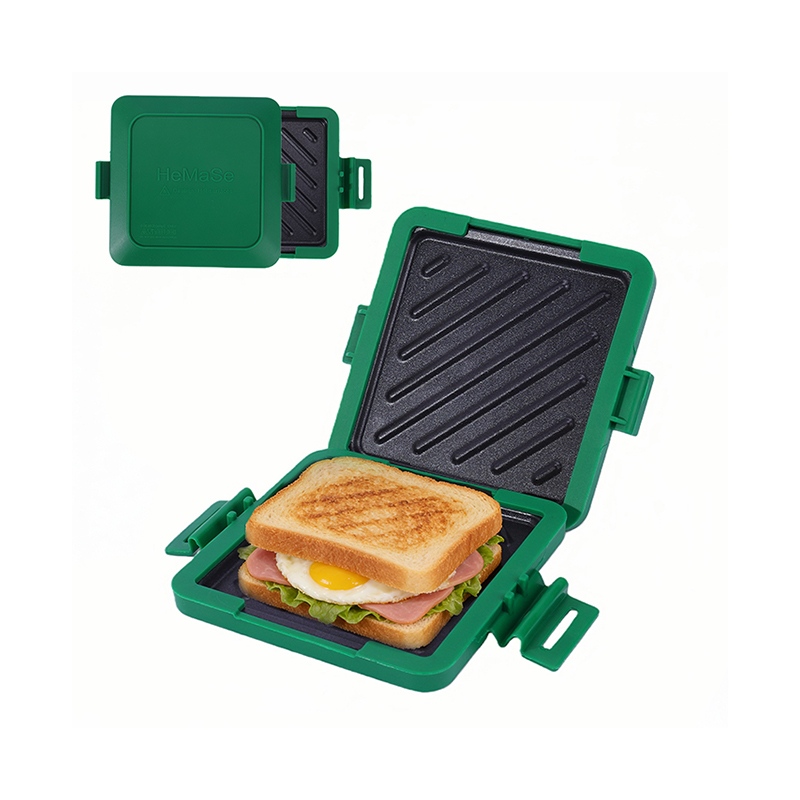
What changes when the destination market is the US or EU?
The destination market should be fixed before the document pack is approved. In the US, a buyer needs to establish the regulatory basis for each component and confirm that restrictions and conditions of use cover the finished application. A supplier declaration or test report must be read together with the identity of the coating system and the manufactured article it represents.
In the EU, Regulation (EC) No 1935/2004 provides the general framework for food-contact materials. The European Commission notes that specific EU measures exist for some material groups, while national provisions can remain relevant where a harmonized specific measure does not exist. The coating file therefore needs a market-aware review rather than a certificate nickname.
The current EU framework also includes Regulation (EU) 2024/3190 on BPA and other bisphenols in certain food-contact materials, including varnishes and coatings. The measure has transitional details and was corrected in 2026. A brand should have the actual coating system and order timing checked against the current text instead of turning it into a blanket "BPA-free by law" sentence.
For Germany, BfR Recommendation LI covers temperature-resistant polymer coating systems for frying, cooking and baking utensils. It discusses finished articles and migration test conditions for defined coating families. It is a recommendation, not a universal "LFGB certificate." The correct evidence route still depends on the coating and intended market.
Where does coating failure usually begin?
Flat center areas are easy to see and easy to spray. A product team should spend more time on transitions: ridge tops, deep corners, the perimeter, cut or formed edges, holes, contact points between stacked parts and the interface between the coated plate and surrounding components.
These are investigation zones, not a list of predetermined defects. A chip near an edge might come from weak coverage, handling impact or part-to-part contact. A dull patch might reflect abrasion, residue or a cure issue. The team should preserve the sample, photograph the location and trace the process before assigning a cause.
| Observed symptom | Possible questions | What to record | Containment or next check |
|---|---|---|---|
| Edge chip or exposed point | Was the edge prepared and covered? Did the part contact a rack, fixture, buckle or another plate? | Exact location, batch, rack position, assembly state and packaging contact | Isolate affected stock and compare coating, handling and assembly records |
| Patchy gloss or color | Is it application variation, cure variation, contamination or an appearance-only difference? | Approved limit sample, viewing light, lot, line and cure record | Separate appearance review from functional and compliance conclusions |
| Peeling or flaking | Did separation occur at the substrate, between layers or after mechanical damage? | Failure face, use history, cleaning tools, food load and heating sequence | Stop claim decisions and investigate surface preparation, layer compatibility and cure |
| Early loss of release | Is there residue, abrasion, recipe variation or a coating change? | Food, oil, cycle, utensil, cleaning method and sample history | Clean by the approved method, compare controls and review the system revision |
| Marks on ridge tops | Are the highest points contacting tools, stacked parts or the opposing plate? | Pattern location, assembly clearance and transport or pack-out contact | Check both coating coverage and mechanical contact before changing chemistry |
| Damage near the silicone interface | Did coating, molding or assembly create contact or contamination at the boundary? | Process sequence, masking or overmolding area and part movement | Review the assembled interface, not the coated plate alone |
The microwave grill pan design guide covers how ridges, closure and food clearance affect the assembled product. For coating approval, those same features define where coverage, abrasion and cleanability deserve closer inspection.
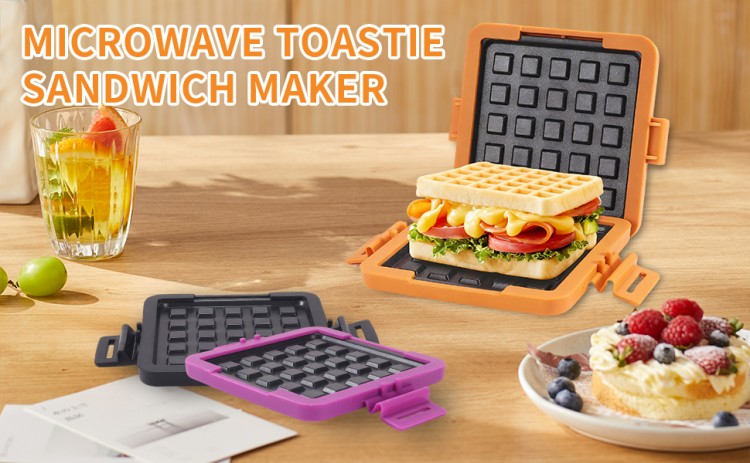
Why is one scratch test not enough?
Coating performance has several dimensions. Adhesion, abrasion, food release, staining, chemical exposure and repeated cleaning are different questions. A single scratch with an unnamed tool cannot represent all of them, and a pass cannot support a broad lifetime claim.
A 2022 peer-reviewed study compared several adhesion and degradation methods on four industrial non-stick coating systems. The methods did not distinguish the systems in the same way. That work does not select a test for every microwave grill pan, but it supports a sound approval principle: the method and failure criterion must match the question being asked.
A NIST study of two commercially available nanoceramic cookware products examined washing, scouring, scratching, abrasion and migration. Aggressive use changed the release behavior compared with fresh material, and the two products did not behave identically. Those products were not HeMaSe microwave grill pans. The useful lesson is that wear state and consumer care conditions belong in the evidence plan.
Build a test matrix from the real claim and risk:
- For adhesion: define the method, sample preparation, location, conditioning and acceptance rule.
- For abrasion: define the tool, load, motion, medium, cycles and endpoint. A cycle number without the rest is not comparable.
- For food release: define the food, recipe, oil, starting condition, heating sequence, cooling and removal method.
- For cleaning: use only the detergents, pads, dishwasher conditions or hand-washing methods the instructions will permit.
- For food contact: use an accredited laboratory and a protocol appropriate to the market, material and intended use.
After testing, inspect the whole assembly. A coating result may be acceptable while a buckle, silicone frame or interface has changed. A microwave cookware approval cannot stop at the center of the plate.
What coating information does HeMaSe currently publish?
HeMaSe's current category page identifies a three-layer non-stick coating described as primer, bonding layer and topcoat. It also lists die casting, surface coating, silicone molding, assembly and final inspection as stages in the product route. The Square Microwave Toaster Grill Tray page describes multiple-layer electrostatic spraying and high-temperature curing. These statements give a buyer a useful starting point for technical discussion.
They do not replace the order file. The public pages do not establish the exact chemistry, formulation code, cure window, film specification or current product-specific compliance status for every model. HeMaSe and the buyer should confirm those items against the selected construction, destination market and approved order documents.
The visible range also shows why one coating statement cannot stand alone. A wave-pattern clamshell, a waffle grid and a deeper multi-pot present different geometries and cleaning access. The same coating family, if proposed across several forms, still needs model-level review at ridges, corners, edges and interfaces.
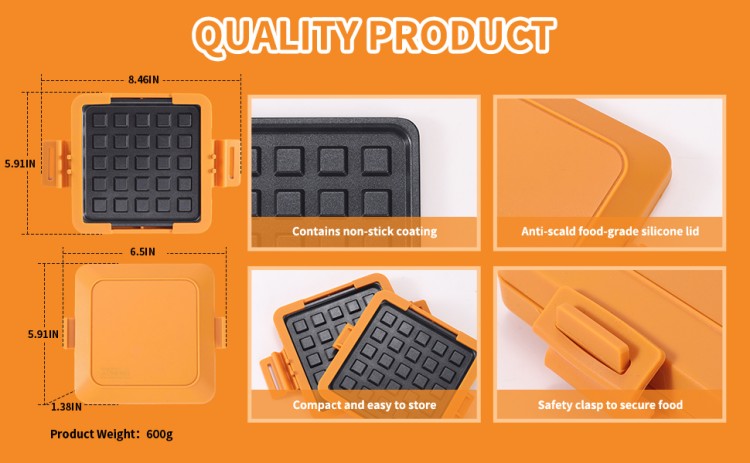
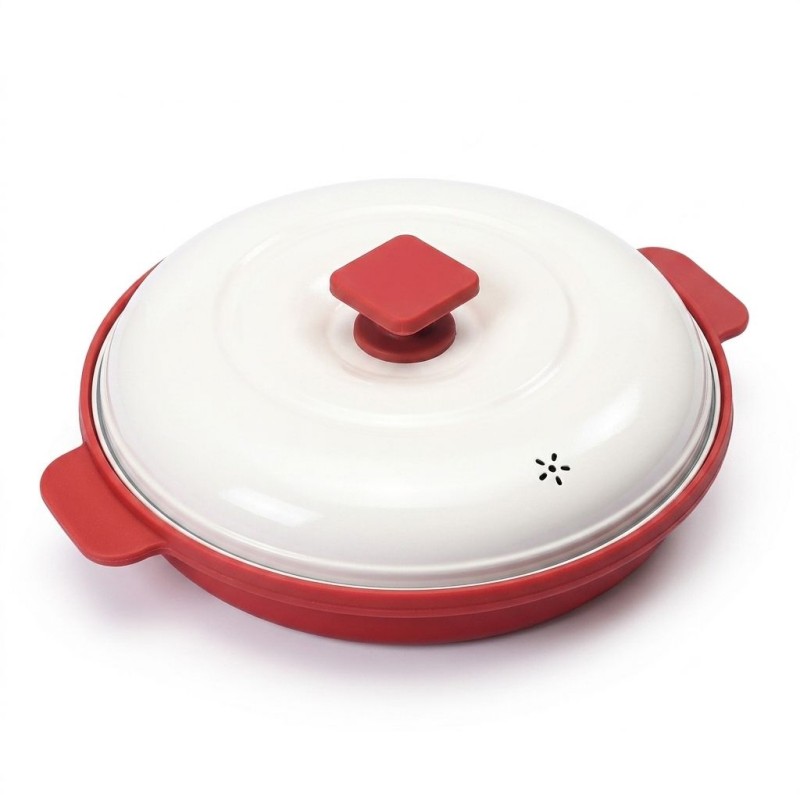
For a buyer comparing available forms, start with the microwave grill pan range. For the relationship between substrate, heat-responsive layer, cooking face and silicone structure, use the materials specification guide. The coating record should refer back to both the selected model and its approved material revision.
What belongs in a coating approval pack?
The best approval pack is not the thickest. It is the one that lets the brand, factory and compliance reviewer identify the same coating on the same product under the same conditions. Start with traceability and remove ambiguous labels.
Microwave grill pan coating approval checklist
- Finished-product model, drawing revision and destination market are identified.
- Substrate grade or specification and surface-preparation route are controlled.
- Coating supplier, system reference, color and each required layer are recorded.
- Application method and relevant process parameters are held in the factory specification.
- Cure controls and the record used to release each production batch are defined.
- Approved visual sample and limits for color, gloss, texture, specks and edge coverage are signed.
- Food-contact declarations and reports identify the sample, market, method and conditions of use.
- Functional tests state their method, conditioning, locations, acceptance rule and sample history.
- Consumer instructions match the validated microwave mode, tools, cleaning and misuse restrictions.
- Artwork claims are listed separately with an evidence owner and approval status.
- Change control names the coating, supplier, layer, substrate, process and color changes that need buyer review.
- The retained sample and production trace code can be connected to the shipped batch.
A material safety data sheet can be useful for workplace handling, but it is not automatically proof that the finished pan complies with food-contact rules. Likewise, a coating supplier's general declaration may not identify the substrate, cure or finished article. Keep each document in its proper role.
When reviewing a microwave grill pan manufacturer, ask how the production order is locked to the approved coating system and how a substitution would be communicated. That is more revealing than asking whether the factory can provide "all certificates."
How should coating claims be controlled before packaging?
Marketing language can expand faster than the evidence. The safest point to control it is before the artwork is translated or spread across marketplaces. Create one claim matrix for the exact model and destination market.
| Proposed claim | Approval question | Evidence needed before use |
|---|---|---|
| Non-stick | With which foods, recipe, oil, heating and cleaning conditions? | Defined release method, representative samples and an acceptance rule |
| Food-contact compliant | Which market, regulation, coating revision and conditions of use? | Regulatory basis plus finished-article or applicable supporting documentation reviewed for the product |
| PFOA-free | What is the scope and evidence point? | Supplier or test evidence tied to the approved coating system and the intended market claim |
| PFAS-free | Which PFAS definition, substances, threshold and jurisdiction? | A legally reviewed definition and evidence that actually addresses that scope |
| PTFE-free | Does the complete multilayer system exclude PTFE? | System-level formulation or supplier evidence, not an inference from "PFOA-free" |
| Dishwasher-safe | Which dishwasher program, detergent, loading and endpoint? | A documented repeated-cleaning protocol on the finished product |
| Scratch-resistant | Resistant to what tool, force, motion and number of uses? | A defined method and carefully limited consumer wording |
| Metal-utensil safe | Has the exact utensil interaction been approved? | Product-specific validation and instructions. Otherwise, do not make the claim |
| Lifetime coating | What service life and use conditions can be supported? | Durability evidence and legal review. Avoid an unlimited claim without both |
Our preference is to approve the claim sentence at the same time as the test plan. If the wording cannot be converted into a repeatable condition and pass criterion, it is probably too vague for packaging. A narrow claim that matches the product file is more defensible than several broad badges.
Coating is also only one part of product approval. Use the microwave cookware quality inspection checklist to connect the cooking face with assembly, closure, silicone, appearance, pack-out and traceability.
Frequently asked questions
What coating is used on a microwave grill pan?
It depends on the product and supplier specification. HeMaSe's current microwave grill tray category page describes a three-layer non-stick structure of primer, bonding layer and topcoat, but the public page does not establish one exact coating chemistry for every model. Confirm the system reference, substrate, layers, cure and intended-use evidence for the selected product.
Is PTFE the same as PFOA?
No. PTFE is a fluoropolymer used in some coating systems, while PFOA is a different chemical substance. A PFOA-free statement does not mean that a coating is PTFE-free. Keep the two claims separate in the specification and artwork review.
Does PFOA-free mean PFAS-free?
No. PFOA-free addresses PFOA under the scope of the supporting evidence. PFAS-free is a much broader claim and its meaning can depend on the definition and jurisdiction. Do not infer PFAS-free from a PFOA-free declaration.
How can a buyer verify a non-stick coating?
Identify the coating supplier and system, substrate, layer sequence, application and cure controls. Then review food-contact documentation for the destination market and run defined adhesion, release, wear and cleaning checks on the finished product. Keep an approved sample and use change control for production.
Should the coating or the complete pan be tested?
Both types of evidence can matter. Coating-supplier documents help establish formulation identity and regulatory basis, while finished-pan testing can address the actual substrate, cure, geometry, repeated-use conditions and food-contact surface. The compliance plan should connect them rather than treating either one as universal proof.
What causes a microwave grill pan coating to peel?
Possible causes include inadequate surface preparation, layer incompatibility, incorrect cure, poor edge coverage, impact, abrasion, aggressive cleaning, unsuitable utensils or thermal misuse such as prohibited empty heating. Preserve the failed sample and review its location, batch, process and use history before deciding on the cause.
Evidence note
HeMaSe product statements in this article come from the linked current company pages. Regulatory interpretation is based on the current US eCFR provision, FDA food-contact guidance, European Commission legislation pages and Regulation (EU) 2024/3190. The adhesion and wear discussion uses the peer-reviewed study Validation of adhesion characterization methods for antistick coatings applied in cooking systems and the NIST publication Consumer Use Effects on Nanoparticle Release from Commercially Available Nanoceramic Cookware. Those studies examined other cookware systems and are not evidence of HeMaSe product performance.
HeMaSe product development
Build the coating file before approving the claim
Send HeMaSe the selected model, destination market, representative foods, microwave mode, cleaning expectations and proposed coating claims. We can use that brief to identify the coating-system documents, sample controls and open approval points for your private-label microwave grill pan.
Discuss a Microwave Grill Pan Coating