

A browned sandwich proves that one pan cooked one load in one microwave. It does not prove safe operation across the intended appliance range, stable production, food-contact suitability, durable release or clear consumer instructions. A useful microwave grill pan test plan separates those questions and records the conditions behind every result.
Validate a microwave grill pan in five connected stages: lock the product and test setup, clear safety-related checks, measure heating behavior, run repeatable food and handling trials, then confirm durability, food-contact evidence and labeling on production-representative samples. Set the acceptance rules before testing. A photo, a generic report or a single successful recipe cannot approve the whole product.
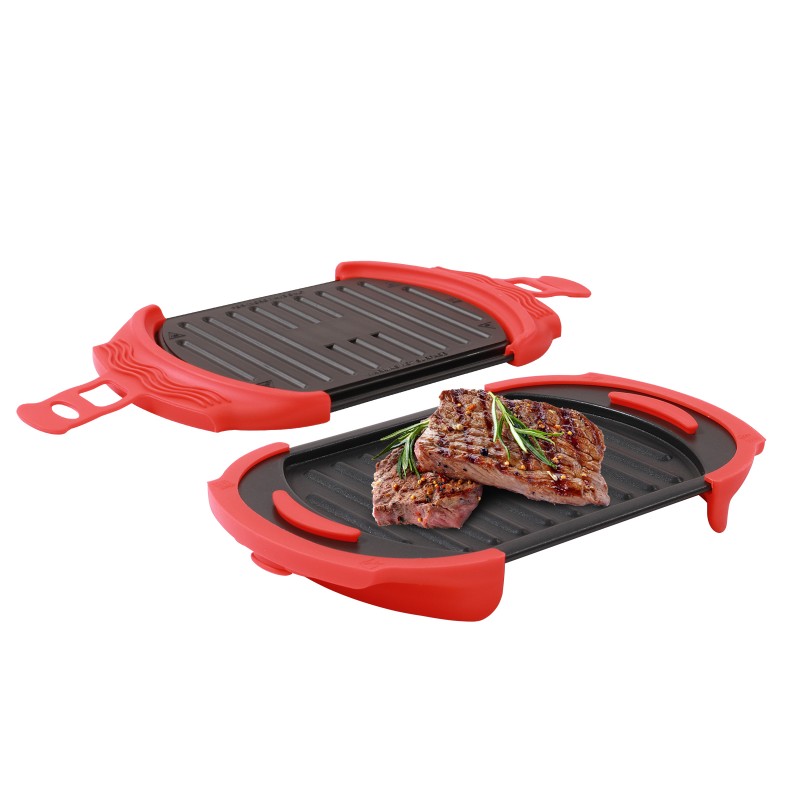
Start the microwave grill pan test plan with the claim and risk map
Many development teams begin with a borrowed test list. That puts methods before purpose. Start with the promises that will appear on the product page, packaging and instructions. Then list the product conditions that could make each promise fail.
"Microwave safe" raises questions about appliance compatibility, arcing, abnormal heating, damage and correct use. "Crisps food" needs a defined food, surface result and comparison point. "Non-stick" needs a repeatable release method and sample condition. "Dishwasher safe" requires a documented dishwasher protocol. None of these claims can share one vague pass mark.
Freeze the setup
Identify the sample, drawing, materials, microwave, load, mode and starting condition.
Clear safety checks
Review arcing, abnormal heating, product damage, handling and foreseeable misuse.
Measure function
Record plate and food behavior instead of judging one finished photo.
Age and repeat
Recheck coating, closure, silicone, fit and cleaning on used samples.
Release the file
Connect reports, the approved sample, claims, instructions and production controls.
Our position is straightforward: if a test result cannot be traced to a claim or a product risk, it is probably decoration in the report. If a claim has no defined check, it should not reach the artwork.
This page covers development validation. Routine incoming, in-process and finished-product checks have a different job. The microwave cookware quality inspection checklist explains how to turn the approved design into repeatable production inspection.
Lock the test conditions before judging the result
Microwave test results are sensitive to the oven, load and position. Change the food thickness, starting condition, microwave power or pan orientation and the result may change with it. The record must be detailed enough for another operator to repeat the same case.
Product identity
Model, drawing revision, material and coating revision, sample status, molding or assembly revision, batch reference and prior-use history.
Microwave identity
Brand and model, stated input and output information, cavity type, turntable or fixed floor, selected mode, power setting and condition of the appliance.
Placement
Pan orientation, position on the turntable, distance from the cavity walls, rotation clearance and the location of closures or handles relative to the cavity.
Load
Food or test medium, mass, dimensions, thickness, composition, starting temperature, distribution on the plate and whether the pan is open or closed.
Heating sequence
Any permitted preheating, power and time sequence, turning or resting step, opening point and cooling period before inspection.
Measurement
Instrument, sensor position, sampling rate, photograph angle, scoring method, operator and the exact acceptance rule.
The US FDA makes the same underlying point in its chemistry recommendations for food-contact submissions: microwave temperature depends on factors such as food composition, heating time, food mass and shape, and container shape. The FDA document discusses migration testing and includes special cooking applications. A laboratory must still decide whether and how that guidance applies to a reusable microwave grill pan.
The safety gate comes before the recipe score
A metal or partly metal microwave product requires a design-specific compatibility review. Ordinary metal cookware guidance cannot approve a purpose-built microwave grill pan, and a product photo cannot show how the item behaves inside different cavities.
The first gate should cover the intended microwave mode and placement. Watch for electrical discharge, abnormal sound or odor, unexpected movement, contact with a cavity wall or rack, damage to the pan, deformation of surrounding material and any condition that requires the test to stop. Define the stop criteria before the run and preserve the sample after an event.
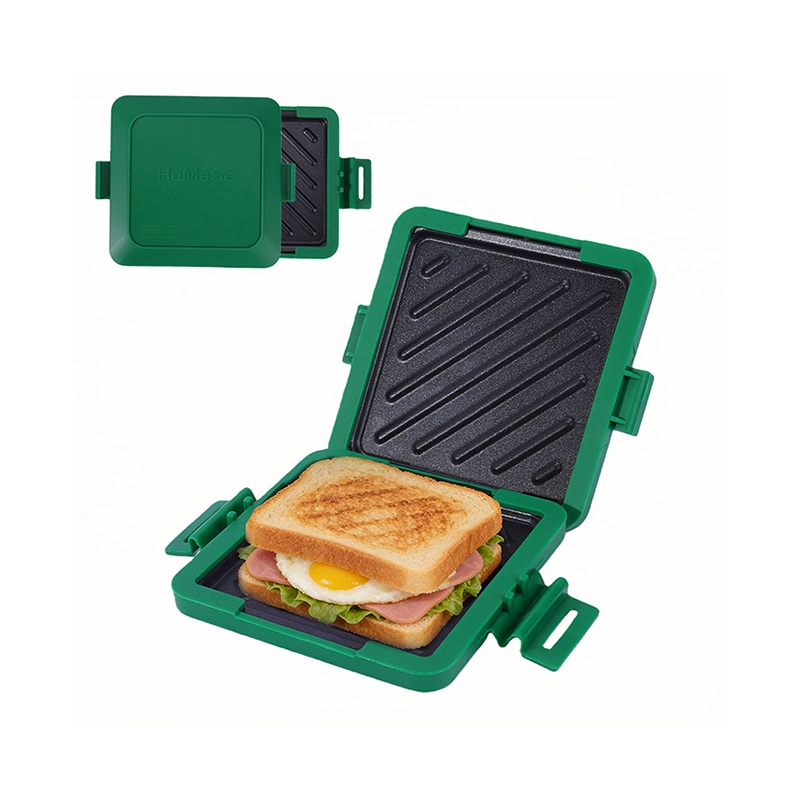
The current HeMaSe Quick Cooking Microwave Toaster Grill Tray page specifies microwave mode only and instructs users not to use grill, convection, oven, induction or open-flame modes. It also tells users to avoid contact with the microwave interior and to stop if they observe arcing or unusual behavior. Those instructions set the boundary for this model's validation and should remain consistent across the manual, carton and online listing.
Foreseeable misuse deserves separate cases. Examples include an empty or lightly loaded product, off-center placement, an overfilled clamshell, a closure left partly open, a missing removable part or use after visible damage. The brand and its safety adviser must decide which cases are appropriate and where testing would create an unreasonable hazard.
prEN 18372:2026 is a draft worth watching, not a certificate
In July 2026, CEN circulated prEN 18372 for enquiry. The draft concerns the suitability of metal or partly metal food-contact articles during microwave heating. Its published scope includes coated and uncoated containers intended for microwave-only heating, with attention to safety, heating efficiency, marking or instructions and the test report.
The DIN Media project page for DIN EN 18372:2026-08 identifies it as a draft based on prEN 18372:2026. It is not a final European Standard on the date of this article, and the text can change. A quotation, laboratory plan or product page should not claim "EN 18372 certified."
The draft is still useful to product teams because it separates safety and heating efficiency and treats consumer marking as part of the evaluation. It also reinforces the need to control oven conditions and product position. Brands developing metal microwave cookware should monitor its status with their laboratory or standards provider and update the validation plan if a final edition is published.
Heating performance needs a map, not one peak number
A peak temperature says little about the rest of the cooking face. The useful record shows how the plate behaves over time and across locations that matter to the food: center, corners, ridges, grooves, edges and the opposing face of a clamshell.
ASTM F874 covers temperature measurement and profiling for microwave susceptors used in interactive packaging and cooking aids. Its scope illustrates why a temperature-versus-time profile at the susceptor or food interface is more informative than one reading after the door opens. It is not, by itself, a complete pass or fail standard for every reusable HeMaSe product.
The measurement method needs care. A thermal image taken after opening the door shows surface temperature at that moment, after the scene has already changed. A contact sensor can disturb the interface or create its own microwave test considerations. The test designer should select instruments and placement with competent laboratory support, then document the limitations.
| Measurement question | Why it matters | Record in the report | Common interpretation error |
|---|---|---|---|
| How quickly does the active face respond? | It affects permitted preheating and the food-contact sequence | Time profile, load, oven, mode and measurement position | Reporting a peak without the time needed to reach it |
| How different are center and edge zones? | Food near the boundary may receive a different contact result | A fixed measurement map and repeated runs | Using one center point to describe the whole plate |
| Do the two faces behave similarly? | A clamshell may brown the top and bottom differently | Upper and lower face data with the same load and closure state | Photographing only the better-looking food face |
| How does the food change the response? | Water, fat, shape and contact alter the system | Food identity, mass, dimensions, starting condition and placement | Comparing runs with different loads as if only the pan changed |
| What happens after repeated use? | Coating, fit or contact can change with wear and cleaning | Sample age, use sequence, cleaning method and inspection history | Combining fresh and aged results in one average |
A temperature map supports development, but it does not replace food-contact compliance or food safety measurement. Plate temperature and the coldest point inside a food answer different questions.
Build a food trial that another team can repeat
The food trial should start with one primary retail use. A sandwich program needs defined bread, filling, total thickness and closure position. A waffle product needs a batter recipe, fill amount and release method. A grill pot for thicker foods needs a load arrangement, lid condition and a way to measure the coldest internal point.
Write the procedure before the first sample arrives. Include the allowed preheating step, if any, placement, power sequence, turning, rest, opening and cleaning. Photograph both sides of the food under consistent lighting. Score contact pattern, surface color, sticking, moisture and any deformation separately. One composite score hides useful failures.
For products intended to cook raw meat or poultry, surface browning cannot establish food safety. The protocol needs a competent food-safety method for internal temperature and cold spots, plus instructions that match the validated load. Keep that work separate from the cosmetic browning score.
Food trial record
- Primary food and recipe are version-controlled.
- Mass, dimensions, thickness and starting condition are recorded.
- Oil, water, filling and seasoning amounts are fixed where they affect contact or moisture.
- Microwave model, mode, power sequence and turntable position are identified.
- Pan orientation, load placement and closure state are photographed before heating.
- Food contact, color, release and moisture are scored separately.
- Internal food-safety checks are added when the food and claim require them.
- Pan condition is inspected after heating, cooling and the approved cleaning step.
The microwave grill pan design guide explains why active area, ridge geometry, food clearance and moisture paths must be designed around the load. The food trial is where those design assumptions meet the actual recipe.
Consumer handling and instructions are test outputs
A pan may cook acceptably and still create a poor handling sequence. Observe how the user removes it, where hands naturally land, whether the product stays level, how a buckle releases and where steam or hot liquid can move when the pan opens.
Measure the surfaces the user is expected to touch under the intended heating and load conditions. Review grip size with the pan full because an empty handling check misses the weight and balance of the food. If the format has a lid, define the opening direction and the waiting or venting step. If it is a clamshell, check whether all closures can be released without dragging the hot food or twisting the plates.
Then write the instructions from the observed sequence. A warning that exists only in the laboratory report cannot help a consumer. The same mode restrictions, placement, food load, preheating, tool, cleaning and retirement advice should appear wherever the customer will use the product information.
Fresh samples are not enough for durability and cleanability
Launch approval needs fresh samples because they establish the intended starting condition. It also needs conditioned or aged samples because the product is reusable. The aging route should reflect the care method and claims on the package, not a convenient cycle copied from unrelated cookware.
After the agreed use and cleaning sequence, inspect coating release and appearance, exposed edges, silicone condition, closure engagement, plate alignment, detachable-part fit, odor and any location where parts rub. Repeat the defined food trial and heating checks when a change could affect function.
The microwave grill pan coating guide explains why adhesion, abrasion, release and food-contact compliance require different evidence. In the validation plan, tie each coating check to a sample age and failure criterion. "No obvious problem" is not an acceptance rule.
Food-contact compliance testing follows intended use
Performance and compliance reports should meet in the same product file, but they are not substitutes for each other. A successful food trial does not prove that every food-contact component has an appropriate regulatory basis. A migration report does not prove the product will brown food evenly or stay easy to handle.
For the US, the FDA states that the regulatory status of a food-contact material depends on the individual substances that comprise the article. Identity, specifications and conditions of use matter, and an effective Food Contact Notification can be manufacturer-specific. Confirm that the documented coating, silicone, colorants, adhesives or other applicable components match the approved production construction.
For the EU, the European Commission identifies Regulation (EC) No 1935/2004 and GMP Regulation (EC) No 2023/2006 as part of the general framework for food-contact materials. Specific EU or national measures may also apply by material and market. Give the laboratory the full material stack, target countries, food types, repeated-use condition and actual heating profile so it can propose the correct plan.
Read every report beyond its cover page. Check sample identity, construction, color, test basis, food simulants, time and temperature conditions, repetitions, detection or quantification information, conclusion and any restriction. If the tested sample cannot be connected to the ordered model, the report is weak traceability no matter how familiar the laboratory logo looks.
The microwave grill pan materials guide provides the layer-by-layer questions needed for that submission. Do not reduce the finished article to a single phrase such as "silicone and metal" when the food-contact surface is a multilayer assembly.
What should happen between a prototype and the golden sample?
A prototype proves that an idea can be assembled. It may use temporary tooling, hand-adjusted parts or a process that does not represent normal production. Treat it as a learning sample, not as the production reference.
The next stage should use the intended materials, tooling, coating route, silicone process, assembly and packaging configuration as closely as practical. Record every permitted deviation. When the functional, safety, compliance and appearance evidence is accepted, both parties can sign a golden sample and its linked document revision.
A pilot run checks whether the factory can reproduce that result under a production route. Sample across the run rather than taking the first attractive unit. Compare dimensions, closure, surface, heating behavior, food result, handling and pack-out with the approved limits. The golden sample is useful only when the drawing, material record, process and test methods tell inspectors what must remain the same.
| Sample stage | Main question | What can be learned | What should not be assumed |
|---|---|---|---|
| Concept sample | Does the basic form support the intended food and user sequence? | Geometry, loading, rough contact pattern and major usability problems | Production consistency, final compliance or finished appearance |
| Engineering sample | Do the specified materials and processes meet the validation cases? | Safety cases, heating map, food protocol, handling, coating and assembly response | That every process variable is already stable at volume |
| Compliance sample | Does the identified construction support the destination-market plan? | Evidence tied to a controlled model, material and intended use | That a later substitution remains covered |
| Golden sample | What physical result and revision have both parties approved? | Appearance, fit, labeling reference and links to controlled documents | That one stored unit explains every hidden process requirement |
| Pilot-run sample | Can the normal route reproduce the approved product? | Variation across production, inspection practicality and pack-out consistency | That mass production can skip ongoing controls |
The HeMaSe range needs model-specific test cases
The current HeMaSe Microwave Toaster Grill Tray range includes clamshell, patterned and multi-format products. HeMaSe also lists deeper Microwave Grill Multi-Pot models. The shared microwave grill pan test framework remains useful, but the cases and acceptance points change with the construction.
| HeMaSe format | Published design feature | Model-specific validation focus | Useful internal page |
|---|---|---|---|
| Square clamshell tray | Wave-pattern opposing plates and silicone-side closure structure | Upper and lower heating, plate alignment, food-thickness range, closure state and cavity clearance | Square Microwave Toaster Grill Tray |
| Quick Cooking tray | Slanted or wave cooking plate and four symmetrical buckles | Four closure points, overfill response, opening sequence, mode restrictions and contact pattern | Quick Cooking Microwave Toaster Grill Tray |
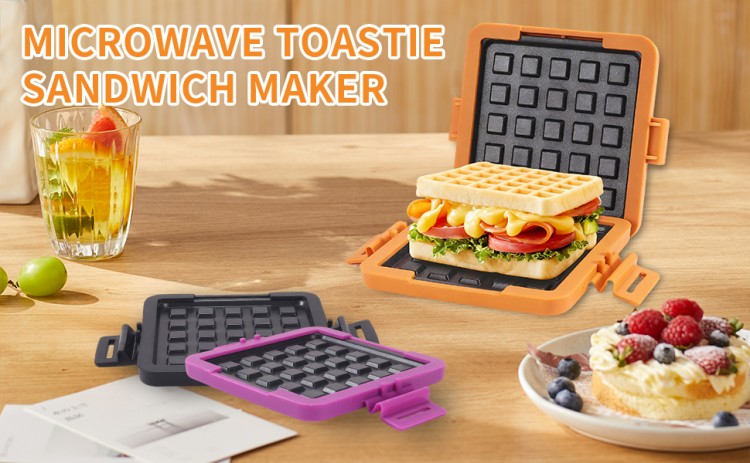
| Waffle-pattern tray | Grid cooking face intended to form a patterned result | Batter amount, corner fill, pattern release, residue removal and coating condition at intersections | Waffles Microwave Toaster Grill Tray |
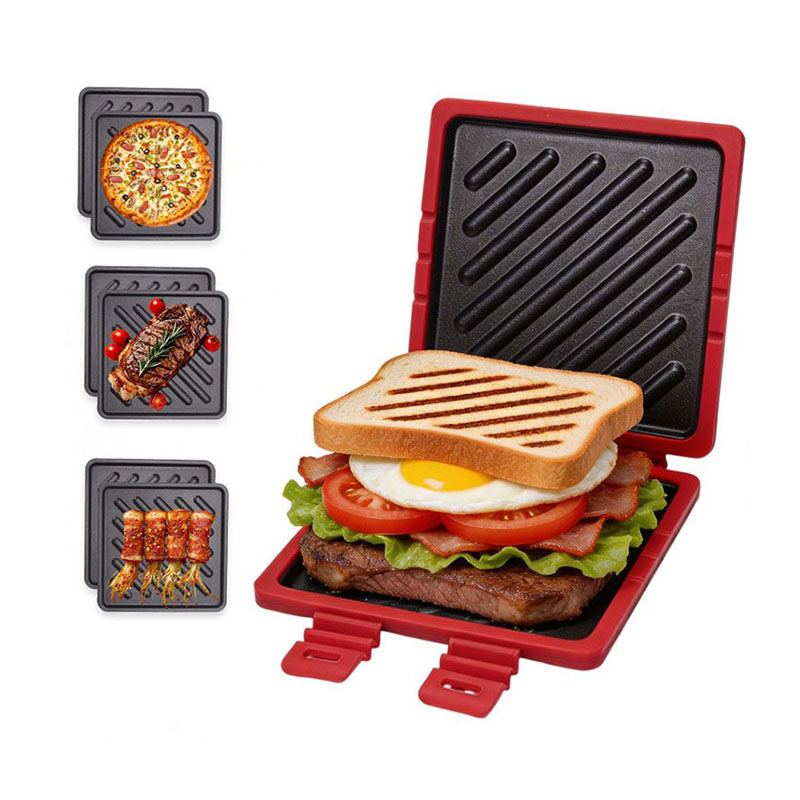
| 3-in-1 tray | Detachable multi-plate configuration | Part identity, orientation, fit after cleaning, incomplete assembly and pack-out | 3-in-1 Microwave Toaster Grill Tray |
| Microwave Grill Multi-Pot | Deeper cooking body, lid and corrugated base on the current product page | Headspace, lid seating, steam path, internal food temperature, liquid handling and base cleanability | Healthy Low Oil Microwave Multi-Cook Grill Pot |
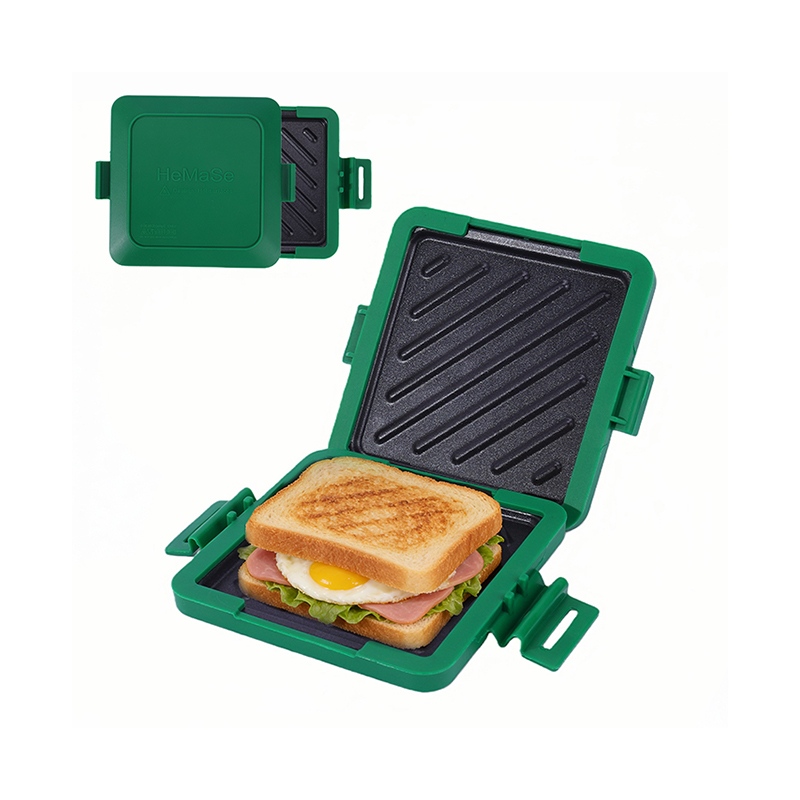
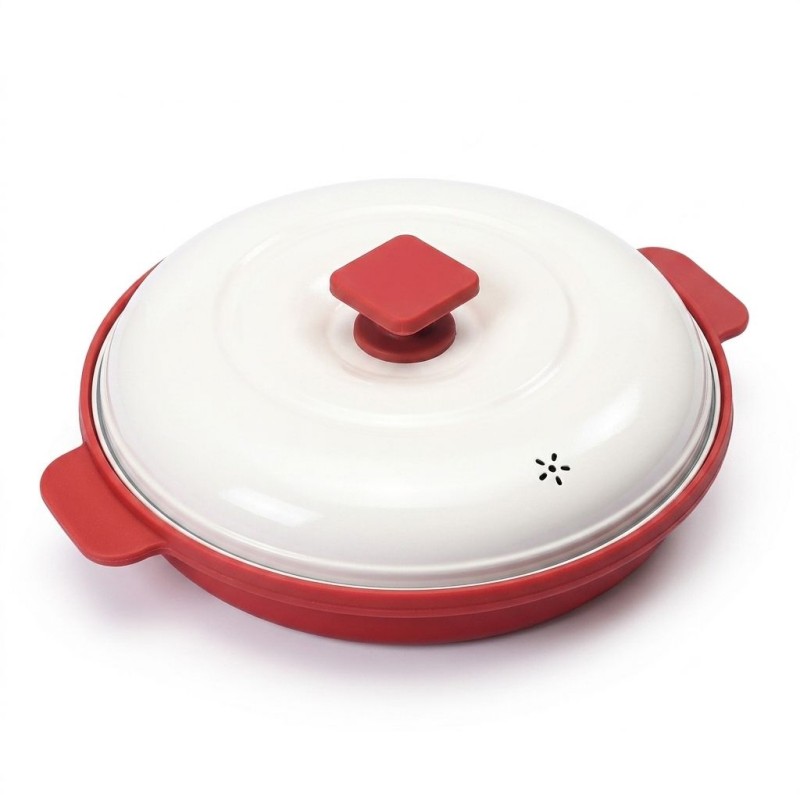
HeMaSe's public pages describe these product structures. They do not publish a complete current validation report for each model. Buyers should request the documents and test scope tied to the exact construction, order revision and destination market.
Approve retail claims from the evidence backward
A claim matrix keeps technical and marketing teams in the same conversation. Put the proposed sentence in the first column, the test method in the second, and the permitted wording in the last. If a result applies only to one load or care method, the claim needs the same boundary.
| Proposed claim | Minimum question the test must answer | Evidence boundary to state |
|---|---|---|
| Microwave safe | Under which oven range, microwave mode, load, placement, assembly and product condition? | Intended configuration, use restrictions and applicable market review |
| Creates a crispy or grilled surface | For which food, recipe, starting condition and scoring method? | Representative use and the result actually demonstrated |
| Even heating | Which surface or food locations, variation method and comparison define even? | Test load, appliance set and measurement map |
| Non-stick | Which food, oil, heating, cooling, release and sample age? | Validated food and care conditions |
| Easy to clean | Which residue, detergent, tool, water condition and effort or scoring rule? | Approved cleaning method and excluded abrasive tools |
| Dishwasher safe | Which program, detergent, loading, repetitions and endpoint? | Protocol and product components actually tested |
| Suitable for raw meat or poultry | Can the validated load meet the food-safety endpoint, including cold spots? | Food type, size, arrangement, microwave conditions and instructions |
| Reusable | What defined aging and post-aging checks support continued use? | Care rules, inspection and retirement conditions |
A technical report should never be stretched to fit finished artwork after the fact. Write the intended claim early, test that sentence and cut it back when the evidence is narrower. This approach produces clearer instructions and fewer arguments at final approval.
Frequently asked questions
What tests should a microwave grill pan pass?
The plan should cover product identity, microwave compatibility, arcing and abnormal-heating checks, heating distribution, repeatable food trials, handling, coating and assembly condition, cleaning, food-contact evidence and labeling. The exact methods and limits depend on the product, market, claims and intended use.
How do you test a metal microwave grill pan for arcing?
Use a competent laboratory plan that defines the pan configuration, food or test load, microwave models, effective power, position, clearance, mode, heating sequence and stop criteria. Test production-representative samples and record any discharge, damage or abnormal behavior. Do not improvise an arcing test in an uncontrolled setting.
Why should several microwave ovens be used?
Microwave cavities, power delivery, turntables and field patterns differ by appliance. A result from one oven shows one condition. A brand should choose an appliance set that represents its target market and document why those models and conditions were selected.
Is a food cooking test enough to prove safety?
No. A food trial can measure cooking and release under defined conditions, but it does not by itself prove microwave compatibility, food-contact compliance, durable construction, safe handling or correct labeling. Those questions need their own methods and evidence.
What is a golden sample for a microwave grill pan?
A golden sample is the signed physical reference linked to the approved drawing, materials, coating, assembly, appearance, labeling and test file. It helps judge production, but it cannot replace written specifications for hidden materials, process settings or acceptance limits.
Is prEN 18372:2026 already a European Standard?
No. prEN 18372:2026 was circulated as a draft for CEN enquiry and may change. It concerns the suitability of metal or partly metal food-contact articles during microwave heating, but products should not claim certification to a final EN 18372 unless a final standard is published and the claim is supported.
Evidence note
HeMaSe product descriptions and images come from the linked current company pages. The test-planning principles are supported by FDA food-contact chemistry guidance, FDA component-status guidance, the European Commission food-contact framework, the published ASTM F874 scope and the DIN Media listing for draft prEN 18372:2026. Draft standards can change, and the appropriate laboratory must set the final protocol for the product, market and claims.
HeMaSe product development
Turn the product claim into a validation plan
Send HeMaSe the target model, destination market, microwave mode, appliance range, representative foods, cleaning method and proposed packaging claims. We can use that brief to identify the sample stages, test cases, documents and open decisions for your private-label microwave grill pan.
Discuss Microwave Grill Pan Testing