

Two microwave grill pans can look different in a catalog yet compete for the same customer. Buying both adds another product code without necessarily adding a useful choice. For a first wholesale order, give each model a clear job before deciding how many colors, boxes or accessories to include.
Build a microwave grill pan range around distinct customer needs. Start with a core model for your main food use, add a different format only when it serves another need, and keep color and packaging variants manageable. Clamshell trays, lidded pots and patterned plates need different product descriptions and instructions.
What job should each microwave grill pan do in your range?
For a distributor or private-label brand, an assortment needs more than a shared category name. Decide whether your main customer wants a sandwich accessory, a deeper cooking vessel or a distinctive food pattern. Then choose the model that makes that purpose easiest to explain.
Our recommendation at HeMaSe is to separate a new food use from a cosmetic variation. A different color gives the shopper another appearance. A different closure, usable area or cooking format can give them another function. Those changes deserve different space in your buying plan.
A useful starting structure is a core product plus a complementary format. Add a patterned option only when the visual finish fits your channel. This is a selection framework, not a requirement to buy a fixed number of models or divide the order by a fixed ratio.
- A core model should cover the food use you intend to feature most prominently.
- A complementary model should solve a different loading or containment need.
- A pattern-led option should have a clear design purpose rather than duplicate the core product under a new name.
If you are still defining the category, our microwave grill pan guide explains the formats. For wholesale microwave grill pans, the next decision is which of those formats deserves a place in your own range.
Which HeMaSe formats give buyers a meaningful choice?
HeMaSe offers Microwave Toaster Grill Trays and a separate Microwave Grill Multi-Pot range. Within those families, the food-contact pattern and the way the product holds food are practical differences for a retail buyer.
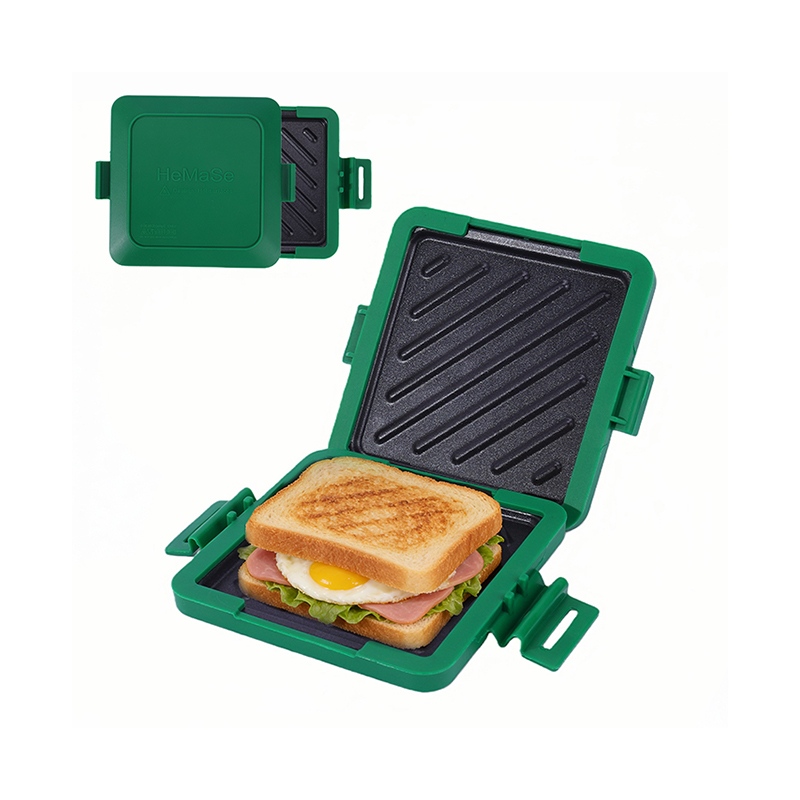
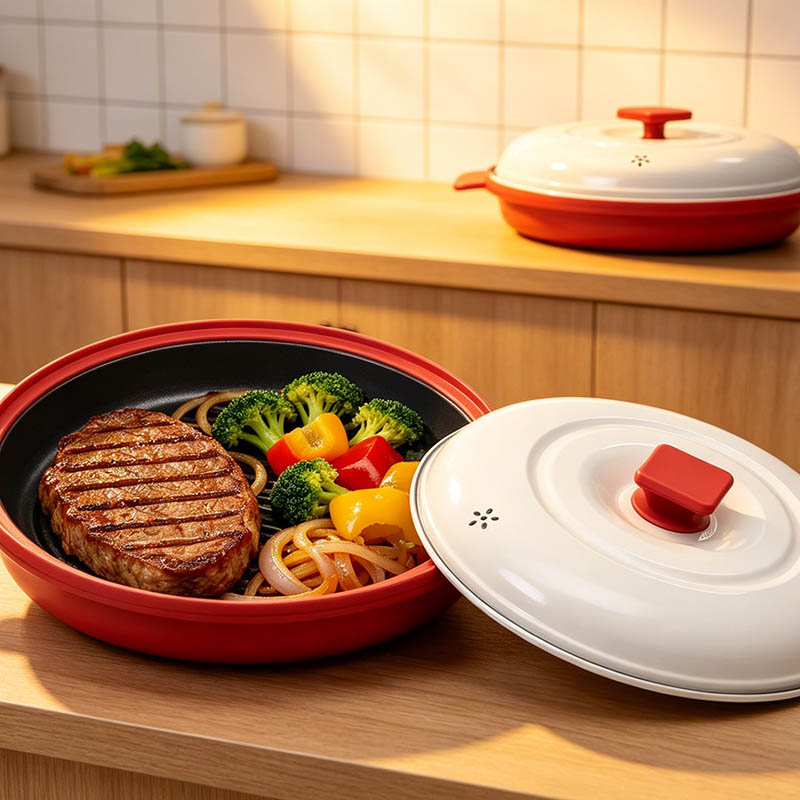
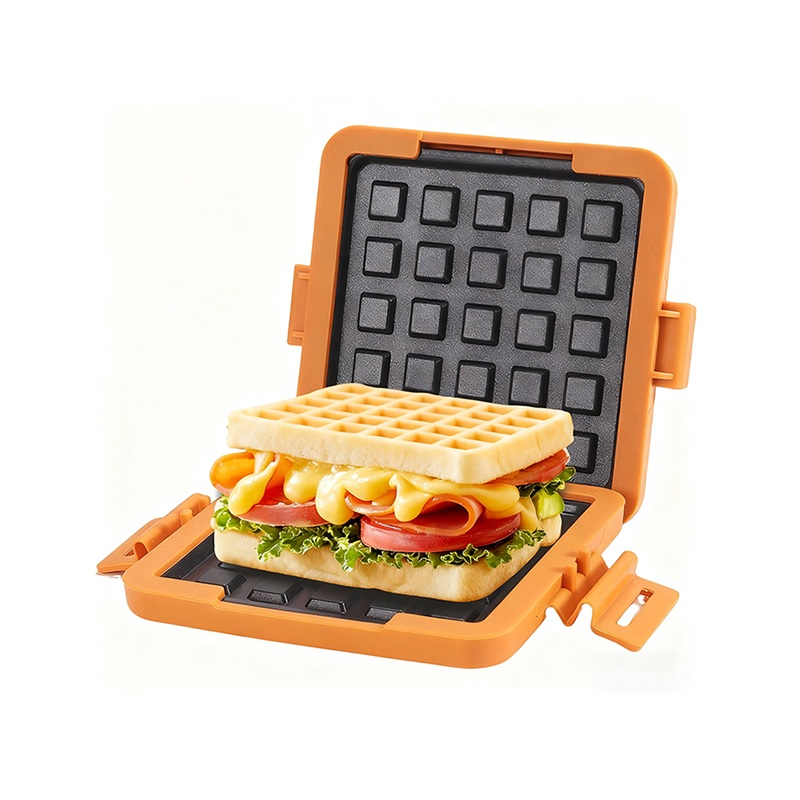
| Format | Possible role in a retail range | HeMaSe example | What the listing should explain |
|---|---|---|---|
| Clamshell toaster tray | A core product for a sandwich-focused offer | Quick Cooking tray | Bread reference, filling space, closure and permitted microwave method |
| Cooking body with a separate lid | A complementary vessel when your brief calls for more headroom and containment | Food Grade Multi Cook Grill Pot | Intended food uses, body and lid configuration, usable volume and handling |
| Grid-pattern toaster tray | A visual alternative for a breakfast or design-led range | Waffles tray | Grid pattern, suitable foods and what is actually included |
Choose a clamshell when the sandwich is the main product story
Our Quick Cooking tray has a wavy cooking face and four perimeter buckles. Its published bread reference is approximately 12 × 12 cm. That helps define the intended toast format; it is not the outside footprint or a promise that any filling thickness will fit.
A buyer should describe the bread and filling format, not just call the product a universal grill. For this model, the published use restrictions specify standard microwave use and exclude Grill/Convection modes. That distinction belongs in the product information even when the wider range contains other types of cookware.
Add a pot when the body and lid serve a different need
The Food Grade Microwave Multi Cook Grill Pot page identifies model SN-0077G and describes a silicone and aluminized-steel construction with a lid held by its own weight. It is a different product format from a buckle-closed sandwich tray.
We would add that format when the customer brief calls for a vessel with a separate lid, rather than offer it as a larger version of the same sandwich accessory. The comparison should explain the food space and intended use. Our lidded pan versus clamshell guide develops that distinction.
Give the patterned tray a specific retail purpose
The Waffles tray has a grid cooking face, a silicone shell and perimeter locking points. Its published applications include toast and sandwiches. The pattern can give a breakfast-focused line a different visual identity, but it should not be described as a different cooking system simply because the food mark changes.
For a broader housewares range, it may be an optional style. For a range built around a particular food pattern, it may be the lead product. We would make that decision from the customer brief, not assume that a patterned model belongs in every first order.
How should the sales channel change the assortment?
Microwave cookware for retailers needs to be understandable at the point of purchase. What that means depends on how the shopper encounters it. A shelf display, an online listing and a gift box give you different amounts of space to explain the product.
| Channel | Recommended starting emphasis | Information to make prominent | Avoid |
|---|---|---|---|
| Housewares retail | A clearly named main food use, with another format only where the distinction is easy to explain | Product format, actual size, included parts and allowed mode | Nearly identical boxes that conceal the difference between models |
| E-commerce brand | A focused listing for each meaningful product configuration | Open and closed views, usable food area, contents and care | Using one model's photos or instructions for a different product |
| Gift or promotional channel | A product with a clear standalone use and a suitable presentation | Brand placement, contents, recipient instructions and packaging | Adding a decorative model that does not fit the gift's purpose |
| Regional distributor | A main model with a documented reason for each additional format | Model identity, languages, carton contents and reorder configuration | A wide catalog with no clear distinction between the stocked products |
For private label microwave cookware, keep the range visually coherent without giving every model the same claims. A common logo and box style can tie the products together. Their capacities, loading methods, care and allowed uses still need separate descriptions.
HeMaSe's Waffles tray page lists logo, color, packaging and multilingual-manual customization. Those are useful planning options, not a reason to multiply every variant at launch. Discuss the chosen configuration with the HeMaSe factory team before treating all combinations as available on identical terms.
How many colors and configurations should the first order include?
Start by distinguishing functional variety from stock variety. Adding a different food format can broaden the offer. Adding more colors and box versions creates more combinations to identify, allocate and replenish.
Consider a planning example in which every model, color and packaging combination is tracked separately:
2 models × 2 colors × 2 pack formats = 8 configurations
Add a third model across the same choices and the list becomes 12 configurations. These are counts of possible combinations, not recommended order quantities or a sales forecast.
From our factory perspective, a clear configuration list is more useful than a total quantity followed by a request for several colors and boxes. Each line should identify the product, color, logo method, included parts and packaging. Otherwise, the buyer and supplier may be discussing different versions of the same order.
Ask how minimum quantities apply to the proposed combinations. A combined order total does not tell you whether requirements are met for each model, color or custom pack. Keep those commercial questions attached to the actual configuration rather than applying a single company-wide MOQ assumption.
We would begin with the colors you can explain and replenish, then add variants when you have a reason to carry them. If a change alters the food-contact pattern or closure, it belongs in the model discussion rather than being treated as another color choice. For that boundary, see our microwave grill pan design guide.
Should you sell individual products or a microwave cookware set?
A set is useful when the pieces serve connected but different needs. A sandwich tray and a separately lidded cooking vessel may provide a clearer combination than several sandwich trays whose main difference is color. Each piece should earn its place in the box.
That does not mean every retailer should start with a set. A single product is easier to describe when your main offer is tightly focused. A set needs a clear contents list and separate instructions wherever the products differ.
- Name every product and part in the proposed set.
- Explain what each piece adds to the customer's use.
- Keep each model's instructions and permitted modes identifiable.
- Confirm how the pieces fit within the retail box and the shipping carton.
- Agree how missing, damaged or replacement components will be identified.
Do not assume that pieces from different HeMaSe models are interchangeable. A lid or cooking plate that appears similar may belong to a different assembly. Bundle planning should keep the model identities intact.
A bundle is a proposed retail configuration, not automatically a standard HeMaSe pack. For wholesale microwave cookware, agree the contents and packing arrangement explicitly. Separate-lid pots and clamshell trays may need different protection inside the same box.
What should you send your microwave grill pan supplier?
Send a short range brief that explains why each model belongs. It should let the supplier distinguish your main product from optional additions without having to guess your sales channel.
| Brief field | What to specify | Why it affects the range |
|---|---|---|
| Main customer use | Sandwiches, a separately lidded food vessel, a patterned toast offer, or another defined use | Establishes the lead model and the role of each addition |
| Sales channel and destination | Retail shelf, online brand, distributor or gift program; destination market | Shapes packaging, language and the amount of product explanation required |
| Exact model | Product URL or model identity and the selected parts | Prevents a broad category name from standing in for the item ordered |
| Configuration | Color, logo location and method, pack format and included parts | Defines the versions that need separate agreement |
| Quantity by configuration | The proposed quantity on each line, not only the combined total | Allows a model-specific discussion of minimums and packing |
| Retail information | Required languages, contents list, product photos and instructions | Connects what is ordered to what the customer sees |
| Packing and replenishment | Individual packs or a proposed set, carton identification and the version to reorder | Keeps the first shipment and later replenishment tied to the same product |
Include the usable food space as well as the overall size. Handles, buckles and the lid affect the external footprint; they do not all contribute to cooking area. Our microwave grill pan size guide explains how to keep those dimensions separate.
The range brief decides what you want to stock. Choosing a manufacturing partner is another task, covered in our microwave grill pan manufacturer guide. Keeping those decisions separate helps you request a quotation for a defined assortment instead of an unspecified selection of pans.
Plan the second order before expanding the first
A product range needs identities that survive beyond the first shipment. Keep the agreed model, color reference, logo artwork, included parts and packaging version together. Reordering by a catalog photograph alone leaves too much room for ambiguity.
Review which products customers actually ask for, which configurations are reordered and which require more explanation. Those observations give you a reason to add, reduce or change a model. Do not expand just because another product looks attractive in a new catalog.
At HeMaSe, our recommendation is to keep the lead food use clear throughout that process. A sandwich-focused range should remain easy to recognize as a sandwich offer. Add a pot or patterned tray when it brings a distinct use or finish, and explain the difference with the correct model images.
Frequently asked questions
Is a toaster tray or a multi-pot the better first product?
Choose according to the main customer use. A toaster tray is a relevant starting point for a sandwich-led range. A separate-lid pot fits a brief built around a cooking vessel with a different food space and loading method. Neither format is a universal best seller.
Can I mix different microwave cookware models in one wholesale order?
Discuss the exact model list, quantities and packing arrangement with the supplier. Do not assume that one combined total meets every model's minimum or that a mixed retail set is a standard pack. Specify each configuration separately.
Does every model in a private-label range need the same instructions?
No. Branding can be consistent while the model instructions differ. Match the contents, permitted modes, loading, handling and care information to the product supplied. A common outer style should not conceal those differences.
Build your microwave cookware range with HeMaSe
Explore our toaster grill trays and multi-pot formats. Send HeMaSe your sales channel, main food use and proposed model list, with the colors and packaging you want. We can discuss existing formats and the customization route for your range.
Explore Grill TraysExplore Multi-PotsDiscuss Your First Order