

A microwave grill pan and a microwave with Grill Mode can both brown food, but they are different products. One is cookware placed inside a microwave. The other is an appliance with its own grill heating element. Confusing them can lead to the wrong purchase, the wrong cooking mode or damage to cookware that was never designed for direct grill heat.
A microwave grill pan is microwave-specific cookware with a heat-conductive cooking plate. A microwave with grill is an oven that adds a separate heating element for direct surface browning. You do not need Grill Mode to use a pan designed for ordinary microwave mode. In fact, the current instructions for the HeMaSe Quick Cooking Microwave Toaster Grill Tray specifically say not to use that model in grill or convection mode. Always match the cookware manual to the appliance mode.
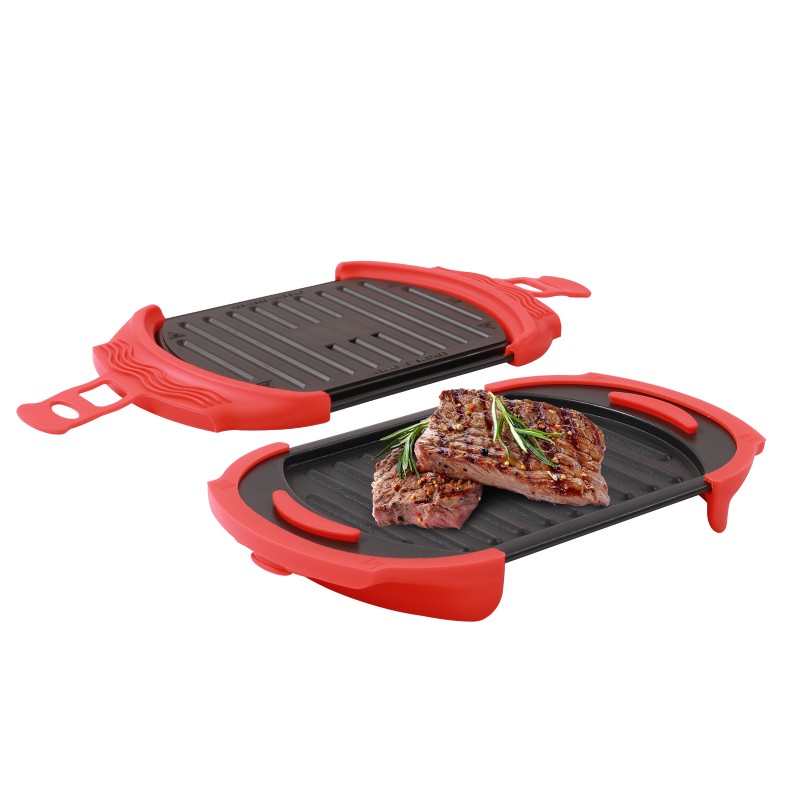
What are the two products being compared?
A microwave grill pan is a piece of cookware. Depending on the seller and market, the same general category may be called a microwave grill tray, microwave crisper pan, browning dish, grill plate or toaster grill. Our guide to microwave grill tray names separates those cookware terms by shape and intended use.
A microwave with grill is the microwave oven itself. Panasonic describes this appliance type as a microwave combined with a grill heating element. Whirlpool likewise explains that Grill Mode adds direct heat for surface searing. Some models supply a rack or basket that positions food closer to that element.
The missing noun causes most of the confusion. "Microwave grill pan" means cookware. "Microwave grill" may mean an appliance, a feature on an appliance, or loosely described cookware. If a product listing never makes that distinction, read the operating instructions before assuming what it can do.
The broader HeMaSe microwave grill pan guide covers cookware types and general use cases. This comparison stays with one narrower question: where the browning heat comes from.
How does each one brown food?
The two systems can produce a similar visible goal, but the heat reaches the food by a different path.
Microwave grill pan
Microwave with Grill Mode
In a grill pan, the food browns where it touches the heated plate. A clamshell tray can press food against two cooking surfaces, which is useful for toast and sandwiches. The current HeMaSe tray pages describe a heat-conductive plate inside a silicone or polymer structure. That construction belongs to the cookware.
In an appliance's Grill Mode, the oven provides the extra heat. Whirlpool's current Grill Mode explanation describes an additional grill element and direct surface heat. Panasonic's microwave grill guide makes the same basic distinction between microwave heating and the grill element.
This also explains why a grill microwave may use a rack while a grill pan uses a cooking plate. The rack changes the food's position relative to the appliance element. The pan creates a hot contact surface under or around the food. Neither accessory should be substituted for an ordinary metal rack or pan that the manuals do not approve.
Microwave grill pan vs microwave with grill: the practical differences
| Question | Microwave grill pan | Microwave with Grill Mode |
|---|---|---|
| What is it? | Removable microwave-specific cookware | A microwave appliance with an added grill function |
| Where does browning heat come from? | The heat-conductive cooking plate | The appliance's grill heating element |
| Where does browning occur first? | At the food-to-plate contact area | On the surface facing the grill element |
| Does it require a special microwave? | Not if the pan is approved for standard microwave mode and fits the cavity | Yes. Grill Mode must be built into the appliance |
| Typical support structure | Flat, ridged, round or clamshell plate | Model-supplied rack, basket or ovenproof dish arrangement |
| Mode decision | Follow the pan's instructions | Follow the appliance manual and use the named accessories |
| Best fit | Compact contact browning, pressed sandwiches and small food loads | Exposed-surface grilling when the appliance supports it |
| Main mistake to avoid | Assuming "grill pan" means it belongs in Grill Mode | Using an unapproved rack, pan or container near the element |
These are category-level differences, not universal performance promises. A small clamshell pan and a large grill-mode appliance will not produce identical results. Plate design, cavity layout, power settings, food thickness and the instructions for the specific model still decide the outcome.
Can you use a microwave grill pan in Grill Mode?
Only if the cookware instructions explicitly permit it. The product name is not permission.
The reason for this strict reading is practical. Grill and convection modes expose cookware to a heat path that may not have been part of its intended operating conditions. A silicone handle, coating, latch or bonded layer can have different limits from the metal plate inside it. A label such as "microwave safe" does not automatically mean "safe under the grill element."
The reverse mistake also occurs. A rack supplied with a grill-mode microwave may be correct for that appliance even though an ordinary metal rack is not suitable for a different microwave. Treat the appliance manual and cookware manual as one matched set of instructions. If either one prohibits the combination, do not use it.
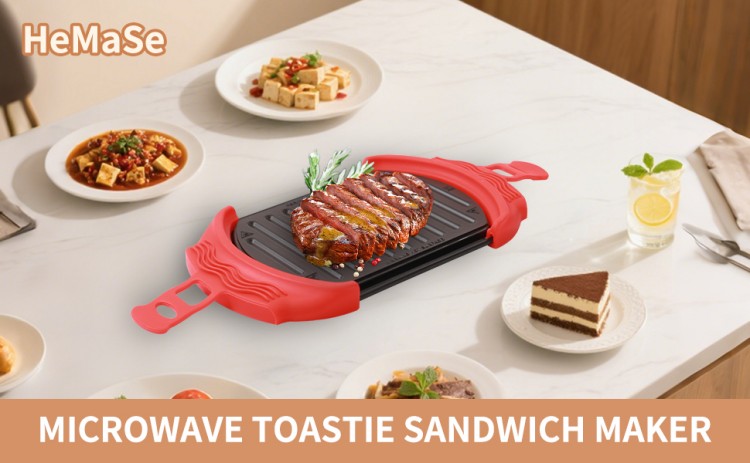
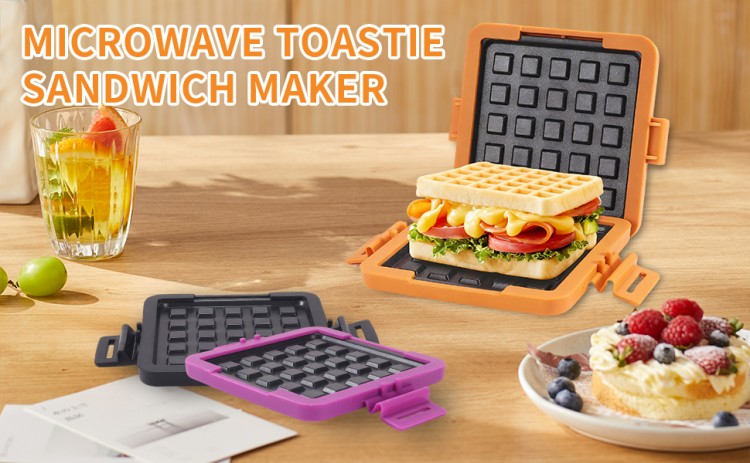
Which option fits your kitchen and your food?
You already own a standard microwave
A compatible microwave grill pan adds a contact surface without replacing the appliance. This route makes sense when the main jobs are toast, sandwiches, pizza slices or other food that fits the pan in a thin layer.
You are buying a new microwave
A microwave with Grill Mode may suit a buyer who wants the appliance itself to provide direct surface heat. Compare the supplied accessories, cavity size, cleaning requirements and mode instructions, not just the word "grill" on the control panel.
You want pressed food
A two-sided toaster tray has a clear physical advantage for panini, quesadillas and toast because both sides can contact a cooking plate. Check the closure and allowable food thickness before loading it.
You want top browning
An appliance grill element directs heat toward an exposed surface. This is a different arrangement from pressing the food against a pan. The appliance manual decides the rack position and whether microwave energy runs at the same time.
You want soup or wet meals
A shallow grill tray is the wrong shape. Use cookware designed to contain liquid, such as a suitable product from the HeMaSe Microwave Grill Multi-Pot range, and follow that model's venting and lid instructions.
You want baking or roasting
Do not assume Grill Mode is the same as convection. Whirlpool's current comparison notes that convection models add a fan to circulate hot air. If baking is the main job, compare convection specifications and recipes rather than choosing by the grill label.
Shape matters within the cookware category too. A round microwave toaster grill tray and a square tray arrange food differently inside the same cavity. Measure the available turntable area and confirm that the product can rotate freely if the microwave requires rotation.
Will the cooking result look the same?
No. Both systems can brown food, but contact direction changes the result. A ridged pan works where the food touches the ridges. A clamshell presses two sides. An appliance grill element works mainly on the exposed side that faces it. Flipping, rack height and combination settings may change that pattern on a grill-mode microwave.
Bread makes the difference easy to understand. A closed toaster tray holds bread against the cooking plates, so surface contact is the main design variable. Under a grill element, the exposed top receives direct heat and the lower side depends on the rack, dish and whether the food is turned. Neither method is automatically better. They solve slightly different texture problems.
Food load also changes the comparison. A pan has a fixed contact area, so overcrowding can leave part of the food away from the plate. A grill-mode cavity may offer more exposed area, but only if the manual allows the chosen rack and dish arrangement. Thick food still needs a doneness check. A browned surface does not prove the center is cooked.
What matters from the microwave cookware side?
From our side of the product, the word "grill" is not enough for an instruction sheet. The sheet needs to identify the appliance mode, whether food must be loaded before heating, which parts become hot, how the product closes and which modes are prohibited. Those details prevent more misuse than a large photo of browned food.
The current HeMaSe Quick Cooking page is a good example of why the distinction must be visible. Its product name contains "grill tray," but its precaution section says microwave mode only and excludes grill and convection modes. If a retailer shortens that to "use in a microwave grill," the meaning changes and the customer may choose the wrong button.
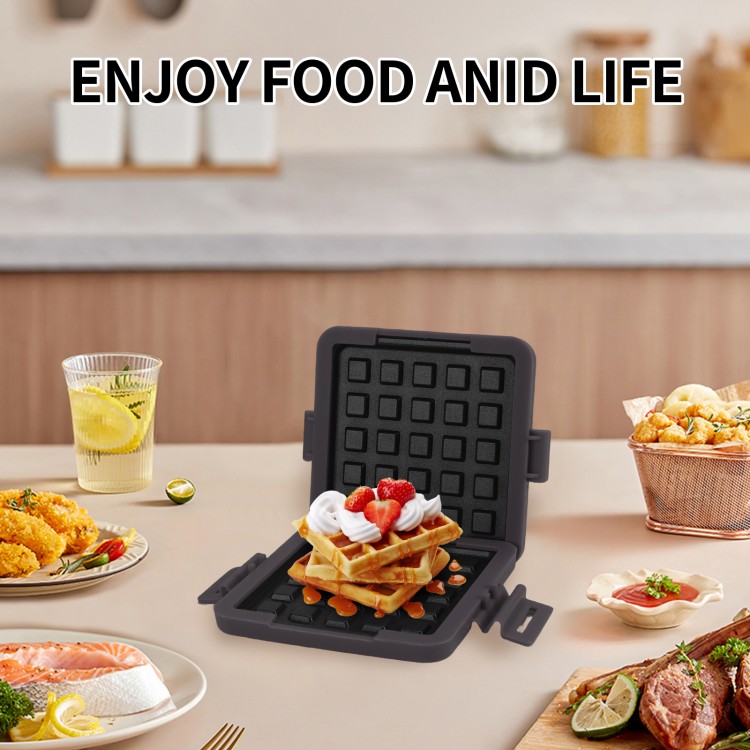
We also separate the name of the cookware from its form. The square tray, round tray and locking waffle tray belong to the same broad product family, but they do not present the same contact area or closure. One generic instruction cannot describe every model accurately.
Our view is simple: compatibility language belongs beside the operating steps, not in small print after the sales claims. For private-label packaging, the product owner should approve the mode statement and prohibited-use line before artwork is released. That is a clearer customer promise than claiming the product works in every microwave.
What should you check before cooking?
Five checks before pressing Start
- Identify whether "grill" refers to the cookware or a function on the microwave.
- Read the exact cookware instructions for allowed and prohibited modes.
- Use only the rack, basket, pan or dish approved by the appliance manufacturer.
- Confirm that the cookware fits the cavity and does not obstruct required turntable movement.
- Prepare oven mitts or the specified handles and a heat-safe surface for removal.
Amana's current Grill Mode instructions warn that the oven cavity, door, accessory and pan become hot, and they call for oven mitts and a heat-safe landing surface. A microwave grill pan can also become hot because contact heat is the point of the product. "Microwave" does not mean the cookware stays cool.
Stop if the manuals conflict or if you cannot identify the model. Do not improvise with an ordinary metal grill pan, oven rack or foil. For raw meat and other high-risk foods, follow an authoritative food-safety temperature guide and check the center rather than judging doneness from grill marks.
Sources checked
- HeMaSe: Quick Cooking Microwave Toaster Grill Tray, current product specifications and precautions checked August 25, 2026.
- Whirlpool: What Is a Microwave with Grill Mode?, appliance mechanism, accessories and convection comparison checked August 25, 2026.
- Panasonic UK: How Does a Microwave Grill Work and How Do I Use It?, appliance definition and mode distinction checked August 25, 2026.
- Amana Product Help: Grilling in Microwave, grill element, accessory and hot-surface guidance checked August 25, 2026.
Frequently asked questions
Is a microwave grill pan the same as a microwave with grill?
No. A microwave grill pan is removable cookware with a heat-conductive cooking surface. A microwave with grill is an appliance with a separate grill heating element.
Do I need Grill Mode to use a microwave grill pan?
Not when the pan is designed for standard microwave mode. Use only the mode named in the pan's instructions. The current HeMaSe Quick Cooking tray instructions specify microwave mode and exclude grill and convection modes.
Can I use a microwave grill pan in Grill Mode?
Only if the instructions for the exact pan permit it. A microwave-safe label alone does not confirm compatibility with a separate grill element.
Is a microwave crisper pan the same as a microwave grill pan?
The terms often describe the same cookware family. Crisper pan emphasizes the browning result, while grill pan may emphasize ridges or contact grilling. Check the structure and instructions rather than relying on the name.
Is Grill Mode the same as convection mode?
No. Grill Mode uses a heating element for direct surface heat. A convection microwave adds a fan that circulates hot air. Some appliances offer both, but the functions are not interchangeable.
Which is better for sandwiches?
A two-sided microwave toaster tray is shaped for pressed sandwiches because both bread surfaces can contact a plate. A grill-mode microwave can brown the exposed surface, but its result depends on the rack position, settings and whether the food is turned.
Can I put an ordinary metal grill pan in a microwave?
Do not use an ordinary metal pan unless the microwave manufacturer explicitly approves it. Use microwave-specific cookware or the accessories supplied for the exact appliance model.
Why does my microwave grill pan say not to use Grill Mode?
The pan may be designed to create heat in standard microwave mode, while its coating, handles, latches or bonded layers are not intended for direct exposure to the appliance's grill element. Follow the model-specific restriction.