

A microwave is good at heating water inside food. It is much less effective at keeping the outside dry. That is why pizza crust turns limp, bread feels damp and breaded food loses its crunch. The practical fix is to manage surface moisture and add the kind of hot contact surface that an ordinary microwave-safe plate does not provide.
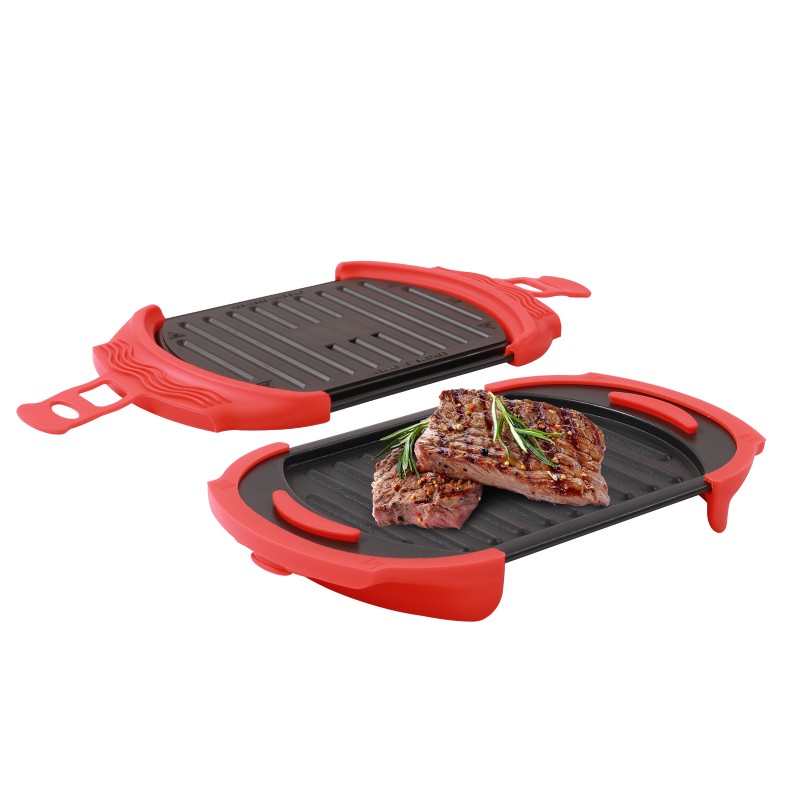
To make food crispy in a microwave, keep the portion shallow, avoid trapping steam, remove excess surface moisture and place the food against a microwave-specific crisper or grill plate when the product instructions allow it. A microwave toaster grill tray adds a heat-conductive contact surface, while ridges or a clamshell format improve contact and give moisture somewhere to move. It can improve browning and texture, but it cannot make every wet or thick food behave like it came from a dry oven.
Why does microwave food turn soggy instead of crispy?
Food becomes crisp when its surface loses enough water and becomes hot enough for browning. An ordinary microwave works against both conditions. Microwave energy heats water in the food quickly, but the air around the food is not a stream of hot, dry oven air.
Cornell food engineers described the moisture problem in a useful way. Internal pressure can move water toward the food surface. Because the surrounding air does not dry that surface like a conventional oven, moisture accumulates. A crisp crust then softens from the outside.
The effect is easy to see with leftover pizza. The cheese and sauce release steam. The base sits on a relatively cool plate. Moisture reaches the crust faster than the microwave cavity can remove it. The slice may be hot, yet the bottom is still soft.
Bread has another problem. It can move from damp to tough in a short interval. Early in reheating, condensed moisture softens the surface. Continue heating and too much water leaves the crumb, so the bread becomes rubbery or hard after it cools. More time is not a reliable substitute for better heat transfer.
1. Water heats
Microwave energy heats moisture inside the food.
2. Steam reaches the surface
Without dry surrounding heat, part of that moisture stays near the crust.
3. Contact heat changes the surface
A compatible conductive plate heats the contact area and helps the surface lose moisture.
What does food need to become crisp in a microwave?
We reduce the problem to three conditions when we review a microwave grill tray: surface heat, steam control and food contact. If one is missing, the result usually stays pale or soft.
A hotter surface
A room-temperature glass or ceramic plate mainly holds the food. A microwave crisper pan is designed to create a hotter cooking surface that transfers heat into the crust by contact. That change matters most at the bottom of pizza, toast, pastries and breaded snacks.
A route for moisture
Steam needs space to leave the food instead of condensing against it. A shallow load, a vented arrangement and surface channels can help. A sealed deep pot has a different job: it retains moisture for cooking rather than maximizing crust.
Consistent contact
A warped slice or overfilled sandwich touches the plate in only a few places. A clamshell tray applies contact from both sides. A ridged tray creates lines of contact and channels, but it does not heat air gaps as effectively as the points that actually touch.
A food the method can handle
Relatively thin foods with a dry outer surface respond better than wet batters, thick roasts or overloaded sandwiches. Moisture content, thickness and starting temperature change the result, even when the cookware and microwave stay the same.
A peer-reviewed study of susceptor heating in dough and pizza samples found higher contact-surface temperatures in the tested setup, but it also found that moisture, sample size and initial temperature influenced the outcome. That is why we do not publish one universal crisping time for every microwave, filling and food thickness.
What does a microwave crisper pan actually change?
A microwave crisper pan, browning tray or grill pan changes the heat path. The product contains a layer or plate designed for microwave heating, then transfers that heat to the food surface. The names vary by market, but the conductive cooking surface is the feature that separates a crisper from an ordinary microwave dish.
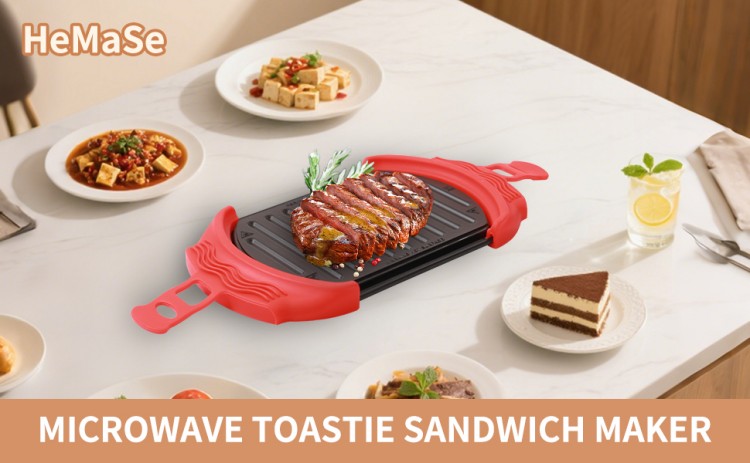
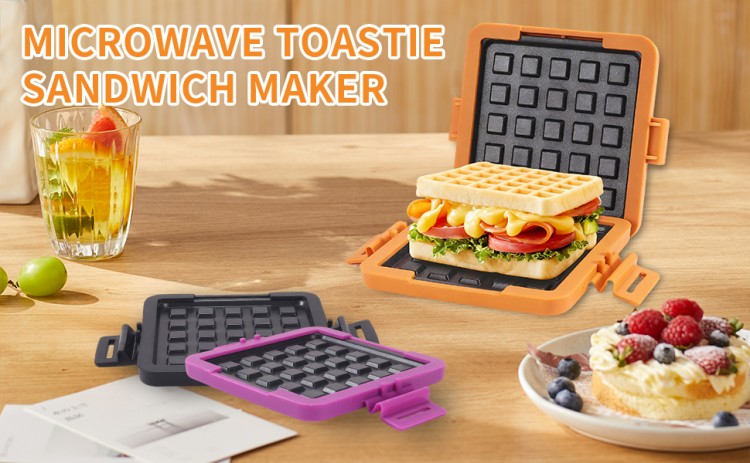
The current HeMaSe Quick Cooking Microwave Toaster Grill Tray page identifies silicone, polymer and an aluminum plate in its material structure. It also describes a slanted wavy cooking surface, a heat-conducting layer and four perimeter buckles. Those details have practical consequences:
- The conductive plate supplies contact heat at the bread or crust.
- The wavy surface creates raised contact points and channels for liquid or fat.
- The upper and lower plates press a sandwich from both sides.
- The buckles help keep the two halves aligned, but an overfilled sandwich can still prevent proper closure.
This is not dry oven convection. It is a local surface-heating system inside a microwave. The strongest results occur where the food touches the heated plate. If a reader expects the whole microwave cavity to become a small oven, the product will disappoint them.
What do we check from the product side before discussing cook time?
Cook-time promises are easy to print and hard to defend. At HeMaSe, the more useful starting point is the physical setup. We ask what food touches the plate, where its moisture can go and whether the tray instructions match the microwave mode.
The first check is flat contact. A slice of bread with a modest filling can close evenly in a clamshell tray. A tall sandwich may lift the plates apart, so the center heats while parts of the exterior never meet the hot surface. Cutting the filling is often more effective than adding another heating cycle.
The second check is moisture load. Tomato slices, wet sauces and frozen ice crystals all add water at the exact place the bread needs to dry. Draining a filling or blotting frost from the food can change the result without changing the microwave setting.
The third check is the product instruction. The current Quick Cooking model page says to use that tray in microwave mode only, not grill or convection mode. It also says to put food in the tray before heating and avoid extended empty heating. Those instructions take priority over generic advice found on another pan, package or video.
How should you make different foods crispy in a microwave?
The same method does not fit every food. Use this table as a diagnostic guide, then follow the cookware and food-package instructions that apply to the exact product.
| Food | Why it turns soft | Better setup | What to watch |
|---|---|---|---|
| Toast or a grilled sandwich | Steam from bread and fillings condenses at the surface | Use a clamshell crisper tray with even contact on both sides; keep wet fillings modest | Too much filling prevents closure and creates cold contact gaps |
| Leftover pizza | Sauce and cheese release moisture into the base | Use a hot microwave-specific contact plate under one layer of slices | Stacked slices steam one another; thick toppings may be hot before the base crisps |
| Breaded snacks | Ice and internal moisture soak the coating | Remove loose frost and leave space between pieces on a compatible crisper surface | Follow the package method; raw fillings still need safe internal cooking |
| Bacon | Rendered fat and water collect around the strips | Use a ridged plate that keeps parts of the food above the drainage channels | Fat gets very hot; avoid crowding and handle the tray as instructed |
| Pastries | The crust absorbs steam from the filling | Use a shallow single layer and contact heat under the base | High-sugar fillings can overheat before a thick pastry dries |
| Vegetables | Fresh vegetables contain enough water to steam readily | Dry the surface, cut pieces evenly and use a ridged contact plate if the model permits | Expect surface marks, not the same dehydration as a long oven roast |
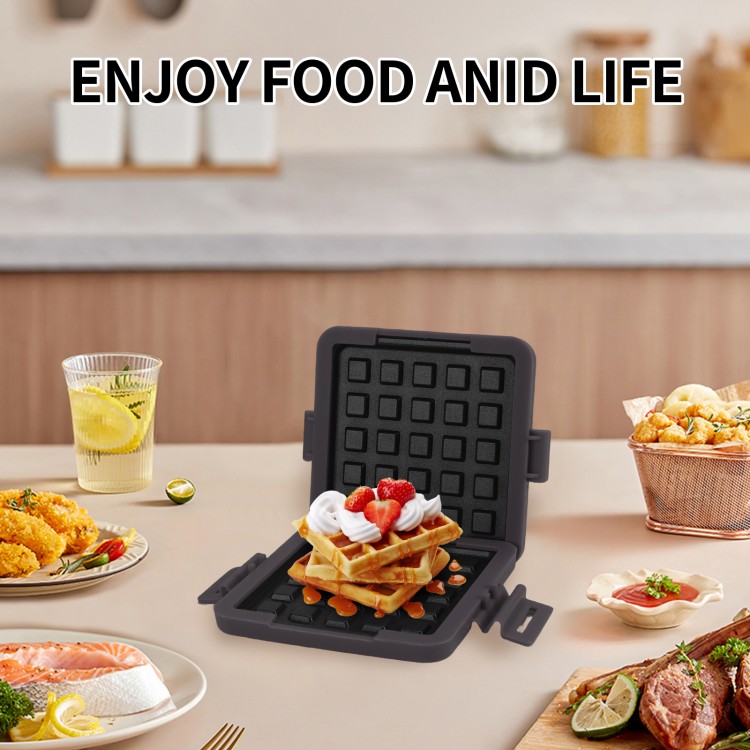
For sandwiches and patterned toast, compare the waffle-pattern tray with the square wave-pattern tray. The choice is about food contact, drainage and the surface result, not a claim that one pattern is universally faster.
Which common mistakes keep microwave food soft?
- Covering food that you want to crisp. A cover is useful when you want moist, even reheating. It also keeps steam near the surface. Crisping and moisture retention are different goals.
- Stacking pieces. The top of one piece traps moisture against the bottom of another. Use a single layer when surface texture matters.
- Starting with a wet surface. Drain sauces, blot visible condensation and remove loose ice. The plate should not have to boil away avoidable water before it can work on the crust.
- Overfilling a clamshell tray. The plates need contact. If the buckles strain or the halves sit at an angle, reduce the load.
- Adding time in large jumps. Bread and sugar-rich food can move from soft to scorched quickly. The current Quick Cooking page tells first-time users to begin with a short interval and adjust.
- Copying another product's preheat advice. Some crisping systems have their own preheat instructions. The current HeMaSe Quick Cooking page says to place food in the tray and avoid extended empty heating. Follow the exact model page or manual.
- Using the wrong appliance mode. A product called a grill pan is not automatically approved for a microwave's Grill or Convection Mode. Check both manuals.
Which microwave crisper pan shape fits the job?
Start with the food, then choose the cookware format. The full microwave grill pan guide covers the category in more depth, but four shapes account for most texture problems.
| Format | Surface behavior | Best match | Main limitation |
|---|---|---|---|
| Flat crisper plate | Contact heat from one side | Pizza bases, pastries, breaded snacks | The upper surface does not touch a second plate |
| Ridged grill tray | Raised contact lines with channels | Bacon, vegetables, foods where drainage matters | Less contact area between the ridges |
| Clamshell toaster grill | Contact heat and light pressure from two sides | Toast, panini, quesadillas, compact sandwiches | Overfilling reduces contact and stresses the closure |
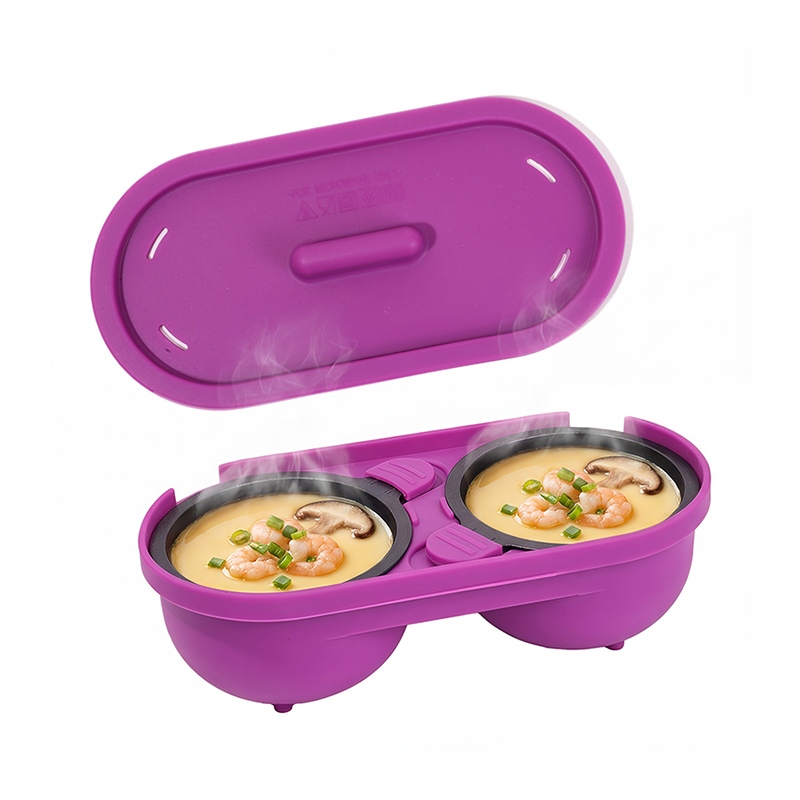
| Deep lidded multi-pot | Deeper cooking space that retains more moisture | One-pot meals and foods that need a contained vessel | It is not the first choice when maximum crust dryness is the goal |
HeMaSe lists flat and clamshell products in its Microwave Toaster Grill Tray range. Deeper cookware sits in the separate Microwave Grill Multi-Pot range. Keeping those categories separate prevents a common buying mistake: choosing a steam-retaining pot for a job that depends on drying the crust.
When will a microwave grill pan not solve the problem?
A crisper pan is not a cure for every texture issue. Very wet foods keep releasing steam. Thick foods can heat unevenly. Large batches block surface contact. Cakes and breads that depend on a stable envelope of dry hot air still belong to a baking process designed for them.
It also cannot recover a coating that has already absorbed a large amount of liquid. If frozen breading is wet through, contact heat may dry the bottom while the upper layer stays soft. A shallow portion and space between pieces give the cookware a more realistic job.
Finally, crispness is not the same as doneness. The outside of meat can brown while a thick center remains undercooked. USDA notes that microwave cooking can be uneven and recommends checking relevant foods with a food thermometer. Texture is a surface question. Food safety is an internal-temperature question.
What should you check before heating a microwave grill pan?
Use only cookware specifically made for microwave use. Ordinary metal bakeware is not a substitute for an engineered microwave crisper system. Read the oven manual and the pan instructions, especially when the appliance also has Grill or Convection Mode.
Pre-use check
- The model is identified as microwave-compatible.
- The selected appliance mode matches the tray instructions.
- The tray fits without touching the oven walls or obstructing rotation.
- Food is in place if the instructions prohibit or limit empty heating.
- The latches close without being forced.
- The non-stick surface has no peeling, deep scratches or visible damage.
- Metal tools, steel wool and abrasive pads stay away from the coating.
- Hot cookware is handled by the parts named in the product instructions.
The current Quick Cooking product instructions include food-before-heating, short initial timing, coating care and latch inspection. Review that model-specific page before using it. FDA and USDA guidance also emphasize using microwave-safe cookware and following manufacturer instructions.
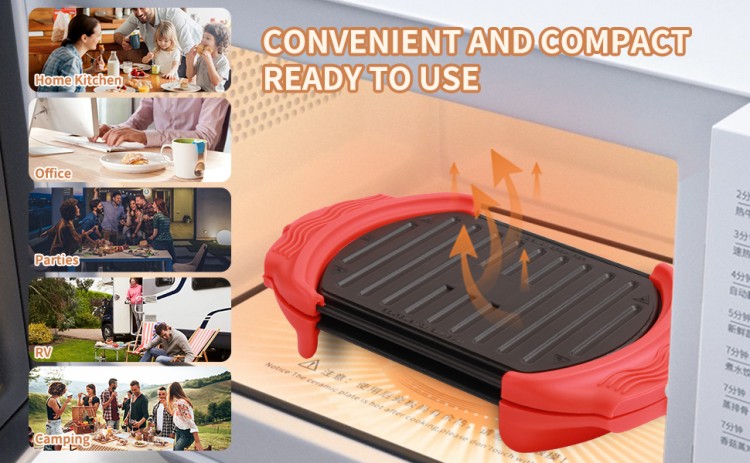
What does the HeMaSe product format look like in practice?
Frequently asked questions
Why does microwave food get soggy?
Microwave heating moves moisture through the food, and some of that moisture reaches the surface. The surrounding air is not the same dry, hot environment as a conventional oven, so the surface may stay wet instead of forming a dry crust.
Can a microwave make food crispy without a crisper pan?
You can reduce sogginess by using a shallow single layer, avoiding trapped steam and removing excess surface moisture. Browning is harder because an ordinary microwave-safe plate does not provide the same hot contact surface as a microwave-specific crisper pan.
Do microwave crisper pans really work?
They can improve browning and surface texture by adding a heat-conductive contact surface. Results still depend on the food's moisture, thickness, starting temperature, contact with the plate and the instructions for the specific pan and microwave.
Should I cover food when I want it crispy?
Usually not, because a cover retains steam near the surface. Covering is useful for moist, even reheating, but crisping depends on letting surface moisture escape. Follow the food and cookware instructions if they specify a cover.
Can I preheat a microwave grill pan empty?
Only if the instructions for that exact pan tell you to do so. The current HeMaSe Quick Cooking Microwave Toaster Grill Tray page says to place food in the tray and avoid extended empty heating. Do not copy preheating advice from a different product.
Is a microwave grill pan the same as Grill Mode?
No. A microwave grill pan is cookware with a heat-conductive cooking surface. Grill Mode is an appliance function that uses a separate heating element. Some pans are not approved for Grill or Convection Mode, so check both manuals.
HeMaSe · Ningbo Sai'an Intelligent Technology Co., Ltd.
Matching a microwave grill tray to a real food use case?
Send our team the target food, expected portion, destination market, microwave mode, preferred plate pattern and packaging brief. We can discuss whether a flat plate, ridged tray, clamshell toaster grill or deeper multi-pot is the more honest product fit.