

A microwave grill pan can brown toast, re-crisp pizza and cook other thin foods, but only when the instructions match the exact pan. The most common error is copying a preheat time or microwave mode from a different product. Some crisper pans require empty preheating. Other locking trays tell users to place food inside first and avoid extended dry heating.
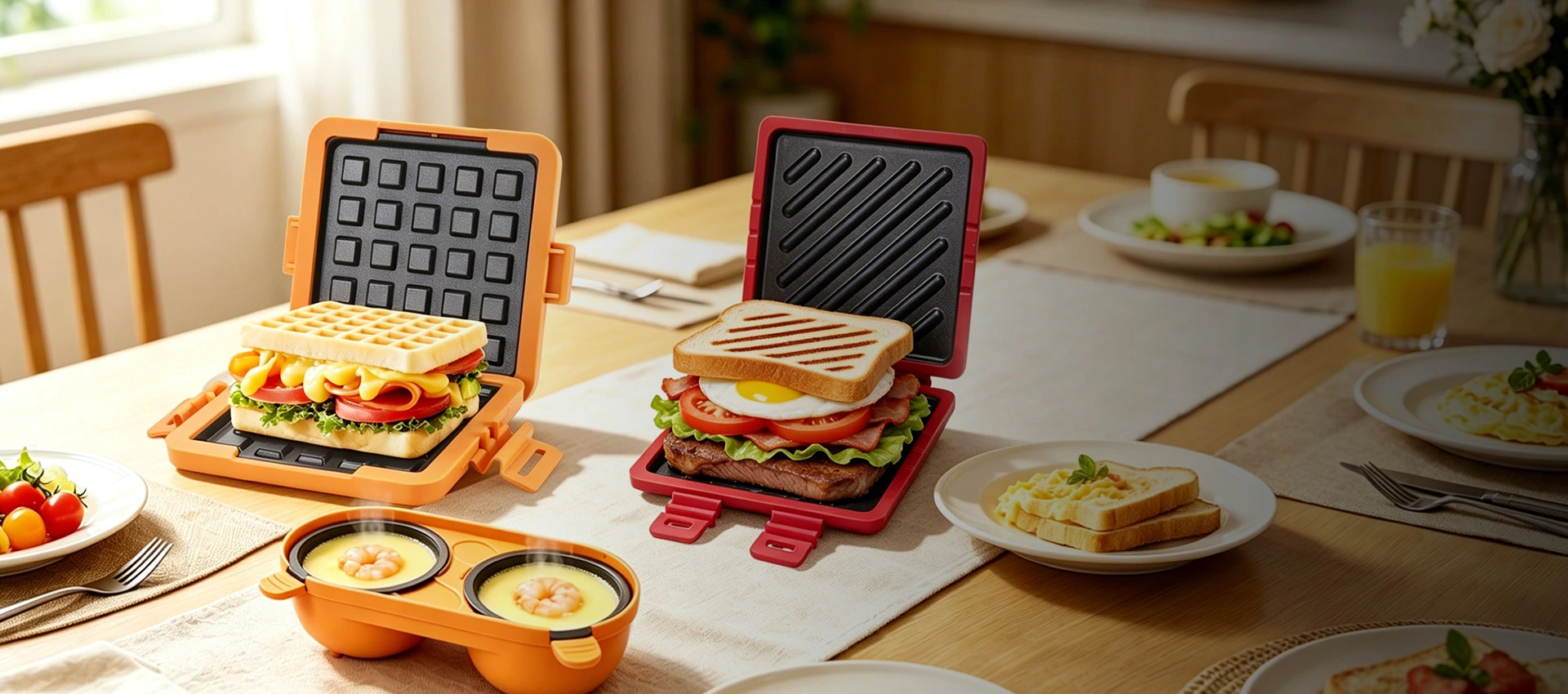
First, identify what kind of microwave pan you have
The phrase "microwave grill pan" is used for several products. Before looking for cooking times or recipes, match your cookware to the right category.
| Product type | How to recognize it | Operating rule |
|---|---|---|
| Microwave crisper pan | A shallow, purpose-built pan with a non-stick browning surface; sometimes supplied for a particular microwave model | Use only with the appliance or conditions named by its manual |
| Microwave toaster or grill tray | One or two cooking plates held by silicone handles, a shell or locking clips | Follow its directions for food loading, closure, time and microwave mode |
| Microwave grill rack | A raised rack supplied with a microwave that has a grill or combination function | Use only with the named appliance settings and accessories |
| Silicone microwave baking tray | A flexible mold or tray without a browning plate | It may heat food but will not necessarily create contact browning |
| Conventional metal baking sheet or stovetop grill pan | Ordinary cookware with no microwave-use instructions | Do not place it in a microwave |
The US Food and Drug Administration says metal pans generally should not be used in a microwave because metal reflects microwave energy and may lead to uneven cooking or appliance damage. A labeled microwave crisper pan is purpose-built cookware, not permission to experiment with ordinary metal.
Amana makes the same distinction in its official crisper-pan instructions: its pan is designed for a specific type of microwave oven, and users should check the appliance manual before use.
Should you preheat a microwave grill pan?
Sometimes, but not always. This is the point where generic advice becomes unsafe advice.
The current instructions for the HeMaSe Quick Cooking Microwave Toaster Grill Tray tell users to place food in the tray and not heat it empty for an extended period. The page recommends beginning with a short cycle for first use and adjusting for the microwave's wattage.
By contrast, the official Lakeland Microwave Crisper Dish instructions require empty preheating before food is added. That manual gives its own times for a 900 W microwave and for lower-wattage appliances.
Both sets of instructions can be correct for their own products. The wrong move is taking the preheat step from one design and applying it to another.
Technical decision map: preheat only when the exact manual says so
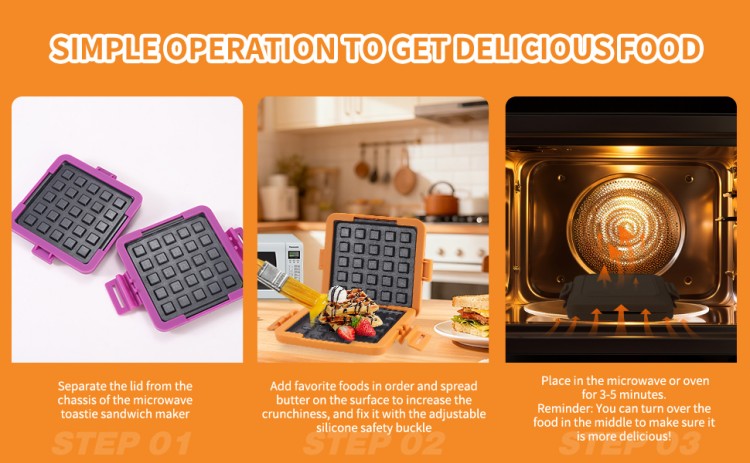
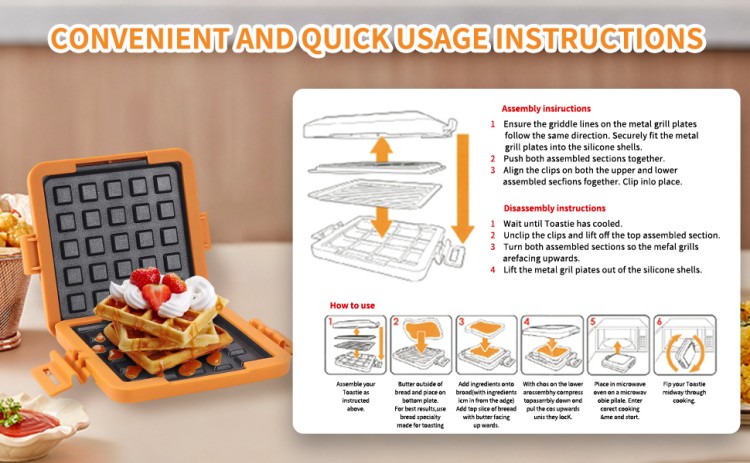
How to use a microwave grill pan in seven steps
-
Read the pan and microwave instructions
Confirm the cookware model, allowed wattage or appliance, microwave mode, preheat rule, maximum food load and cleaning method. If the pan and appliance instructions conflict, stop and ask the manufacturer which combination is approved.
-
Inspect the cooking surface and closures
Do not use the pan if the coating is peeling, the body is distorted, a latch is broken or an insert is loose. Check that the pan fits on the turntable without touching the cavity walls, ceiling or floor.
-
Preheat only if the exact manual requires it
Use the specified time and wattage. If the instructions say to place food in the tray before heating, skip empty preheating. Never extend a dry-heating cycle to chase more browning.
-
Prepare a thin, even food layer
Dry excess surface moisture where the recipe allows, keep pieces similar in thickness and avoid overfilling. For a clamshell tray, arrange the food so the closure can lock without forcing it.
-
Select the stated microwave mode
Use standard microwave mode unless the product manual specifically names grill, convection or a combination program. The current HeMaSe locking-tray instructions exclude microwave grill and convection modes for that model.
-
Start short, then check and turn
The USDA microwave guidance notes that higher-wattage ovens cook faster and recommends starting with the shortest time in a stated range. Turn, rotate or rearrange food midway when the cookware instructions allow it.
-
Remove, rest and verify doneness
Use oven mitts or the product's heat-safe handles. Open lids or clamshells away from your face. Allow any instructed standing time, then check raw meat, poultry and fish with an instant-read food thermometer after removing the pan from the microwave.
Why does a microwave grill pan make food crisper?
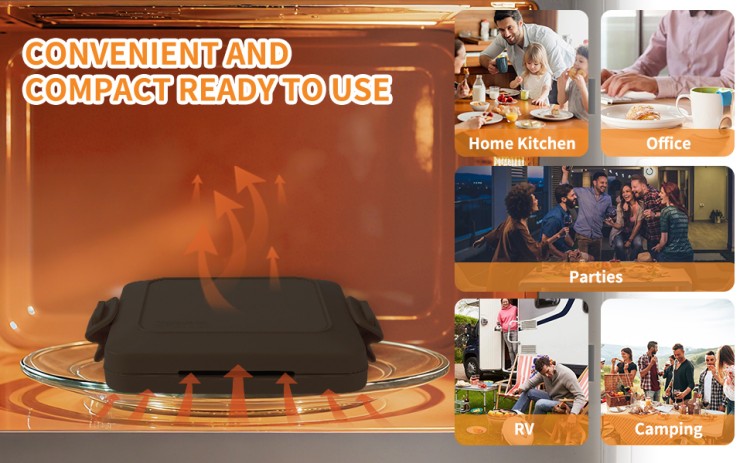
A plain microwave heats water-containing food efficiently, but it does not give the food a hot frying surface. Steam can soften bread and pizza crust. A microwave grill pan adds contact heat at the cooking plate, so the surface touching the pan can lose moisture and brown while microwave energy continues heating the food.
Contact matters
A bowed slice of bread or overfilled sandwich loses even contact with the hot plate. The result may be hot filling with pale bread.
Moisture still has to escape
Wet toppings, trapped condensation and too much filling work against crisping. A hotter pan cannot fix unlimited moisture.
Thickness sets the limit
Thin food lets surface browning and internal heating finish within a similar window. Thick food is harder to cook evenly.
This is why we do not describe a microwave grill pan as a replacement for every oven or stovetop pan. Its strongest job is fast contact browning on a compact food load. Our broader microwave grill pan guide explains the main product formats and how the cooking principle differs from a standard microwave plate.
Which foods work best in a microwave grill pan?
The best candidates are foods that benefit from a browned contact surface and can be arranged in a thin, even layer. Product shape still matters. A shallow crisper pan, ridged tray and closed sandwich press do different jobs.
| Food | Fit for a grill pan | Practical note |
|---|---|---|
| Toast, panini and quesadillas | Strong fit | Keep fillings controlled so a clamshell can close evenly |
| Pizza, pastries and previously fried snacks | Strong fit for reheating | Place the surface you want to re-crisp against the plate |
| Bacon, thin patties and thin fillets | Model-dependent | Allow for rendered fat and verify a safe internal temperature |
| Sliced vegetables | Good fit | Use similar thickness so pieces finish together |
| Soup, sauce or high-liquid meals | Poor fit for a shallow grill tray | Use microwave cookware designed to contain liquid, such as a suitable lidded multi-pot |
| Thick raw meat | Poor fit for beginners | The browned outside does not prove that the center is safe |
| Cakes and deep baking | Limited | A contact pan does not reproduce the enclosed dry heat of a conventional oven |
How do wattage, food load and thickness change cooking time?
There is no reliable universal cooking-time chart for every microwave grill pan. The pan, appliance and food form a single operating combination. A number copied from another model may overheat the coating or leave the center undercooked.
| Variable | What usually changes | What to do |
|---|---|---|
| Higher microwave wattage | Food and the purpose-built cooking system heat faster | Start at the short end of the model's stated range |
| Thicker food | The center needs more time than the contact surface | Use thinner portions or a method better suited to the food |
| Larger food load | More mass and moisture must be heated | Stay within the manual's load limit and avoid stacking |
| Frozen food | Pieces may heat unevenly if their thickness varies | Follow a model-specific frozen-food instruction and arrange even pieces |
| Wet filling or topping | More steam reaches the crust or bread | Reduce free moisture and avoid overfilling |
| Poor plate contact | Food becomes hot without even browning | Flatten the food load gently and close the tray without force |
For a new pan or a different microwave, make one controlled adjustment at a time. Changing the food load, time and power together makes it impossible to tell which change improved or worsened the result.
Why is food still soggy or uneven?
| Symptom | Likely check | Next action |
|---|---|---|
| Food is hot but not crisp | Wrong pan type, poor contact, excess moisture or an instruction step was skipped | Confirm the model, dry the contact surface where appropriate and reduce the load |
| Center browns but edges stay pale | Uneven food thickness, off-center placement or incomplete closure | Center the pan, arrange an even layer and check every latch |
| Filling leaks from a sandwich | Overfilling or a damaged closure | Reduce filling and inspect the locking parts before reuse |
| Food dries before it browns | Cycle too long, food too thick or the pan is not the right format | Shorten the cycle and use a thinner portion or different cookware |
| Pan arcs or sparks | Wrong cookware, another metal object, damage or contact with the cavity | Stop the microwave immediately and do not reuse the setup until the cause is confirmed |
| Coating is scratched or peeling | Metal utensils, abrasive cleaning or wear | Stop using the pan and ask the manufacturer about replacement |
We would rather tell a user to change the food or cookware than keep adding time. More time can make the center hotter without fixing poor surface contact.
Which safety checks matter most?
Before every cooking cycle
- Use only a pan labeled or supplied for microwave cooking.
- Keep the pan and handles clear of the cavity walls, ceiling and floor.
- Do not add another metal utensil, rack or foil unless the exact instructions permit it.
- Use the turntable as directed and make sure the pan can rotate freely.
- Do not use a damaged coating, loose insert, warped body or broken latch.
- Expect the pan and food to be hot. Use oven mitts or the intended handles.
- Use wooden, silicone or suitable plastic utensils rather than metal tools on a non-stick surface.
These checks align with the official Amana instructions for a microwave crisper pan, including keeping the pan away from the cavity, avoiding another metal object and protecting the non-stick surface.
For raw food, browning and grill marks are not proof of safety. The USDA safe minimum internal temperature chart gives the following values:
| Food | Minimum internal temperature | Rest time |
|---|---|---|
| Beef, pork, veal and lamb steaks, chops and roasts | 145 F (62.8 C) | At least 3 minutes |
| Ground meats | 160 F (71.1 C) | Not separately specified in the chart |
| All poultry | 165 F (73.9 C) | Not separately specified in the chart |
| Fish and shellfish | 145 F (62.8 C) | Not separately specified in the chart |
| Leftovers and casseroles | 165 F (73.9 C) | Not separately specified in the chart |
Unless a thermometer is specifically labeled for in-microwave use, remove the food from the microwave before checking it.
How should a microwave grill pan be cleaned and stored?
Let the pan cool on a heat-safe surface. Do not rinse a very hot pan with cold water unless its manual permits that temperature change. Remove food residue with warm water, mild detergent and a soft sponge.
Avoid steel wool, metal spatulas and harsh abrasives on non-stick surfaces. Dishwasher use is model-specific. The current HeMaSe Quick Cooking tray page permits top-rack dishwasher cleaning, while the Lakeland crisper-dish manual specifies hand washing. Once again, the product manual decides.
Before storing the pan, dry it fully and check that separate parts are seated correctly. Do not stack a sharp object against the coating. Inspect latches and the cooking surface before the next use rather than after the microwave has started.
What does HeMaSe look at from the product side?
From a cookware factory's perspective, the cooking plate is only one part of the result. We also look at how the food contacts the plate, how the two halves align, where moisture can collect, whether the user can close the latches without force and whether the instructions match the intended microwave mode.
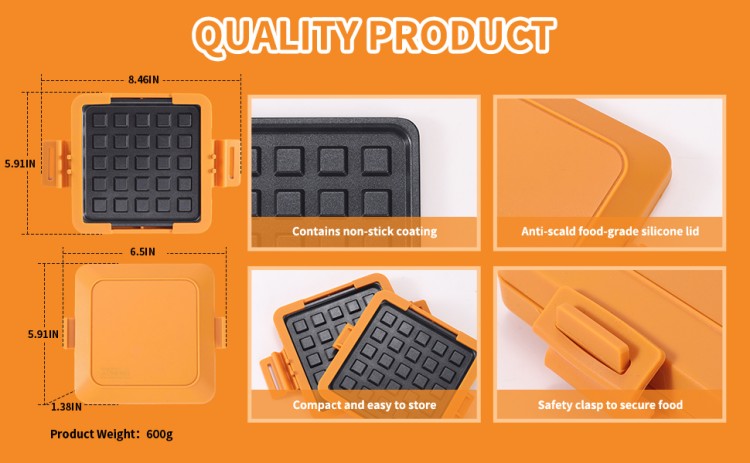
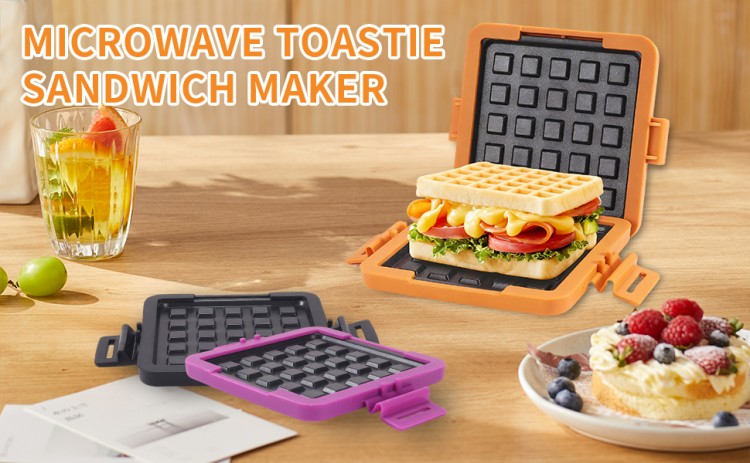
The current Quick Cooking Microwave Toaster Grill Tray page lists a silicone, polymer and aluminum-plate construction, a wavy cooking surface and four symmetrical buckles. Those details explain the operating advice on the same page: do not overfill, check every closure, avoid extended empty heating, begin with a short first-use cycle and keep the product out of convection or grill mode.
Our opinion is straightforward. A useful microwave grill pan instruction should tell the customer what not to do, not just show browned toast. Limits reduce misuse, returns and damaged cookware. They also make a product easier to evaluate honestly.
Sources checked
- HeMaSe: Quick Cooking Microwave Toaster Grill Tray, current product page checked August 24, 2026.
- US FDA: Microwave Ovens, accessed August 24, 2026.
- USDA FSIS: Cooking with Microwave Ovens, updated June 27, 2024.
- USDA FSIS: Safe Minimum Internal Temperature Chart, accessed August 24, 2026.
- Amana Product Help: Using the Crisper Pan and Handle, accessed August 24, 2026.
- Lakeland: The Microwave Crisper Dish instructions, accessed August 24, 2026.
Frequently asked questions
Do you preheat a microwave grill pan?
Preheat only if the instructions for the exact pan require it. Some crisper pans specify an empty preheat cycle, while some locking microwave grill trays tell users to place food inside first and avoid extended dry heating.
Can you put a metal grill pan in a microwave?
Do not put an ordinary metal grill pan in a microwave. Use only a purpose-built microwave grill or crisper pan that is labeled for the appliance and conditions in its instructions.
Should I use microwave mode or grill mode?
Use the mode named by the cookware and appliance instructions. Do not assume that a product called a microwave grill pan belongs in the oven's grill mode. Some purpose-built trays specify standard microwave mode only.
Why is my microwave grill pan not making food crispy?
Check the product type, manual steps, plate contact, surface moisture, food thickness and load. Overfilling or wet toppings can keep bread and crust soft even when the food becomes hot.
How long should food cook in a microwave grill pan?
Use the time stated for the exact pan, food and microwave wattage. Start with the shortest recommended time, check the result and add time only in small increments.
Can a microwave grill pan cook raw meat?
Some models can cook thin meat, poultry or fish, but browning does not prove the center is safe. Follow the model instructions and verify the USDA safe minimum internal temperature with a food thermometer.
What is the difference between a microwave grill pan and a crisper pan?
The names overlap. A crisper pan is often a shallow browning plate, while a grill tray may add ridges, silicone handles or a clamshell press. The construction and manual matter more than the listing name.
Can a microwave grill pan go in a dishwasher or conventional oven?
Only if the exact product instructions allow it. Dishwasher and oven compatibility vary by model. The current HeMaSe locking tray page allows top-rack dishwasher cleaning but excludes conventional ovens and microwave convection or grill modes.