

Microwaving leftover fries is easy. Restoring the crisp crust is the hard part. Moisture moves from the soft potato center into the crust during storage, then ordinary microwave reheating generates more steam without supplying much dry surface heat. The useful method is to limit that moisture, keep the fries in one layer and add a microwave-specific contact surface when available.
Arrange refrigerated fries in a single uncrowded layer, remove visible condensation and heat them in short checks. A plain microwave will warm the fries, but the crust may remain soft. For better surface texture, use a compatible microwave crisper or grill tray that adds contact heat. Do not use a fixed time from another recipe or preheat a tray unless the instructions for that exact model say to do so.
Why do french fries lose their crispness after storage?
A fresh fry has two different textures. Its center is moist and soft, while its crust is comparatively dry and brittle. Storage works against that separation. Water moves from the center toward the crust and from humid air into the surface. Once the crust absorbs enough moisture, it bends instead of cracking.
A 2024 review in Current Research in Food Science describes french-fry texture as a multiscale result involving the potato, crust structure and processing history. The review concerns industrial fry production, not a home microwave recipe. Its useful point here is narrower: crispness depends on the condition of the crust, not merely on whether the center is hot.
Ordinary microwave reheating targets moisture inside the food. Steam reaches the already softened crust. Because the microwave cavity does not behave like a dry oven, the surface may stay damp while the inside becomes hot. Longer heating can then dry the potato center without restoring a brittle crust.
After storage
Moisture from the potato center and container softens the crust.
Plain microwave
The fries become hot, but steam can remain around the surface.
Conductive contact plate
A compatible crisper plate adds surface heat where the fries touch it.
How to reheat fries in a microwave with less sogginess
This method controls variables instead of pretending that every portion needs the same time. Check the food package first. Some frozen microwave fries use special crisping packaging and have their own directions. This section is for previously cooked, properly refrigerated fries.
- Check the leftovers first. Reheat only fries that were refrigerated promptly and stored safely. When the storage history is uncertain, texture should not be the deciding factor.
- Remove condensation. If the container or fries are visibly wet, blot the surface gently. Do not soak the fries in more oil to hide the moisture problem.
- Separate the portion. Put the fries in one layer with gaps where practical. A pile traps steam and prevents most pieces from touching the cooking surface.
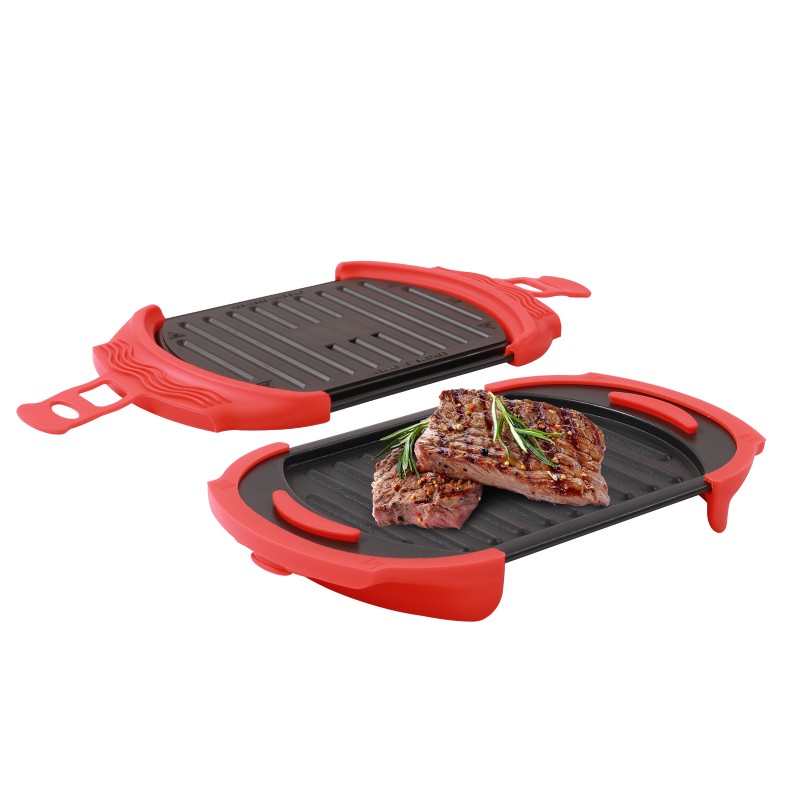
- Choose the heat path. A plain microwave-safe plate warms the fries. A microwave-specific crisper or grill plate can add contact heat at the crust. Use only cookware approved for that purpose.
- Follow the tray instructions. The current HeMaSe Quick Cooking model says microwave mode only and warns against extended empty heating. Another brand or model may use a different sequence.
- Heat in short checks. Stop and inspect the center temperature, surface dryness and contact side. Smaller adjustments reduce the chance of a hard center or scorched edge.
- Serve without trapping fresh steam. Moving hot fries into a closed container can soften them again before they reach the table.
Can a microwave crisper pan make leftover fries crispy?
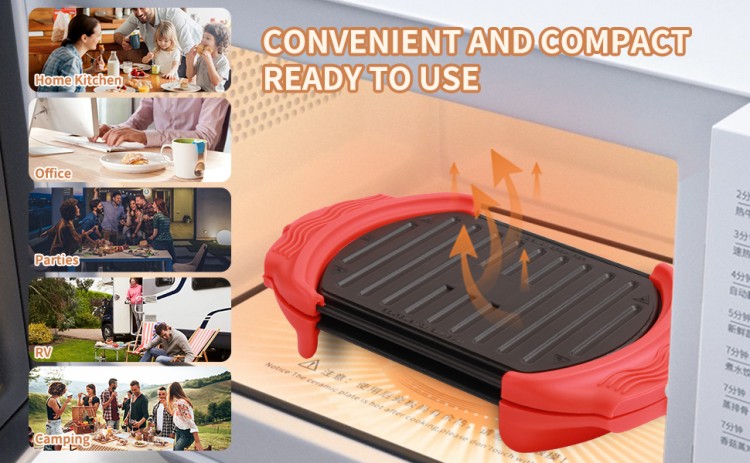
It can improve the contact side, provided the fries are suitable, uncrowded and touching the plate. A microwave crisper pan changes the heat path by using a conductive cooking layer. The hot plate transfers heat directly into the crust instead of relying on warm microwave air.
The result has limits. A round fry touches a flat or ridged plate along a narrow area. A thick pile shields most pieces. Wet toppings release new moisture. A crisper pan cannot dry every face of every fry at once, and it does not recreate deep frying.
HeMaSe uses several names for this cookware family. The tray, crisper plate and browning tray terminology guide explains the overlap. For reheated fries, focus on a shallow conductive surface and usable plate area rather than the marketing name.
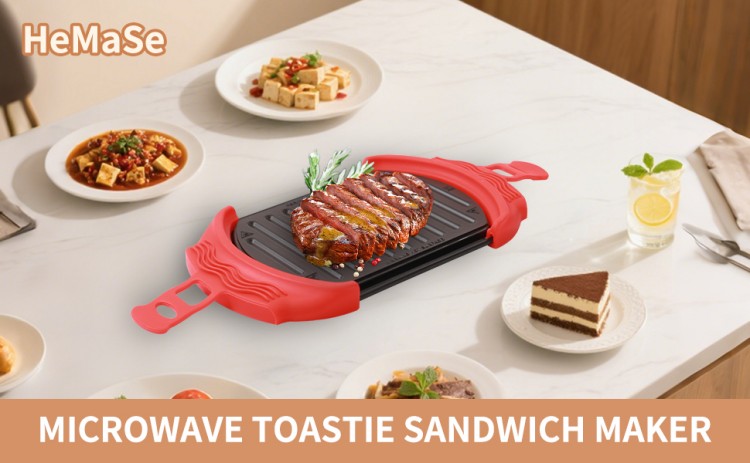
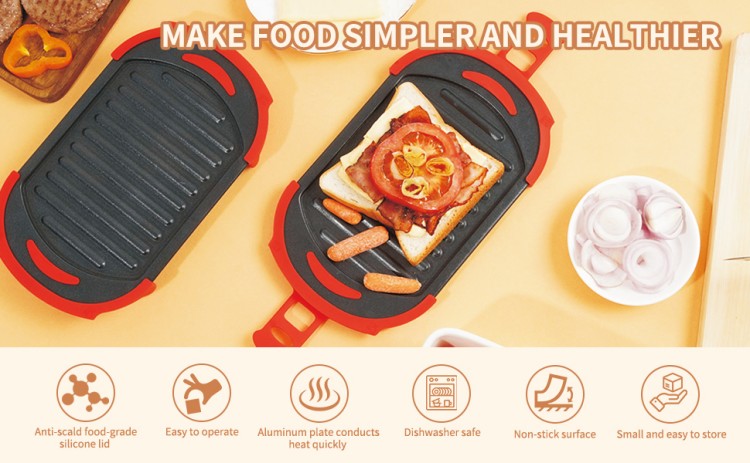
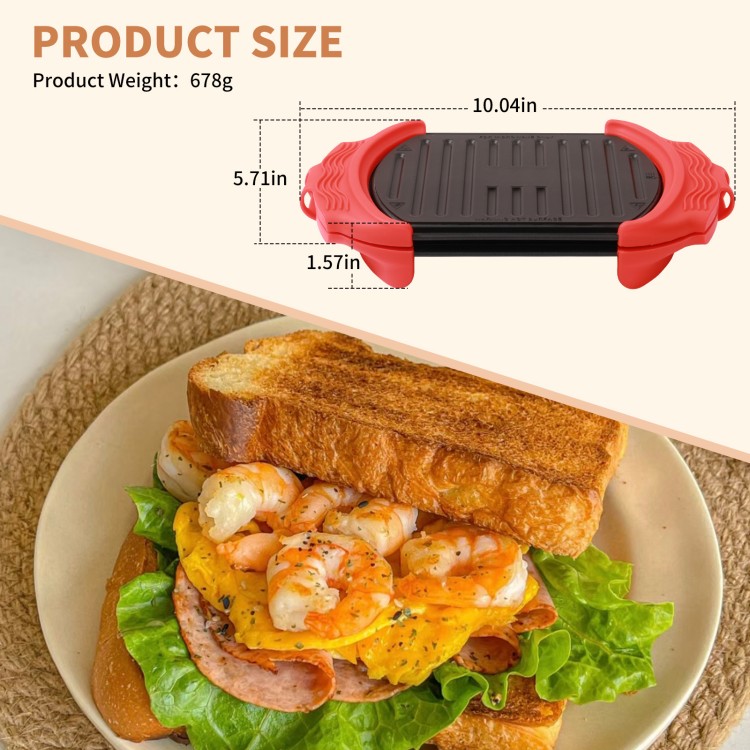
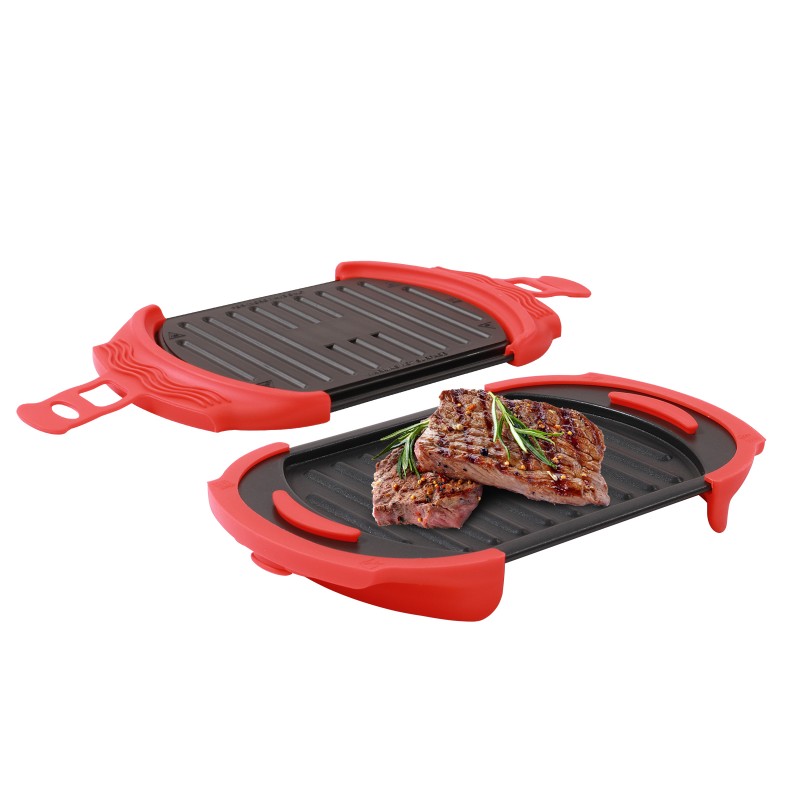
The current Square Microwave Toaster Grill Tray page describes a 3D wave-pattern plate, a non-stick surface, silicone handles and a sealed buckle structure. It lists toast, bacon, chicken, sandwiches and snacks. It does not publish a validated leftover-fries recipe, so this article does not assign it a fixed fries time.
What matters from the microwave tray design side?
When a food has many separate pieces, the design question changes. A sandwich is one broad, flat object. Fries are narrow, curved and irregular. That makes contact area, plate pattern and loading discipline more important.
Plate area
A larger useful surface lets more fries sit in one layer. Nominal outer dimensions are less helpful than the flat or ridged area that food can actually touch.
Contact pattern
Ridges create hot lines and drainage channels. They also leave gaps under curved food. A buyer should evaluate the pattern with the target fry cut rather than assume deeper ridges are always better.
Closure space
A clamshell can bring a second hot surface closer to the fries, but overfilling holds the plates apart. The closure should align without force.
Coating condition
Small food pieces can stick in grooves if residue builds up. The current product guidance calls for non-abrasive cleaning and inspection of the coating before use.
This is the factory-side point that generic recipes often miss: the same heating interval can give different results when one batch touches the plate and another sits on top of it. Loading is part of the cooking system.
Why are the reheated fries still soft, dry or uneven?
| Symptom | Likely cause | What to check | Adjustment |
|---|---|---|---|
| Hot center, soft crust | Microwave heating warmed moisture faster than the surface dried | Cookware type and visible condensation | Use a compatible conductive plate and reduce surface moisture |
| Bottom improves, top stays soft | Only one side touches the hot plate | Tray format and fry shape | Turn the food if the product instructions permit, or use an approved two-sided format |
| Some fries are cold | The portion is piled or pieces vary greatly in size | Layering, spacing and cut thickness | Reduce the load and arrange similar pieces together |
| Fries become hollow or hard | Too much water left the center during repeated heating | Total reheating and long intervals | Use shorter checks and stop when the center is hot |
| Surface turns greasy | Oil and moisture collect under the food | Drainage paths and crowding | Blot excess grease and leave space around pieces |
| Tray closes unevenly | The portion exceeds the available space | Buckles and plate alignment | Remove fries instead of forcing the closure |
Do thin fries, steak fries and loaded fries reheat the same way?
No. Cut size changes the ratio of crust to soft potato. Coatings and toppings change moisture movement again. Use the fry type to set expectations.
| Fry type | Texture issue | Microwave approach | Limitation |
|---|---|---|---|
| Thin shoestring fries | They dry quickly because the center is small | Use a small single layer and very short checks | They can become hard before colour improves |
| Standard straight-cut fries | The crust softens while the center holds more moisture | Space them on a conductive contact surface when available | Curved sides do not all touch the plate |
| Thick steak fries | The moist center takes longer to heat | Use fewer pieces and verify the center before chasing crust | The outside may dry while the center remains cool |
| Crinkle-cut fries | Ridges increase surface area but create mixed contact | Arrange them consistently on the plate | Only the raised points may touch a flat surface |
| Coated frozen microwave fries | The product and package are engineered as a system | Follow the package instructions exactly | Do not substitute a generic leftover-fries routine |
| Loaded fries | Sauce and cheese add moisture | Separate toppings when practical and reassemble after heating | Wet toppings work against a dry crust |
Microwave, crisper pan, air fryer or oven: which reheating method fits?
| Method | How it heats the crust | Strong point | Trade-off |
|---|---|---|---|
| Plain microwave plate | Little direct browning heat | Fast center heating and simple cleanup | Weak crust recovery |
| Microwave crisper pan | Conductive contact heat plus microwave heating | Compact and better contact-side texture | Results depend on plate contact and model instructions |
| Air fryer | Moving hot air dries several exposed surfaces | Good surface drying around separate pieces | Requires another appliance and basket cleanup |
| Conventional oven | Hot dry air heats the batch | Useful for a larger spread-out portion | Longer warm-up and more space |
| Stovetop pan | Direct conduction from below | Strong control over the contact side | Needs attention, turning and pan cleanup |
The microwave grill pan guide covers these cookware formats and their broader use cases. For fries, choose according to portion size, available appliance and the texture you are willing to trade for speed.
When should you avoid reheating leftover fries?
Do not use reheating to rescue leftovers with an uncertain storage history. USDA guidance treats prompt refrigeration and safe storage as the first step. If the fries sat out too long, smell and appearance cannot prove that they are safe.
Microwave heating can also be uneven. A crisp edge does not prove that the whole portion is hot. Health Canada recommends arranging food in a single layer for more uniform heating, following package directions and adjusting for the microwave's power.
Before using a microwave crisper tray
- The leftovers were stored safely.
- The tray is made specifically for microwave use.
- The selected appliance mode matches the tray instructions.
- The tray fits without touching the cavity walls.
- The coating and locking parts show no damage.
- The fries form a shallow load and the tray closes without force.
- Food is in place if the model warns against extended empty heating.
For the current Quick Cooking model, review the model-specific operating limits and care notes. Do not assume that a product called a grill pan belongs in Grill or Convection Mode.
Frequently asked questions
How do you reheat fries in a microwave without making them soggy?
Remove visible condensation, arrange the fries in one uncrowded layer and heat in short checks. A plain microwave warms the center, while a compatible microwave crisper pan can add contact heat at the crust. Follow the instructions for the food and the exact cookware.
Can a paper towel make microwave fries crispy?
A paper towel can absorb some moisture and grease, which may reduce sogginess. It does not create a hot browning surface, so it cannot provide the same contact heating as a microwave-specific crisper plate.
Do you need to add oil when reheating fries?
Not automatically. Leftover fries already contain oil, and adding more does not remove water from a softened crust. First control condensation, crowding and surface contact. Follow the food instructions if they specify oil.
Can you put frozen fries on a microwave grill pan?
Follow the frozen-fries package and grill-pan instructions. Some frozen microwave fries use special coatings or crisping packaging as part of their cooking system. A generic method should not replace those directions.
Should you preheat a microwave crisper pan for fries?
Only if the instructions for that exact pan require preheating. The current HeMaSe Quick Cooking model says to place food in the tray and avoid extended empty heating. Other products may use a different sequence.
Why are my fries hot but still soft?
Microwave energy can heat moisture in the potato faster than the crust dries. Crowding and a cool plate make the problem worse. Reduce the load, remove condensation and use an approved conductive contact surface when available.
Sources checked for this article
- HeMaSe: Square Microwave Toaster Grill Tray
- HeMaSe: Quick Cooking Microwave Toaster Grill Tray
- HeMaSe: Microwave Toaster Grill Tray range
- van der Sman and Schenk: Causal factors concerning the texture of French fries manufactured at industrial scale
- USDA FSIS: Leftovers and Food Safety
- Health Canada: Food safety tips for microwaves
- Ibrahim et al.: Effect of Microwave Heating on Flavour Generation and Food Processing
HeMaSe · Ningbo Sai'an Intelligent Technology Co., Ltd.
Evaluating a microwave crisper tray for snack reheating?
Send the HeMaSe team the target food, cut size, portion, microwave mode, destination market and packaging brief. A real sample evaluation should set the instructions before a brand prints a reheating promise.
Contact the HeMaSe factory team