

You can heat bread in a plain microwave, but heating is not the same as toasting. Traditional toast needs a dry, hot surface so the outside loses moisture and browns. A standard microwave mostly heats water within the slice, which is why bread often leaves the oven soft and then becomes tough as it cools.
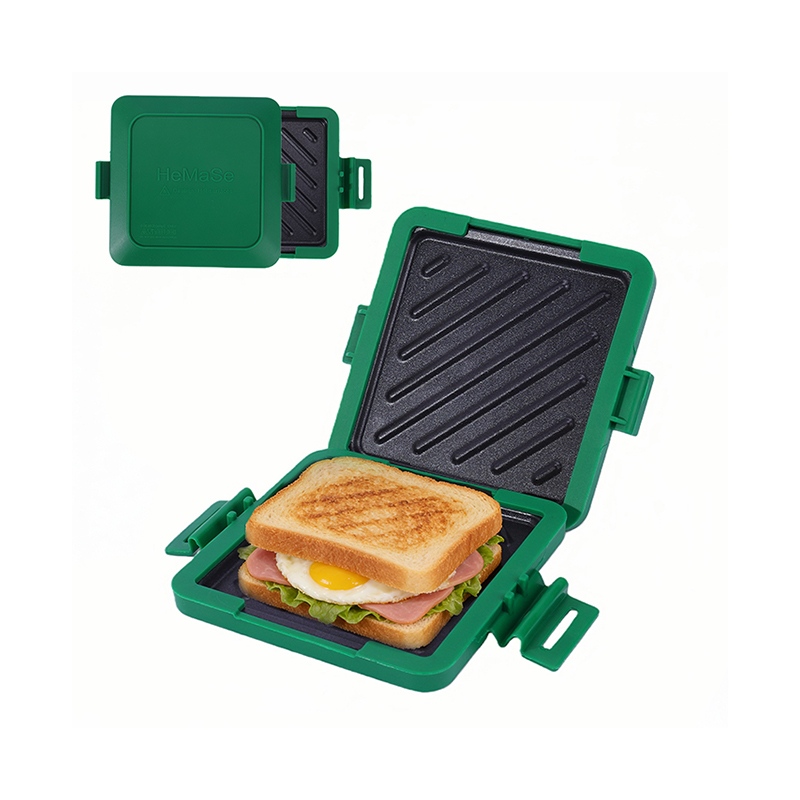
A plain microwave will warm bread but rarely produce the dry, browned surface people mean by toast. To make toast inside a microwave oven, you need an additional browning method approved for that appliance. One option is a microwave toaster grill tray with a heat-conductive plate. The plate gives the bread a hot contact surface, and a clamshell design can heat both faces. Follow the instructions for the exact tray instead of copying a timing or preheating method from another product.
What happens when you microwave a slice of bread?
The first few seconds can be misleading. The bread warms, steam moves through the crumb and the slice may feel softer. Leave it on the counter and the texture changes again. As moisture escapes and the starch structure settles, the slice can become chewy, dense or hard.
That sequence does not create toast. Toasting dries and browns the outer surface while the middle retains some tenderness. A plain microwave does not surround the bread with the hot, dry air of an oven or the intense radiant heat of a toaster.
America's Test Kitchen reaches the same practical conclusion: microwave heating acts differently from the outside-in heat of a toaster, and bread can change from chewy to tough quickly. An open-access chapter on microwave heating and flavour generation explains the broader mechanism. Moist food surfaces stay cooler, and the lack of hot, dry surrounding air makes crust formation and browning difficult.
So the honest answer to "Can you make toast in a microwave?" has two parts. A microwave by itself can heat bread. A microwave plus an approved browning accessory can create a much more toast-like surface because the accessory changes how heat reaches the bread.
Why does a toaster, microwave and grill tray produce different bread?
Conventional toaster
Radiant heat strikes the exposed surface. Water leaves the outside and browning develops there.
Plain microwave
Microwave energy heats moisture in the bread. The plate beneath it may remain a poor browning surface.
Microwave toaster tray
A microwave-specific conductive plate becomes the contact heater at the bread surface.
This distinction prevents a common purchase mistake. A microwave toaster tray is not an ordinary silicone sandwich box, and it is not the Grill Mode built into some combination microwave ovens. It is a cookware system with a heat-conductive cooking surface. Our microwave grill tray name guide explains why sellers also call it a crisper pan, browning tray or microwave sandwich maker.
How does a HeMaSe microwave toaster grill tray change the result?
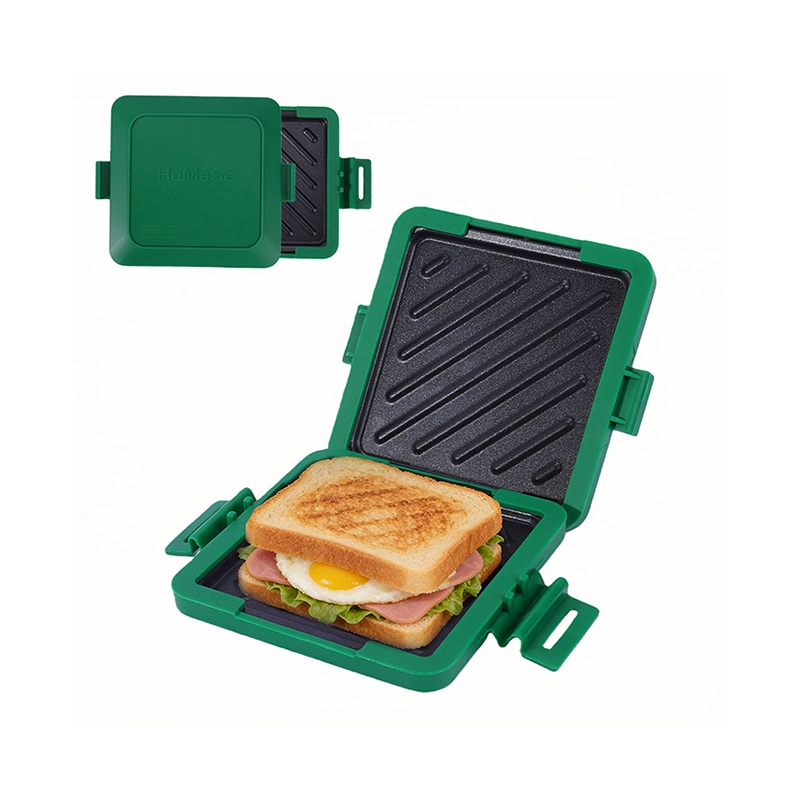
The current Quick Cooking Microwave Toaster Grill Tray page lists silicone, polymer and an aluminum plate in the product structure. It describes a heat-conductive layer behind a slanted wavy cooking surface, plus four buckles around the shell.
Each part has a practical job. The cooking plate transfers heat where it touches the bread. The upper and lower halves create two contact surfaces. The wave pattern changes the contact points and gives moisture or melted fat a path away from some parts of the bread. The buckles keep the two halves aligned when the sandwich is not overfilled.
The plate cannot correct a badly assembled sandwich. If thick fillings hold the halves apart, the bread touches only high spots. The center may become hot while pale patches remain around the edges. Product design helps, but food thickness and contact still matter.
A better way to approach toast in a microwave
There is no useful universal time because microwave output, bread thickness, starting temperature, filling moisture and tray design all change the result. Use the sequence below as a control method, not as a substitute for the product manual.
- Confirm the equipment. If you have only a plain microwave-safe plate, expect warmed bread rather than conventional toast. For browning, use cookware specifically designed and instructed for microwave crisping.
- Read the exact tray instructions. The current Quick Cooking model page says microwave mode only. It excludes Grill and Convection Mode, an oven, open flame and induction.
- Use bread with a reasonably dry surface. Blot condensation from thawed bread. Drain watery fillings before they reach the slice.
- Keep the load within the closing space. The tray should close without forcing the buckles. Uneven closure causes uneven contact.
- Place food before heating when the model says so. The Quick Cooking page warns against extended empty heating and tells users to put food in the tray.
- Start with a short interval. Inspect colour, contact marks and filling temperature before adding more time. Large jumps can dry the bread before the surface improves.
- Let steam escape after opening. Leaving hot toast closed against a moist filling can soften the surface you just created.
Which bread and fillings are easier to toast?
| Starting condition | What happens | Better adjustment |
|---|---|---|
| Thin, even bread | Both faces can contact the plates more consistently | Center the slice and keep the filling level |
| Very thick artisan slice | The crust may contact while the center holds the plates apart | Use a tray with enough closing space or reduce thickness |
| Frozen bread with visible frost | Melting ice adds water before browning begins | Remove loose frost and follow the food's thawing guidance |
| Tomato or wet vegetables | Liquid moves into the bread during heating | Drain or blot the filling and avoid placing it against the edge |
| Cheese-heavy sandwich | Melted fat and water can leak if the tray is overfilled | Leave closing space and keep the buckles unstressed |
| Dry toast without filling | Less internal steam reaches the surface | Watch closely because the slice can dry quickly |
A clamshell tray makes the most sense when both faces need contact heat. A single flat crisper plate can work under open-faced bread, but the upper surface does not touch a second plate. That is a format difference, not a quality judgment.
Does the plate pattern change the toast?
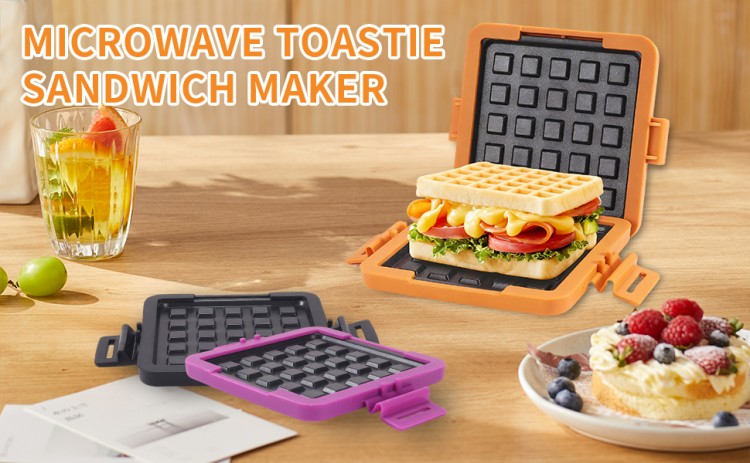
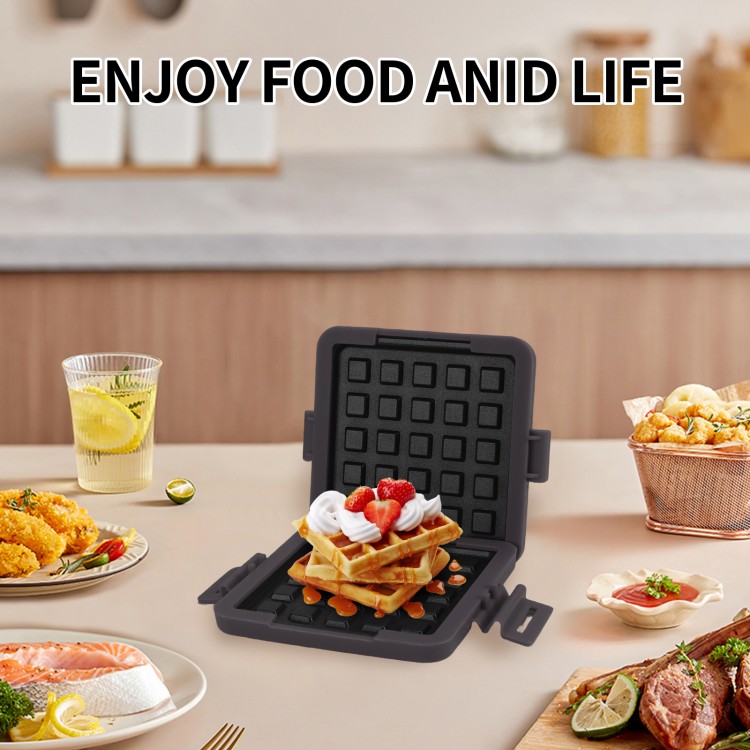
Pattern changes contact. A broad wave surface gives the bread longer contact bands. A waffle grid leaves a different mark and creates smaller pockets between raised areas. An embossed round plate adds a shaped design. None of those patterns guarantees a universal cooking speed.
Choose according to the visible result and the food:
- The Square Microwave Toaster Grill Tray uses a 3D wave-pattern surface and is the straightforward choice when grill-style contact lines are useful.
- The Waffles Microwave Toaster Grill Tray uses a grid pattern for a waffle-like surface imprint.
- The Round Microwave Toaster Grill Tray uses an embossed surface where the visual pattern is part of the product idea.
Why did microwave toast stay pale, turn hard or heat unevenly?
| Symptom | Likely cause | What to inspect | Next adjustment |
|---|---|---|---|
| Bread is hot but pale | No conductive browning surface, or poor plate contact | Cookware type and contact marks | Use approved crisping cookware or improve contact |
| Center is soft and edges are dry | Uneven thickness or a long heating interval | Slice shape, filling position and edge exposure | Level the load and use shorter checks |
| Toast softens after removal | Steam remains trapped against the bread | Wet fillings and how long the tray stays closed | Open carefully and move the toast away from condensed moisture |
| One face browns more | Uneven contact between upper and lower plates | Buckle closure and food position | Recenter the food and reduce overfilling |
| Bread becomes hard after cooling | Too much moisture left the crumb | Total heating and repeated cycles | Stop earlier and avoid chasing colour with time alone |
| Coating shows damage | Sharp tools, abrasives or overheating may be involved | Scratches, peeling and latch condition | Stop use and follow the manufacturer's replacement guidance |
Our broader microwave grill pan guide covers cookware formats beyond bread. For toast, the fastest diagnosis is usually visual: look at plate contact, moisture and closure before adding more heating time.
What should you check before using a microwave toaster grill?
Before heating
- The cookware is specifically designed for microwave use.
- The microwave mode matches the instructions for the exact tray.
- The tray fits the cavity and can rotate or sit as instructed.
- The cooking plates, coating, silicone shell and buckles show no damage.
- The sandwich closes without forcing the locking parts.
- Food is in place if the product instructions prohibit extended empty heating.
- Metal utensils, sharp tools and abrasive pads stay away from the non-stick surface.
Hot bread does not prove that every filling is safely reheated, especially in a thick sandwich. Microwave heating can be uneven. Follow the food instructions and use an appropriate thermometer when internal temperature matters.
Frequently asked questions
Can you make toast in a microwave without a toaster?
A plain microwave can heat and dry bread, but it rarely produces the same browned, crisp surface as a toaster. For toast-like results inside a microwave, use a microwave-specific browning or grill tray approved for your appliance and follow its instructions.
Why does bread get hard after microwaving?
Microwave energy heats water in the bread quickly. The slice may feel soft while hot, then become chewy or hard as moisture leaves and the starch structure changes during cooling. Longer heating can make that effect worse.
Does a paper towel make microwave toast crispy?
A paper towel can absorb some condensation, so it may reduce surface dampness. It does not provide the hot contact surface needed for reliable browning, so it cannot turn a plain microwave plate into a toaster.
Is a microwave toaster tray the same as Grill Mode?
No. A microwave toaster tray is cookware with a heat-conductive cooking plate. Grill Mode is a function built into some microwave ovens. The current HeMaSe Quick Cooking tray instructions say microwave mode only, not Grill or Convection Mode.
Should I preheat a microwave toaster grill tray?
Only when the instructions for that exact tray require it. The current HeMaSe Quick Cooking tray page says to place food in the tray and avoid extended empty heating. Do not apply another product's preheating routine to this model.
What bread works best in a microwave sandwich maker?
Bread that fits the plate and makes even contact is easier to toast. Very thick slices, visible frost and wet fillings make contact and moisture control harder. Adjust the load instead of forcing the tray closed.
HeMaSe · Ningbo Sai'an Intelligent Technology Co., Ltd.
Choosing a microwave toaster format for your market?
Send the HeMaSe team the target bread, filling thickness, preferred surface pattern, destination market and packaging brief. We can discuss whether a wave plate, waffle grid, embossed tray or another microwave cookware format fits the intended use.
Contact the HeMaSe factory team