

A microwave sandwich maker is a microwave-specific cooking tray that places bread between heat-conductive cooking surfaces. It can produce a toasted exterior and warm filling that an ordinary microwave-safe plate usually cannot. The important variables are plate contact, filling moisture, sandwich thickness and the instructions for the exact model.
A microwave sandwich maker works by converting microwave energy into heat at a coated cooking plate. In a clamshell format, the upper and lower plates touch both sides of the sandwich. That contact heat can dry and brown the bread while the microwave heats the filling. It is closer to a compact contact grill than to a plastic sandwich container, but it does not have the weight, open architecture or temperature controls of a countertop panini press.
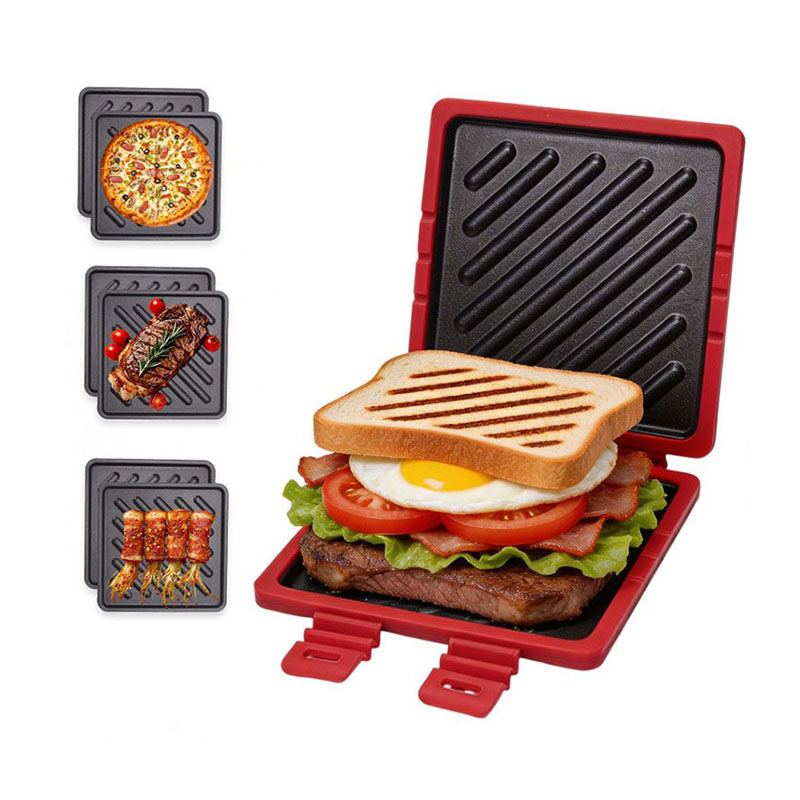
What is a microwave sandwich maker?
The name sounds like a small electrical appliance, but many products in this category have no plug, heating coil or control panel. They are pieces of cookware designed to operate inside a compatible microwave oven. You may also see the terms microwave toastie maker, microwave grilled cheese maker, microwave panini maker, microwave sandwich toaster or microwave crisper pan.
The names overlap, but the construction matters more than the label. An ordinary microwave-safe box can contain splatter and warm a sandwich. It does not automatically provide a browning surface. A proper microwave toaster grill tray includes a heat-conductive cooking plate intended to become the hot contact surface.
This is also different from Grill Mode on a combination microwave oven. Grill Mode uses hardware built into the appliance. A sandwich tray is cookware, so the tray instructions and the microwave manual both matter.
How can a microwave sandwich maker brown bread?
A plain microwave heats water-rich parts of food efficiently, but it does not normally create the hot, dry surface needed for browning. The USDA notes that food surfaces stay cooler during ordinary microwave cooking, which is why foods generally do not become brown or crisp in the same way they do under conventional dry heat.
A microwave sandwich maker changes the heat path. Its conductive plate absorbs microwave energy and becomes a contact heater. When bread touches that surface, heat moves from plate to bread. The bread surface loses moisture and can develop colour. Meanwhile, microwave energy continues to heat water in the bread and filling.
That last step is easy to overlook. A hot plate does not make water disappear. Tomato, sauce, frozen ingredients and a large amount of cheese can release enough steam to soften the bread. Good results come from balancing contact heat with the moisture and thickness of the load.
Which parts of the tray control the result?
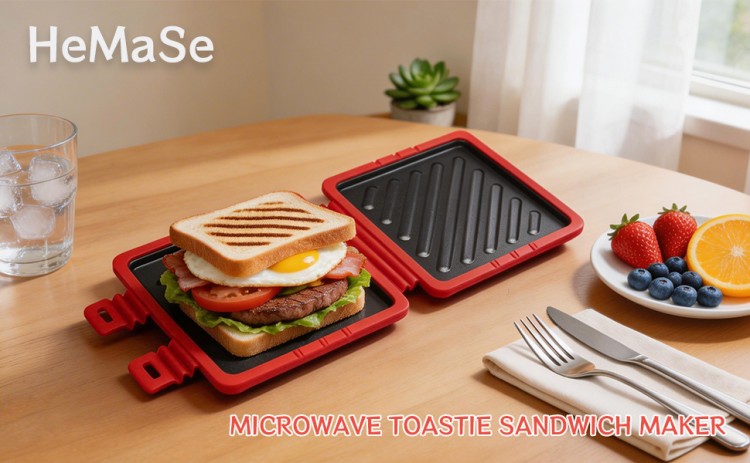
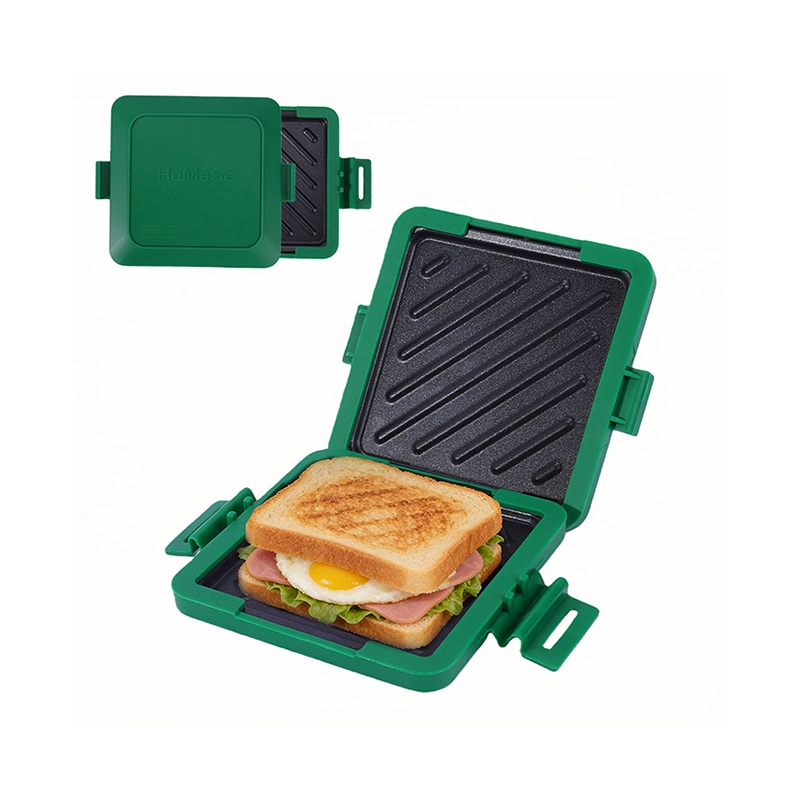
When we compare the current HeMaSe tray formats, four design decisions keep returning: the cooking plate, the plate pattern, the closing space and the shell. They solve different problems. Treating all four as decoration is a common product-selection mistake.
Conductive cooking plates
The plates supply contact heat. A two-sided format can touch both faces, while a single flat plate cooks only the face placed against it.
Wave or grid pattern
Raised areas determine where pressure and heat concentrate. Channels also give melted fat and moisture somewhere to move.
Buckles and hinge
Closure aligns the two plates. If an oversized sandwich holds them apart, only the high points make useful contact.
Silicone outer shell
The shell supports the plates and closing parts. It does not turn every metal object into microwave-safe cookware; the complete product must be designed for this use.
What results should you realistically expect?
A well-matched sandwich can develop distinct contact marks, a drier exterior and a warm center. It should not be sold as a universal replacement for every toaster or press. A microwave format has a fixed plate area and a limited closing gap. Thick focaccia, tall layered sandwiches and loose fillings can exceed that space.
An independent CHOICE test of a microwave toastie maker reached a similar practical conclusion. The compact format worked as a space-saving product, while a conventional sandwich press remained more flexible for different breads and layered fillings. That is not a failure of microwave cookware. It shows why product claims should match the food geometry.
How should you use a microwave sandwich maker?
There is no responsible universal time or wattage. Microwave output, starting temperature, bread thickness, filling mass and tray design change the heating curve. Use this sequence as a control method and let the instructions for your exact model decide the operating details.
- Confirm the mode. Check the microwave manual and the tray instructions. The current HeMaSe Quick Cooking page specifies microwave mode and excludes Grill Mode, Convection Mode, ovens, open flame and induction.
- Inspect the cookware. Do not use a tray with a damaged plate, peeling coating, distorted shell or broken closure.
- Build for contact. Center the bread. Spread filling evenly and leave room around the edges.
- Control moisture. Drain wet vegetables, remove surface frost and avoid excessive sauce.
- Close without force. Buckles should secure the tray without bending or heavy pressure.
- Follow the model's heating sequence. The current Quick Cooking page says to place food in the tray before heating and warns against extended empty heating.
- Inspect in short stages. Check plate marks, filling temperature and steam before extending the cycle.
- Open carefully. Hot steam and cooking surfaces can burn. Move the sandwich away from condensation so its exterior does not soften again.
Which bread and fillings work better?
| Food choice | Effect inside the tray | Practical adjustment |
|---|---|---|
| Even sandwich bread | Broad, consistent plate contact | Center it and keep the filling level |
| Very thick or domed bread | Edges or crust touch while other areas remain pale | Choose a deeper format or reduce the compressed height |
| Cheese | Melts readily but can leak into the hinge or edge | Keep it inside the bread perimeter |
| Tomato and wet vegetables | Release steam that softens the crumb | Drain, blot and use a modest layer |
| Frozen filling | Creates a cold center while the bread keeps heating | Follow safe thawing guidance instead of chasing the center with a long cycle |
| Uneven meat pieces | Create high spots and uncertain internal heating | Use thin, even, fully appropriate fillings and verify temperature where needed |
Microwave sandwich maker or countertop sandwich press?
| Decision point | Microwave sandwich maker | Countertop press |
|---|---|---|
| Heat source | Microwave energy plus conductive cookware | Built-in electric heating elements |
| Storage | Compact cookware with no cable | Larger appliance with cable and housing |
| Food height | Limited by the tray's closing space | Often accepts a wider range of thicknesses |
| Surface contact | Depends on buckles, load and fixed geometry | Often uses a weighted or floating upper plate |
| Operation | Model-specific microwave mode and sequence | Appliance-specific heat settings or indicators |
| Best fit | Small kitchens, controlled portions and compact storage | Frequent batches, varied breads and tall fillings |
Which microwave sandwich tray format should you choose?
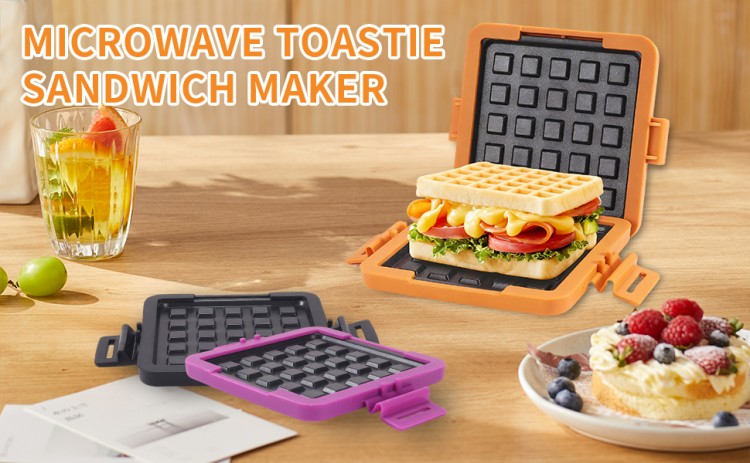
Start with the food, not the catalogue photo. The Quick Cooking Microwave Toaster Grill Tray uses a wave plate and four-sided closure. The 3-in-1 Microwave Toaster Grill Tray presents a broader rectangular plate. The Waffles Microwave Toaster Grill Tray uses a grid surface, while the Round Microwave Toaster Grill Tray changes the food footprint and presentation.
For a retailer or private-label program, test the target recipe rather than an idealized sample. Record bread dimensions, compressed filling height, starting temperature, microwave model, actual operating mode, surface colour, leakage and cleaning outcome. That information is more useful than a single claim such as "crispy in minutes."
Why did the sandwich stay soft, pale or uneven?
| Symptom | Likely reason | What to change |
|---|---|---|
| Hot filling, pale bread | Poor plate contact or no conductive browning surface | Confirm the product type and reduce uneven thickness |
| Crisp at first, then soft | Steam remained against the bread | Drain wet fillings and remove the sandwich after opening |
| One side browns more | Off-center load or unequal closure | Recenter the sandwich and inspect the buckles |
| Edges leak | Filling is too close to the perimeter or tray is overfilled | Reduce the load and leave a clean border |
| Bread turns hard | Repeated or excessive heating dried the crumb | Use shorter checks and stop chasing colour with time alone |
| Coating is scratched | Sharp tools or abrasive cleaning | Stop use if damaged and follow replacement guidance |
For the wider cookware category, see our microwave grill pan guide. It explains the difference between shallow toaster trays, crisper pans and deeper covered cookware.
Frequently asked questions
Do microwave sandwich makers actually toast bread?
A microwave sandwich maker with heat-conductive cooking plates can create a drier, browned contact surface. An ordinary microwave-safe sandwich box usually warms bread without producing the same toasted exterior.
Is a microwave sandwich maker the same as a panini press?
No. Both use contact surfaces, but a countertop panini press has built-in electric heaters and often accommodates a wider range of bread thicknesses. A microwave sandwich maker is cookware with a fixed closing space and model-specific microwave instructions.
Can I make grilled cheese in a microwave sandwich maker?
It is a suitable product format for a controlled cheese sandwich when the food fits and the maker is designed for that use. Keep cheese away from the edge, avoid overfilling and follow the exact model instructions.
Why is my microwave toastie soggy?
Wet fillings, surface frost, trapped steam or poor plate contact can keep the bread soft. Drain moist ingredients, use an even load and move the sandwich away from condensation after opening.
Should I preheat a microwave sandwich maker?
Only if the instructions for that exact model require it. The current HeMaSe Quick Cooking tray page says to put food in the tray before heating and warns against extended empty heating. Do not copy another product's preheating routine.
Can any metal sandwich maker go in a microwave?
No. Do not put ordinary metal cookware in a microwave. Use only a complete product specifically designed and instructed for microwave use, and check both the cookware instructions and the microwave manual.
HeMaSe · Ningbo Sai'an Intelligent Technology Co., Ltd.
Need a microwave sandwich maker matched to a real food brief?
Tell our team the target bread size, compressed filling height, desired plate mark, microwave market and packaging position. We can discuss which current HeMaSe tray format is the closest starting point and what still needs sample testing.
Discuss your microwave sandwich maker