

By HeMaSe · Ningbo Sai’an Intelligent Technology Co., Ltd.
At similar size and thickness, an aluminum plate is generally lighter and spreads heat more readily within the metal. An aluminized steel plate has a steel core that offers greater resistance to bending at comparable geometry. In a finished microwave grill pan, the heating layer, plate profile, support points and contact with food also shape what you get on the plate.
When two suppliers propose different metals for the same tray, ask which other parts of the design would change. A switch in substrate can also change the sheet thickness, rim profile, coating preparation and fit inside the silicone frame. Those details tell you what is actually being compared.
What Is the Difference Between Aluminum and Aluminized Steel?
An aluminum plate has an aluminum or aluminum-alloy substrate. An aluminized steel plate has a steel core with a metallic coating of aluminum or an aluminum alloy. You can have a separate nonstick finish on the cooking face of either plate. For a wider look at how the plate fits with the shell, closure and other parts, see the microwave grill pan materials guide.
Aluminum alloy plate
An aluminum alloy’s grade and temper identify the material and its condition. This matters when a flat sheet has to form into a shallow pan or fit a locking frame. On a specification, ask for the alloy, temper, sheet thickness and food-facing finish. Bare, anodized and nonstick-coated aluminum describe different surface conditions, even if the alloy underneath is the same.
What Is Aluminized Steel Cookware?
Aluminized steel cookware uses a steel substrate with an aluminum-based metallic layer. In the aluminum-silicon sheet illustrated in a steel mill’s technical data, a thin metallic coating sits on the steel. ASTM A463/A463M covers hot-dip aluminum-coated sheet steel in coils and cut lengths. A finished pan has its own use conditions and documentation. ASTM A463/A463M · thyssenkrupp’s aluminum-silicon coated sheet guide.
A comparison labeled aluminized steel vs. carbon steel needs one more detail. Carbon steel can be the core of an aluminized sheet. Ask whether the other option uses uncoated carbon steel, a different metallic layer or a separate food-contact coating. The quote should identify the core and each finish on its own line.

| Compare | Aluminum plate | Aluminized steel plate |
|---|---|---|
| Base material | Aluminum alloy. Confirm grade and temper. | Steel core. Confirm grade and metallic coating designation. |
| Heat spread | Aluminum generally conducts heat more readily across the base metal. | The steel core and layer geometry affect how the sheet spreads heat. |
| Weight and flex | Lower density. Ask how the profile and support control bending. | Higher core stiffness at similar geometry. Compare actual part weight and thickness. |
| Food-facing finish | Specify bare, anodized or an applied coating, as applicable. | Identify the metallic layer and any separate food-contact finish. |
| Edge detail | Check how the formed edge fits the shell and how the finish ends. | Check how cut edges are managed and where the steel core may be exposed. |
How Does the Plate Material Affect Heating and Browning?
The metal plate helps spread heat. The heating structure and food contact determine how that heat is delivered during cooking. In a design with a microwave-responsive layer, that layer generates heat during microwave operation. The plate conducts heat toward the cooking face and spreads some of it across the surface. Where the food rests on the hot face, heat moves into it by contact. A published microwave-tray design illustrates one way to pair a heat-generating layer with a metal plate. European Patent Office publication EP3151635B1.
Heat spread and heat capacity answer different questions
Thermal conductivity describes how readily heat moves through a material. Heat capacity describes how much energy it takes to change an object’s temperature. For the metal plate alone, the energy for a given temperature change is Q = mcΔT, where m is mass, c is specific heat and ΔT is the temperature change. A thicker plate changes the mass as well as the path for heat to travel. To compare warm-up times, you also need to know how much heat enters the plate and how much is transferred to food and the surroundings. OpenStax on heat transfer · OpenStax on heat capacity.
Contact and moisture affect what you see on the food
Picture a sandwich held between two ridged faces. The ridges touch the bread in narrow bands. If the plate sits unevenly or the filling holds one side open, the contact pattern changes. Moisture at the surface also takes energy to evaporate. Either effect can change the appearance of the toast even when the plate material stays the same. If pan contact is the issue, start by comparing the plate profile and closure clearance.
How Do Thickness and Shape Change Weight and Stiffness?
Compare the metal component and the finished pan separately. At equal volume, the aluminum piece is generally lighter than the steel piece. Once a supplier changes thickness, adds a rim or proposes a different lid, the handling weight of the assembled unit can change in either direction. Request both weights if a packaged weight or handling target matters.
Look at the span between the supports
For a locking tray, we would review where the plate is supported and how the frame holds the perimeter before approving a thinner sheet. A plate with a long unsupported span can flex as the tray closes. Parts of the cooking face can then lose contact with the bread, leaving a patchy toast pattern. A rib, a rolled edge or a change in support location can change that behavior.
What a plate change can do on paper. Consider flat strips of equal width and thickness in elastic bending and compare the base metals alone. With representative Young’s moduli of 70 GPa for aluminum and 200 GPa for steel, the steel strip has about 2.9 times the bending rigidity of the aluminum strip. At constant width and material, increasing strip thickness from 0.50 to 0.60 mm raises calculated bending rigidity by about 73%, because rigidity is proportional to thickness cubed for that section. The calculation describes flat strips. A formed pan adds ribs, supports and joints. MIT material properties · MIT beam mechanics.
What an upgrade would have to earn back. If a revised assembly costs 25% more to replace, it needs 25% more usable cooking cycles to reach the same replacement cost per cycle, with other costs held equal. That gives procurement a 1.25× break-even threshold. Plate rigidity, coating wear and closure wear are separate factors when deciding which part limits the usable life of the assembly.
When the proposed plate is thicker or uses a different core, ask how the formed rim will fit the existing shell, whether the closing force will change and whether the assembled weight still meets the brief. Those three checks tell us more about a tray revision than the stiffness figure alone.
Do Both Metals Support a Nonstick Finish?
Yes. Both aluminum and aluminized steel can be used as substrates for a separate nonstick coating. In a quote for an aluminized steel pan, identify the metallic coating on the sheet and the food-contact finish on the formed plate as separate items.
Bare aluminum vs. nonstick-coated aluminum
These options can use the same aluminum substrate. On a bare plate, the food meets the metal surface. On a coated plate, the applied finish is the cooking surface. For a buyer, that difference changes which cleaning instructions and utensils should be specified and which finish should appear on the approved drawing. A dark or smooth cooking surface alone provides too little information to identify its coating system.
Check the edge as well as the cooking face
A coated sheet may have metal exposed at the cut edge. Ask where the edge sits after forming, how the silicone or other surround meets it and which finish covers each accessible surface. On aluminized steel, edge details matter where the steel core can be exposed. Record the proposed metal, surface preparation and cooking finish together so that a material substitution does not leave the coating specification ambiguous. See the grill pan coating guide for details on specifying the finish.
What Makes a Finished Grill Pan Suitable for Microwave Use?
Check the instructions for both the finished pan and your microwave oven. Similar-looking metal parts can belong to cookware with different permitted modes. HeMaSe’s Quick Cooking tray instructions specify microwave use and exclude convection and grill modes. A conventional baking pan should only be used in a microwave mode when the relevant equipment and cookware instructions permit that use. Quick Cooking tray instructions · FDA microwave oven guidance.
For a brand specifying the product, keep three records tied to the same assembly: the metal specification, the applicable food-contact documentation and the use instructions. The material specification identifies the sheet. The food-contact documentation relates to the intended use and destination market. The instructions tell customers how to use that particular assembly. See the European Commission’s food-contact materials overview for the EU framework.
Two HeMaSe Products, Two Plate Specifications
We use an aluminum plate in the Quick Cooking tray and an aluminized steel plate with a PTFE cooking finish in the SN-0077G multi-pot. The examples show how material specifications fit two different assemblies. The tray closes around a sandwich with a locking shell. The deeper pot has a separate lid that rests on the body under its own weight. Each format gives a buyer different dimensions and interfaces to check.
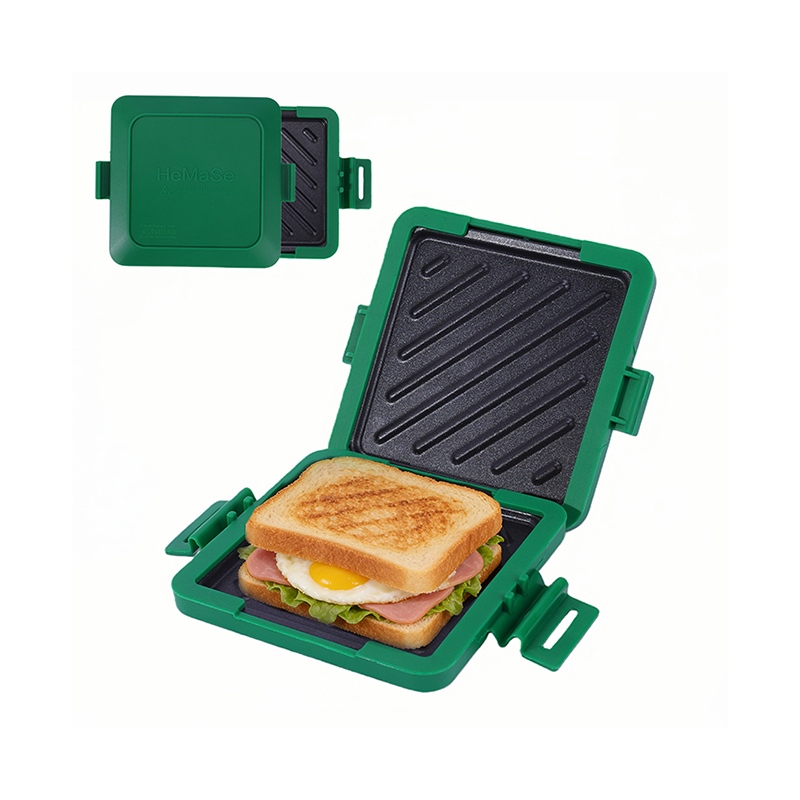
Quick Cooking sandwich tray
For a toast or sandwich range, ask how much usable space remains when the tray closes around the intended filling. If you change the plate thickness or ridge profile, ask how the supplier will hold the closing gap and rim fit. View the Quick Cooking tray.
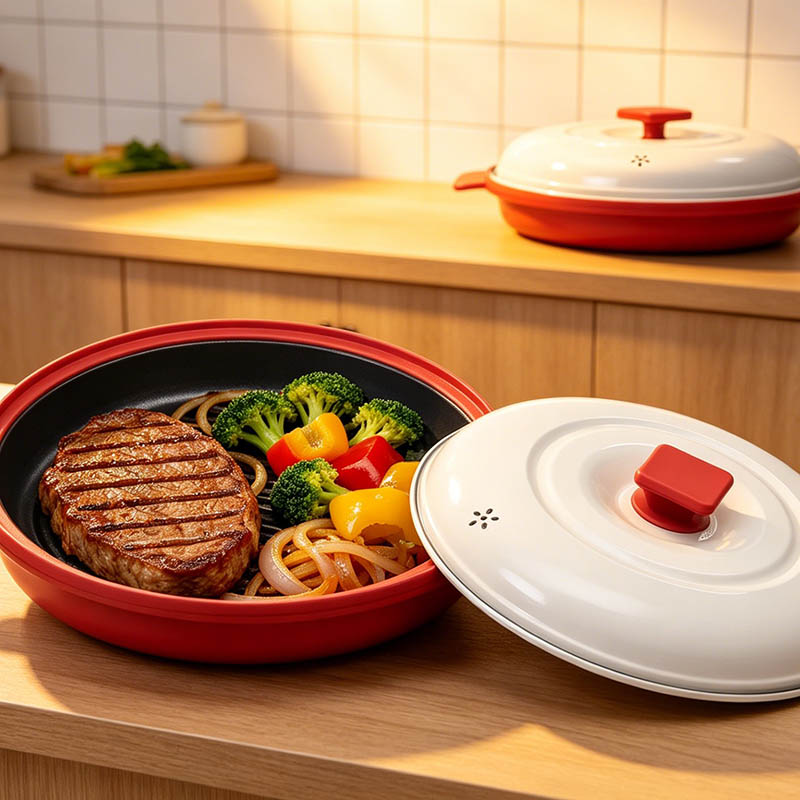
SN-0077G lidded multi-pot
For a deeper cooking format, ask for the food-contact finish, usable base area and assembled dimensions with the lid in place. For a batch order, the approved drawing and care instructions should describe the same lid and base. View the SN-0077G multi-pot.
How to Read a Published Coating Specification
In thyssenkrupp’s steel sheet data, the AS100 designation lists a typical coating thickness of 17 μm per side. The same row lists minimum two-sided coating masses of 100 g/m² for the triple-spot sample and 75 g/m² for the single-spot sample. Those figures describe the supplier’s AS100 stock. When you compare quotes, ask whether a figure is a typical thickness on one side or a minimum coating mass for both sides, and ask which sampling basis it uses. The food-contact finish belongs on a separate line. thyssenkrupp AS-coated sheet data, surface finishes.
What Should Buyers Put on a Side-by-Side Specification Sheet?
Start with one use case and one drawing revision. If the drawing was prepared for a particular plate material, let each supplier identify the changes their alternative requires. Use the same food, closure clearance, intended microwave mode and weight target for both proposals. Then compare the specifications row by row.
| Field | What to ask for | Why it affects the decision |
|---|---|---|
| Base metal and thickness | Alloy and temper for aluminum. Steel grade and metallic coating designation for aluminized steel. State the nominal thickness and its basis. | A grade name alone leaves weight, stiffness and formed geometry unresolved. |
| Finished shape and fit | Ridge height, rim profile, support locations and closing clearance. Note changes to parts that seat against the shell or lid. | A material change can also change how the plate sits and how the food touches it. |
| Metal and assembled weight | Separate weights for the plate and the finished assembly with its lid or locking components. | A change in plate mass may be smaller or larger than the change in the unit a customer handles. |
| Heating and cooking surfaces | Heat-generating component, assembly interface, food-facing finish and edge treatment. Identify what changes in each proposal. | These details affect heat transfer, care instructions and the surfaces that need to be specified. |
| Use and supporting documents | Model and revision, permitted modes, care instructions and applicable food-contact documents. | The packaging, instructions and technical file should describe the assembly being ordered. |
For example, a supplier might propose a thinner steel plate and a revised rim for an aluminum tray. Record both changes. Compare the full proposals if your decision is which tray to order. If your question is what the base metal alone changes, keep the geometry, heating structure and food contact conditions comparable. For related options, see the microwave grill pan guide.
Frequently Asked Questions
Is aluminized steel the same as aluminum or stainless steel?
Aluminized steel is steel sheet with an aluminum-based metallic coating. Aluminum plate is based on an aluminum alloy. Stainless steel is an alloy category. If a supplier specifies aluminized steel, ask for the steel grade and the metallic coating designation.
Does a higher thermal conductivity make a microwave grill pan cook faster?
Higher thermal conductivity can help heat spread within the plate. Cooking time also depends on heat generation, plate mass, food contact, the microwave and the food itself. Compare finished designs under the same intended use conditions to assess cooking time.
Will an aluminized steel plate always be heavier than an aluminum plate?
At equal volume, a steel-core part is generally heavier. Two finished plates can differ in thickness and shape. Compare the actual mass of each plate and the total mass of each assembled pan separately.
Can both aluminum and aluminized steel plates have a nonstick surface?
Yes. Both can carry a separately specified nonstick finish. On aluminized steel, the metallic coating covers the sheet faces, and the nonstick finish is applied to the food-facing surface when the design calls for it.
Can I microwave an ordinary aluminum or aluminized steel baking pan?
Use a pan in microwave mode only when the relevant cookware and equipment instructions permit it. Check the exact model and mode. An oven-use marking by itself does not establish microwave compatibility.