

Before placing a bulk order, check that the microwave grill pan sample fits the intended microwave, cooks the food you plan to sell it for, and still closes and releases food after the approved cleaning routine. Record the conditions and evidence for each check. Then attach the approved sample ID and the written acceptance criteria to the purchase order.
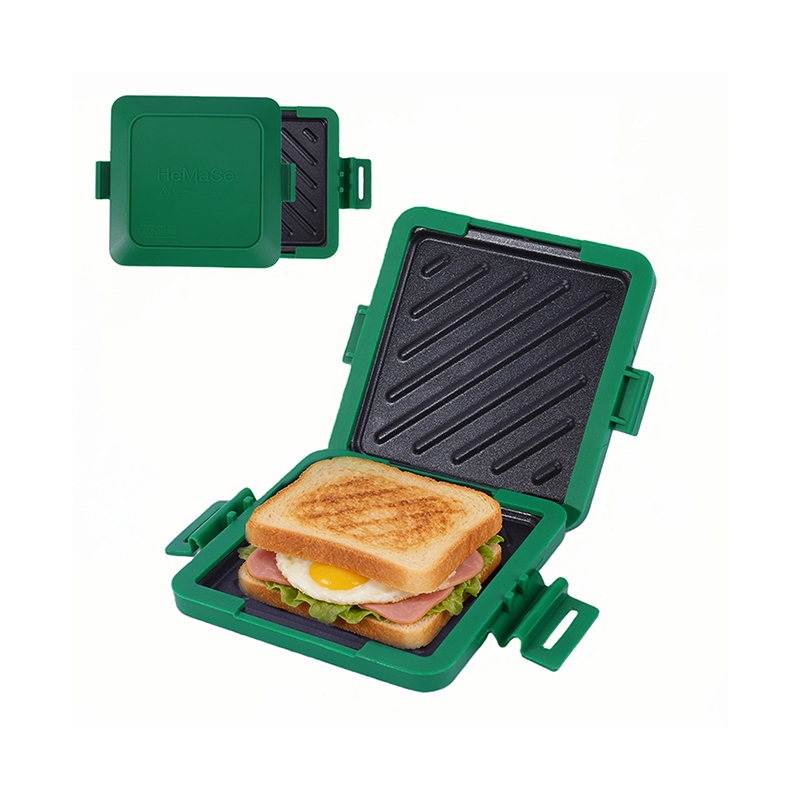
For a sandwich tray, check how it closes with a typical filled sandwich inside. An empty tray can latch easily while the same tray needs excessive force around a thicker load. Once you find a configuration that works, keep its food load, plate version and latch configuration in the approval record.
What Should You Confirm Before Testing the Sample?
Ask the supplier whether you received a stock unit, a development sample or a pre-production sample. Record the model, sample ID and specification revision. Photograph the cooking plate, outer shell, closure and any loose parts. Check that the removable parts, if supplied, seat as described in the instructions.
Check fit with the assembled pan and any handle or closed latch in its use position. For a turntable model, confirm the pan can travel through a full rotation without touching the cavity. Check the allowed combination of cookware, appliance mode and settings in both manuals before running a cooking check. The FDA advises following the microwave manufacturer’s instructions and using cookware made for microwave use. FDA guidance on microwave oven operation
Agree on the foods and portion sizes the packaging or listing will show. For our Quick Cooking Microwave Toaster Grill Tray, the product page identifies four perimeter latches. A filled sandwich lets the buyer check all four under a representative load. For a different microwave grill pan with a lid, use that model’s closure and intended load. HeMaSe Quick Cooking tray · Microwave grill pan size guide
How Do You Run a Repeatable Cooking Check?
Start with the food your buyer expects the pan to handle most often. For a sandwich tray, use the same bread and filling for each comparison and note the assembled thickness. A thicker sandwich changes how the lid sits and how much of the bread touches the cooking plates.
Four Steps for a Repeatable Sample Check
- Prepare matching portions. Record food type, mass, assembled thickness and starting temperature. Use the same ingredients, starting conditions and placement for the two runs.
- Record the cooking setup. Log the microwave model, output rating, power setting, operating mode and heating time. Follow the instructions for that pan and appliance. Use preheat only when both sets of instructions allow it, and record it if used.
- Compare browning and food release. Photograph the side that touched the plate under consistent lighting. For a two-sided press, photograph both sides. Use the same utensil and wait the same length of time before lifting each portion. Record whether it lifts intact and where food sticks.
- Check the pan after cleaning. Let the pan cool and clean it as directed. Check the surface, plate seating and closure. Repeat the same food run from the recorded starting condition, using a fresh matching portion, and photograph the results.
If you compare two samples, hold the settings constant where both manuals permit a common setup. If the models require different settings, record each approved setup and describe the outcome for the complete pan-and-instructions combination. Stop the trial if the pan sparks or shows visible damage. Hold that sample for supplier review before further heating.
What Should Go on the Sample Approval Sheet?
Copy this sheet for each sample revision. Enter the sample ID, date, operator, market, appliance model and setup beside the results. Agree on the acceptable food result before comparing samples. For example, approve a reference photo and say which contact areas matter for your sandwich. A patterned plate will leave a patterned result.
| Check | Conditions and method | Proposed acceptance criterion | Observation to record | Evidence to attach |
|---|---|---|---|---|
| Fit and closure | Check the assembled pan empty, then with the agreed food thickness, before heating. | The pan clears the cavity in use. The example tray’s four latches engage without forcing them. | Food thickness, latch position and any gap. | Photos of the closed tray and any gap. |
| Browning | Use matching portions, placement and approved settings. | The contact area meets the agreed photo reference for the intended food. | Where the food browned and where it stayed pale. | Cook settings and labeled photos of each contact face. |
| Food release | Lift with the same approved utensil after the same rest. | The agreed portion lifts intact within the accepted reference. | Location and extent of sticking or tearing. | Photo of the lifted portion and cooking plate. |
| Condition after cleaning | Clean as directed. Inspect the cooled pan and repeat the food run. | The plate and closure remain seated as specified. Investigate changes before approval. | Coating lift, looseness, closure change or changes in the repeat result. | Cleaning method, cycle count and before-and-after photos. |
| Food-contact paperwork | Review the documents for the ordered configuration and intended conditions of use. | The evidence identifies the relevant food-contact materials and covers the planned market and use. | Material reference, use conditions and review status. | Supporting document and its revision. |
Example decision. Suppose your purchase specification calls for a 25 mm assembled sandwich. All four latches close on the empty tray, but one fails to engage with that portion. Record the latch position and the actual sandwich thickness, photograph the gap, and hold the configuration for review. If you agree to a thinner portion for the product instructions, repeat the check at that revised thickness. If the supplier changes the closure, test the revised part with the original 25 mm target.
Review food-contact evidence alongside the cooking results. For a U.S. purchase, ask the supplier to identify the food-contact plate surface or coating and any food-contact silicone, then link them to the applicable basis for the intended use. An effective FDA Food Contact Notification, when relied on, must be traceable to the manufacturer for which it is effective. FDA guidance on food-contact material components
How Do You Turn an Approved Sample Into a Production Reference?
From the factory side, a useful approval gives production and inspection the same configuration to work from. Keep a signed reference sample and a written record of what was approved. Include the sample ID, drawing or specification revision, plate construction and finish, coating reference, latch or lid revision, instruction version and the acceptance sheet. Ask the buyer and supplier to use those same references on the order and inspection instructions.
Record changes by part and by test affected. A coating change warrants review of the food-contact documents and a repeat of release and cleaning checks. A moved latch or a revised shell warrants another fit check with the agreed loaded thickness. If the change affects how the food sits against the plate, repeat the cooking comparison as well. Review the change before releasing the revised version for production.
Keep any approval limits in the written specification, especially for appearance, fit or food release. The inspector can then use the physical sample and labeled photos to resolve differences without relying on a memory of the original trial. For the wider sourcing process, see our microwave grill pan manufacturer guide.
How Many Samples Should You Test?
Count the distinct configurations and use conditions you need to verify. If two SKUs use different plates or closures, cover both. If only the carton artwork changes, focus the additional check on print, labeling and pack-out, provided the approved pan configuration is documented and carried forward. Plan separate units for checks that can damage a sample and keep one approved reference in good condition for later comparison.
For finished lots, agree on defect definitions, inspection level, lot size and the sampling plan before shipment. ISO 2859-1:2026 describes acceptance sampling by attributes for lot-by-lot inspection. Use it for the production-lot decision where applicable. Decide how many pre-production samples to evaluate from the configurations and questions you need to cover. ISO 2859-1:2026
Frequently Asked Questions
Can I approve a stock sample for a private-label order?
Use it to review the base design. Approve the final configuration before production if the ordered pan uses a different coating, closure, plate or other functional component. Review the finished artwork and instructions for the private-label order.
Should I try the sample in more than one microwave?
Use the appliance type your customers are most likely to use. Add a second permitted setup if your instructions will cover materially different appliance models, power ranges or cavity and turntable layouts. Record the results for each setup.
What should I do if the second cooking run looks different?
Compare food thickness, starting temperature, plate position, cooking settings and whether the pan started warm. Repeat the run with those conditions matched. Put the sample on hold if the difference persists or if you find damage or closure changes.
When should an approved microwave crisper pan be checked again?
Reopen the affected checks when the plate, coating, closure, shell, food-contact material supplier or use instructions change. Tie the results to the new revision before authorizing production.
What to Send HeMaSe With a Sample Request
Send the destination market, the food and portion you intend to show customers, the pan format, and the microwave setup you plan to use. Include any private-label changes and the documents you need reviewed. If you already have an approval sheet, include the checks you want tied to the production specification.
Ningbo Sai'an Intelligent Technology Co., Ltd. · ningboyoulekang@163.com · +86 152 5830 1863