

The tempting shortcut is to scrape a dark grill line until it disappears. On a coated microwave grill pan, that can turn a small cleaning job into a scratched cooking surface. The safer routine is simple: let the pan cool, soften the residue, clean the grooves with a soft sponge, and check the parts that food can hide under.
Let the microwave grill pan cool before washing. Remove loose food with a soft or silicone utensil, wash the food-contact surface with warm water, mild dish soap and a soft sponge, then rinse and dry it thoroughly. Do not use steel wool, metal spatulas or sharp tools on the nonstick coating. Check your exact model's instructions before separating parts or using a dishwasher: HeMaSe's Quick Cooking tray is listed as top-rack dishwasher safe, but that statement does not cover every HeMaSe grill pan.
What is the safest routine after each use?
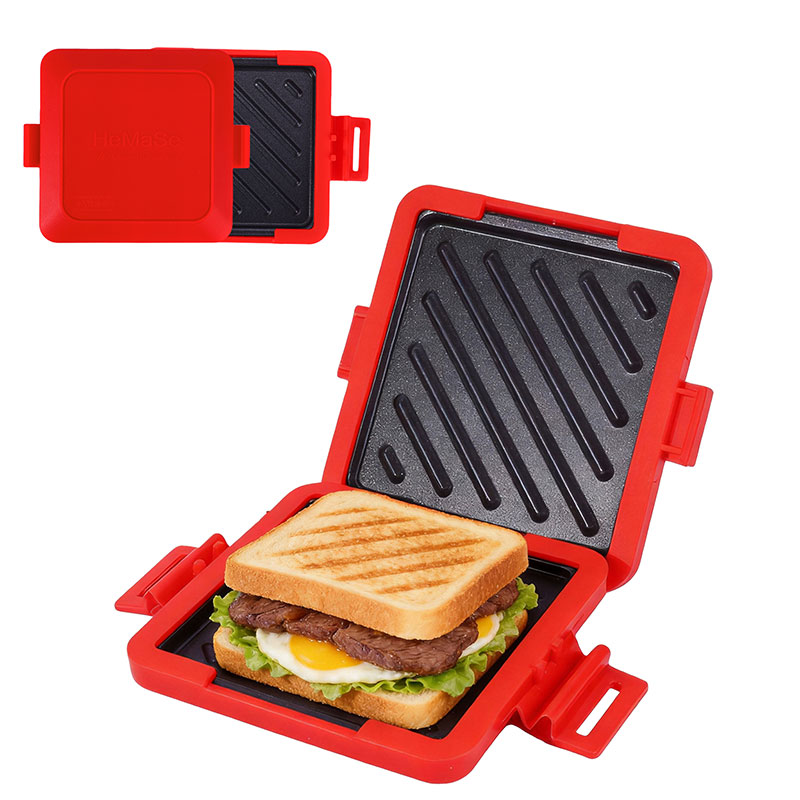
A microwave crisper pan can include a coated food-contact plate, a silicone surround and a closing mechanism. A deep multi-pot may add a separate lid. Clean the actual construction in front of you, rather than treating every red microwave pan like a single-piece dinner plate.
- Let it cool in a safe place. The cooking plate can be hot even if the outside looks easy to hold. HeMaSe's Quick Cooking instructions also say not to rinse a hot tray immediately with cold water. Wait until it can be handled safely before washing or separating anything.
- Lift out loose food gently. Use the utensil type permitted for the model. The Quick Cooking page recommends a silicone spatula or soft sponge and warns against metal spatulas and other sharp or hard objects on the coating. Do not lever dried food out of a ridge with a knife.
- Wash the cooking surface. Use warm water, a little mild dish soap and a soft sponge or cloth. Follow the groove direction, then wipe across the edges where the plate meets the surround. Repeated light passes are better than pressing one abrasive corner into a stuck patch.
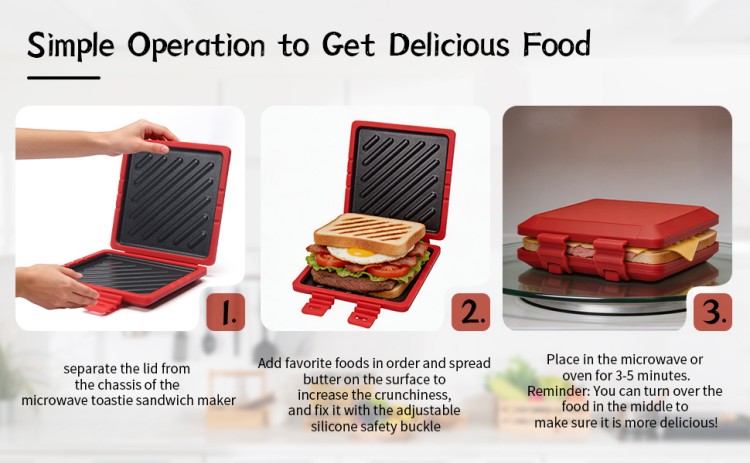
- Check seams, latches and the lid if fitted. A clean-looking center plate does not tell you whether sauce remains around a buckle or inside a lid rim. Clean accessible surfaces without prying apart components that the model is not designed to release.
- Rinse, dry and inspect. Remove soap from food-contact areas, dry accessible crevices and reassemble only as directed. Before the next use, look at the coating and closure. The Quick Cooking page tells users to stop using that tray if its latches or coating are damaged.
Clean tomato, pickle, oily and sugary residues after the pan cools rather than leaving them on the plate for extended storage. That timing comes from the Quick Cooking model's care notes; it does not require washing a still-hot plate.
How do you clean burnt-on cheese, sauce or food in the ridges?
First decide whether you are seeing food on top of the coating or damage to the coating itself. A raised bit of cheese or syrup may soften with warm, soapy water. A flaking or missing coating will not become safe again if you scrub harder.
For residue, wet the cooled surface with warm soapy water and give it time to loosen. Then use a soft sponge along the ridge, a soft cloth around the edge, and a silicone utensil only where the product instructions permit one. Repeat if needed. Avoid soaking a closed assembly or immersing a component whose manual does not say it may be immersed. This is deliberately a gentle method; a steel brush, knife tip or scouring powder can remove the wrong material.
| What you find after cooking | Try this after the pan cools | What not to do |
|---|---|---|
| Melted cheese in a groove | Soften with warm soapy water; follow the groove with a soft sponge and rinse. | Do not dig between ridges with a fork or knife. |
| Sticky sauce or sugary glaze | Loosen gently, wash, and check the plate edge where residue can collect. | Do not leave it on the coating for days or scrub with steel wool. |
| Grease near a clamshell latch | Open the tray as designed and wipe reachable latch surfaces with a soft damp cloth; dry before closing. | Do not force the latch or pry off a non-removable shell. |
| Food around a lid rim or vent | Clean accessible lid features according to the model instructions, rinse and dry them before storage. | Do not assume a separate lid's dishwasher permission from the pan's listing. |
| A mark that remains after gentle washing | Check whether it is a stain, a scratch or a lifting patch. Ask for model-specific care guidance if uncertain. | Do not polish through the coating to make it look new. |
A permanent color mark and a loose coating fragment are not the same problem. If a section is lifting, peeling or missing, stop using the pan and contact the maker rather than continuing to scrape or attempting a home recoating.
What changes between a clamshell tray, a detachable tray and a lidded pan?
This is where generic cleaning advice tends to fail. HeMaSe's current product pages show distinct constructions. The number of seams and removable pieces changes what you need to clean and what you must leave assembled.
A closing toast tray
The Quick Cooking Microwave Toaster Grill Tray has wavy cooking plates and perimeter buckles. Work gently along the waves, then check the plate edge and accessible buckle areas. Keep the closure clean enough to operate normally, but do not treat a latch as a handle for scraping or disassembly. The product page explicitly warns against sharp tools and says to inspect the latches and coating before use.
A tray with a detachable outer casing
HeMaSe's 3-in-1 Microwave Toaster Grill Tray describes a detachable baking tray and silicone casing. If your exact version separates as shown in its instructions, cleaning those parts apart exposes the surfaces that would be hidden when assembled. Let them dry before reassembly. Detachable does not automatically mean every piece is dishwasher safe, and it is not an invitation to remove bonded layers or hardware.
A deep pan with a separate lid
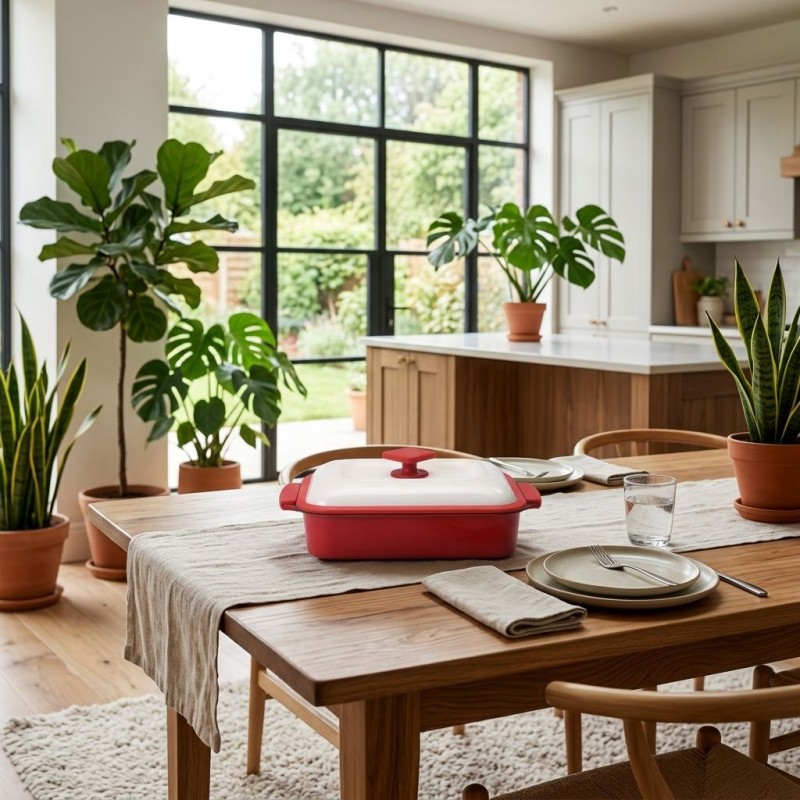
On the Large Capacity Non-Stick Microwave Grill Pan with Lid, clean the food-contact base and the lid as distinct parts. The product page shows a lid with a vent and sealing edge. Those are useful places to inspect for food film before drying and storage. The page lists the model as dishwasher safe, but it does not give a part-by-part rack placement or cycle in its specification table; check the supplied manual before making that a care instruction for every component.
Is a microwave grill pan dishwasher safe?
There is no answer for the whole category. HeMaSe's current Quick Cooking listing says top rack for that named tray. The current Large Capacity lidded-pan page says dishwasher safe, but its short specification does not explain how to place each separate component. The 3-in-1 page's detachable construction does not itself establish dishwasher suitability. When the manual for your specific item is silent or unavailable, hand washing with a soft sponge is the cautious choice.
For comparison, Panasonic's own Magic Pot care instructions call for hot soapy water and warn against abrasive cleaners and scouring pads. They also discuss a removable seal on that particular accessory. The seal-removal step is Panasonic-specific; it must not be copied into a HeMaSe care card.
When should you stop cleaning and inspect the pan instead?
Stop trying to scrub away a mark if the surface appears to be peeling, flaking or exposing a layer beneath the food-contact finish. Also check whether a clamshell still closes as designed. The Quick Cooking page says to stop using that model if the coating or latches are damaged. For other models, use their manual and ask the manufacturer for a replacement or assessment if the food-contact surface is compromised.
A stain alone does not establish that a coating has failed. But a cleaning guide cannot diagnose a coating from a photograph or prescribe a safe repair. Describe what changed, send clear photos of the affected surface and the model label, and request model-specific advice. Avoid a DIY coating spray or a metal scraper marketed as a “restoration” shortcut.
What would we put on a useful care card?
If we were reviewing care copy for a specific HeMaSe model, we would ask one practical question first: can a customer identify every part mentioned in the instructions? “Easy to clean” does not tell someone whether the tray separates, where a lid vent is, or which item a top-rack dishwasher statement applies to.
A useful card names the model, shows which pieces are removable, states when to let the pan cool, identifies the permitted cleaning tools, and distinguishes hand-wash advice from any part-specific dishwasher permission. It should also tell the owner what to inspect before reuse. That is more valuable than promising a spotless surface after an arbitrary number of washes.
The Non-Stick Coating Microwave Toaster Grill Tray product page is another named model to check if that is the version you own. Its own instructions, not a care note for a different tray, should control how you clean it.
Frequently asked questions
What is the best way to clean a microwave grill pan?
Let it cool, remove loose food with a permitted soft utensil, wash the cooking surface with warm water, mild dish soap and a soft sponge, then rinse and dry it. Check grooves, edges and any accessible latches or lid features. Follow the exact model's manual if it gives different instructions.
Can I use steel wool on a microwave grill pan?
No on HeMaSe's Quick Cooking coated tray. Its current product instructions warn against steel wool, metal spatulas and sharp or hard tools because they can scratch the nonstick coating. Use a soft sponge and do not scrape a stuck patch with metal.
How do I remove cheese stuck in the grill grooves?
After the pan cools, soften the residue with warm soapy water and wipe along the grooves with a soft sponge. Repeat gently if needed. Do not dig at the coating with a knife or fork, and do not immerse components unless the model's instructions permit it.
Is the HeMaSe microwave grill pan dishwasher safe?
It depends on the model. The Quick Cooking Microwave Toaster Grill Tray page lists top-rack dishwasher use for that tray. The Large Capacity lidded-pan page lists its model as dishwasher safe without part-by-part placement details. Check the current instructions for your exact pan and its components; do not extend either listing to the entire range.
Should I wash a hot microwave grill pan in cold water?
Not for HeMaSe's Quick Cooking tray. Its current instructions say not to rinse the hot tray immediately with cold water. Let it cool enough to handle safely, then clean it with warm water and a soft sponge.
What if the nonstick coating is peeling?
Stop using the affected pan and ask the manufacturer for model-specific advice. HeMaSe's Quick Cooking instructions explicitly say to stop use if its coating or latches are damaged. Do not try to scrub away a lifting coating or apply an unverified home recoating product.
HeMaSe | Ningbo Sai'an Intelligent Technology Co., Ltd.
Find the Care Instructions for Your Model
Browse our microwave toaster grill trays or grill multi-pots, then use the exact product name when asking us about cleaning, removable parts or dishwasher placement. The right answer depends on the pan you have.
Ask HeMaSe About a Model