

The short verdict
Yes. A microwave crisper tray really does brown and crisp food, as long as it has a genuine heat-conductive base under the silicone. The trays people complain about are almost always cheap ones missing that layer. Set your expectations at "toaster and grill," not "deep fryer," and it delivers.
We make these trays, so treat that as a bias to check, not a reason to tune out. What follows is the version we give buyers who ask us the blunt question before placing an order: does this thing actually work, or is it another kitchen gadget headed for a drawer?
We will show you our own test results, the foods it nails, the ones it flubs, and the single build detail that decides whether any given tray works at all.
1. Why people doubt it in the first place
The skepticism is fair. Everyone has microwaved leftover pizza and pulled out a hot, floppy slice. So "crisp food in a microwave" sounds like a contradiction in terms.
It sounds that way because a microwave, on its own, cannot crisp anything. It heats the water inside food until it steams, and steam softens. That is the whole reason reheated bread goes limp and fries turn to mush.
There is also a trust problem. The category is flooded with near-identical-looking trays at wildly different prices, and plenty of the cheapest ones genuinely do not work. One bad experience gets generalized to the whole product.
A crisper tray that is built right works around the microwave's limitation instead of fighting it. The short mechanism is next. For the full engineering version, we broke it down in our microwave crisper pan guide.
2. What actually happens inside the tray
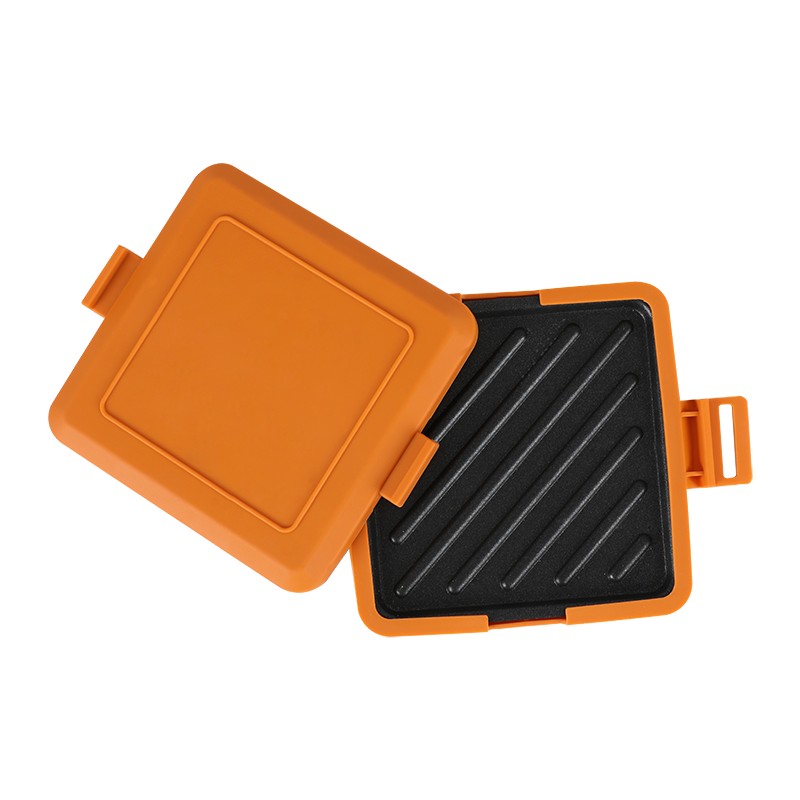
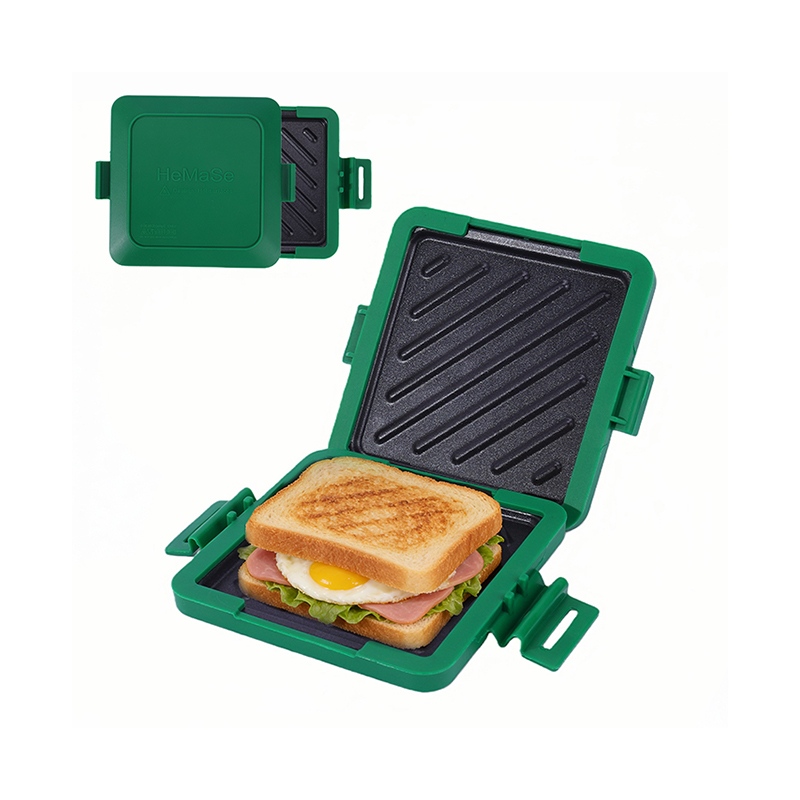
A real crisper tray is two parts. A heat-conductive base sits inside a food-grade silicone shell.
That base is built from a heat-conductive polymer bonded to an aluminized sheet. It soaks up microwave energy and re-emits it as direct contact heat, the same kind a hot skillet gives you. The food touching it browns by conduction while the microwave keeps cooking the inside.
The base is the entire trick. No conductive base, no crisp. That single part is why two trays that look identical can perform nothing alike.
3. We tested ours on seven everyday foods
Numbers beat adjectives, so here is what came out of our own test kitchen on a standard 900W microwave. Times are a guide; higher-wattage units run faster.
| Food | Result | Time | Verdict |
|---|---|---|---|
| Grilled cheese sandwich | Golden, crisp both sides | ~4 min | Works |
| Bacon | Rendered and crisp, less spatter | ~4 min | Works |
| Leftover pizza slice | Base crisped, not soggy | ~3 min | Works |
| Chicken breast (thin) | Browned surface, cooked through | ~5 min | Works |
| Frozen fries | Crisp edges, softer centers than an oven | ~6 min | OK, not perfect |
| Steak (in the multi-pot) | Real sear, marbling kept | ~5 min | Works |
| Battered deep-fry items | Will not deep-fry, stays pale | — | Skip it |
What stood out, food by food
The grilled cheese was the standout. Butter the bread, four minutes, and both faces come out browned with the pull you expect from a pan, not a microwave.
Bacon surprised the room. It renders properly on the hot base, crisps up, and throws far less spatter than a skillet, which also means less cleanup.
Pizza is the demo that flips skeptics. The same slice that goes limp on a bare plate comes off the tray with a firm, crisp base in about three minutes.
Frozen fries were the honest weak spot. The edges crisp nicely, but the centers stay softer than an oven or air fryer would leave them. Fine for a snack, not a match for dedicated fry gear.
A reviewer we sent samples to, James, a food blogger in Leeds, went in expecting to trash it. His words back to us: "The grilled cheese genuinely surprised me. The fries were the only letdown." That is about the fairest one-line summary anyone could give.
4. When a crisper tray genuinely disappoints
We would rather you know the limits than return a pallet. A crisper tray is not magic, and here is where it falls short.
- It will not deep-fry. Battered, oil-hungry food stays pale.
- Capacity is one to two servings. It is not a family batch cooker.
- Thick cuts need a flip partway, since the contact side crisps fastest.
- Low-wattage microwaves (600-700W) simply take longer. That is patience, not a defect.
Notice that none of these are the tray failing. They are the tray being used for the wrong task, or a shopper expecting oven capacity from a microwave accessory. Clear product copy prevents most of the one-star reviews.
5. How it stacks up against what you'd use instead
Most people asking "does it work" are really comparing it to something they already own. Here is the honest place it lands against each.
Versus the bare microwave: no contest. The plate steams, the tray crisps. This is the whole reason the product exists.
Versus a toaster or toaster oven: similar results on toast and sandwiches, but the tray needs no counter space and no second plug. For a dorm or office, that is the deciding factor.
Versus a stovetop pan: the pan still wins on raw control, but the tray wins on convenience and cleanup, and it works where there is no stove at all. If you want the deeper, grill-marked format, our microwave grill pan guide covers that model.
Versus an air fryer: the air fryer holds more and does fries better, but it is bulkier and pricier. The tray is the pick when space, speed, and budget matter more than capacity.
6. Five ways to get the crispiest result
The same tray can give great or mediocre results depending on how it is used. These five habits close most of that gap.
- Preheat the empty tray 1-2 minutes. A base that is already hot starts browning the instant food touches it.
- Pat food dry first. Surface moisture steams before it can crisp, so a paper-towel blot makes a real difference.
- Give food room. A single layer with space around each piece crisps far better than a crowded pile.
- Flip thicker items once. Ten seconds of effort evens out the browning on chicken, steak, or thick bread.
- Know your wattage. On a 700W unit, add a minute or two rather than assuming the tray failed.
7. The real reason some trays "don't work"
Here is the uncomfortable part of the honest answer. When a crisper tray genuinely does not crisp, it is usually not the design that failed. It is the build.
The market is full of trays that skimp on, or fake, the heat-conductive layer to hit a rock-bottom price. Without a real base, you are left with a silicone dish that just steams food like the bare microwave would. That is the "it doesn't work" review, and it is a materials problem, not a category problem.
The other failure is cheap silicone that deforms or grows brittle after a few uses. That is why we test every model to FDA and LFGB food-grade standards, hold BSCI and ISO9001, and rate the silicone from roughly -40°C to 230°C. Those specs are not marketing. They are the difference between a tray that still works on use fifty and one that warps on use five.
When a buyer in Toronto once sent us a "yours doesn't crisp" complaint, we traced it in a day: the unit shipped had been a low-grade sample from a different vendor in their test batch, not ours. Once they ran our certified tray, the problem vanished. The base, again, was the whole story.
8. How to make sure yours actually works
Whether you are buying one for your kitchen or a container for your store, the checklist is the same.
- Confirm there is a stated heat-conductive base, not just "silicone tray."
- Look for FDA and LFGB certification, and ask to see the reports if you are sourcing in volume.
- Check for a temperature range on the spec sheet. No range usually means no testing.
- Match the format to the food. Flat sandwich trays for toasting, a deeper multi-pot for steaks and soups.
If you resell, answer this question on the listing
"Does it really work" is the top pre-purchase doubt in this category. The brands that win the sale answer it directly on the page: show a short demo clip, state the honest 3-to-5-minute cook time, and name the foods it nails and the ones it does not.
One of our private-label partners added a plain "works / skip it" food list to their listing. Returns on that SKU dropped, because buyers self-selected out before ordering. Honesty converts better than hype here.
9. Who a microwave crisper tray is really for
"Does it work" has a second half most reviews skip: work for whom. The tray is a brilliant fit for some kitchens and a poor one for others, and knowing the difference saves both a bad purchase and a bad review.
It is made for small-space cooks. Students in dorms, workers with only an office microwave, renters with no room for another appliance, travelers in hotel rooms. For them there is no real alternative, and the tray is close to essential.
It suits one or two people. Solo households and couples get fast, crisp single servings without heating a full oven. That is the sweet spot the format was designed around.
It is not built for big families. If you routinely cook for four or more, the one-to-two-serving capacity will frustrate you, and a countertop oven or large air fryer is the better spend. We would rather say that plainly than sell you the wrong tool.
For a reseller, that segmentation is a targeting gift. The people who love this product are searchable and specific, so listings, ads, and bundles aimed at the dorm, office, and small-apartment shopper convert far better than generic "kitchen gadget" copy.
Want to test one before you commit?
We will send samples so you can run the "does it really work" test in your own kitchen or QC lab, on your own microwaves. Tell us your market and channel and we will recommend a starter mix with full certification. Email ningboyoulekang@163.com or message us on WhatsApp.
10. Frequently asked questions
Do microwave crisper trays work in every microwave?
Yes, in any standard microwave. Lower-wattage units (600-700W) just need a little more time than a 900-1000W unit.
Do they really crisp food without oil?
Yes. The browning comes from the hot conductive base, not from oil, so a light coating or none at all still crisps.
Why didn't my crisper tray make anything crispy?
Most often the tray lacks a real heat-conductive base, or the food needed a flip, or the microwave is low wattage. A genuine dual-layer tray on normal power crisps reliably.
Are microwave crisper trays worth buying?
For anyone in a dorm, office, or small apartment without room for a grill or air fryer, yes. They deliver toaster-and-grill results in 3 to 5 minutes for the lowest price and footprint of any option